Home/Articles/Histamine Intolerance Symptoms — The Complete Guide
Symptoms
Histamine Intolerance Symptoms — The Complete Guide
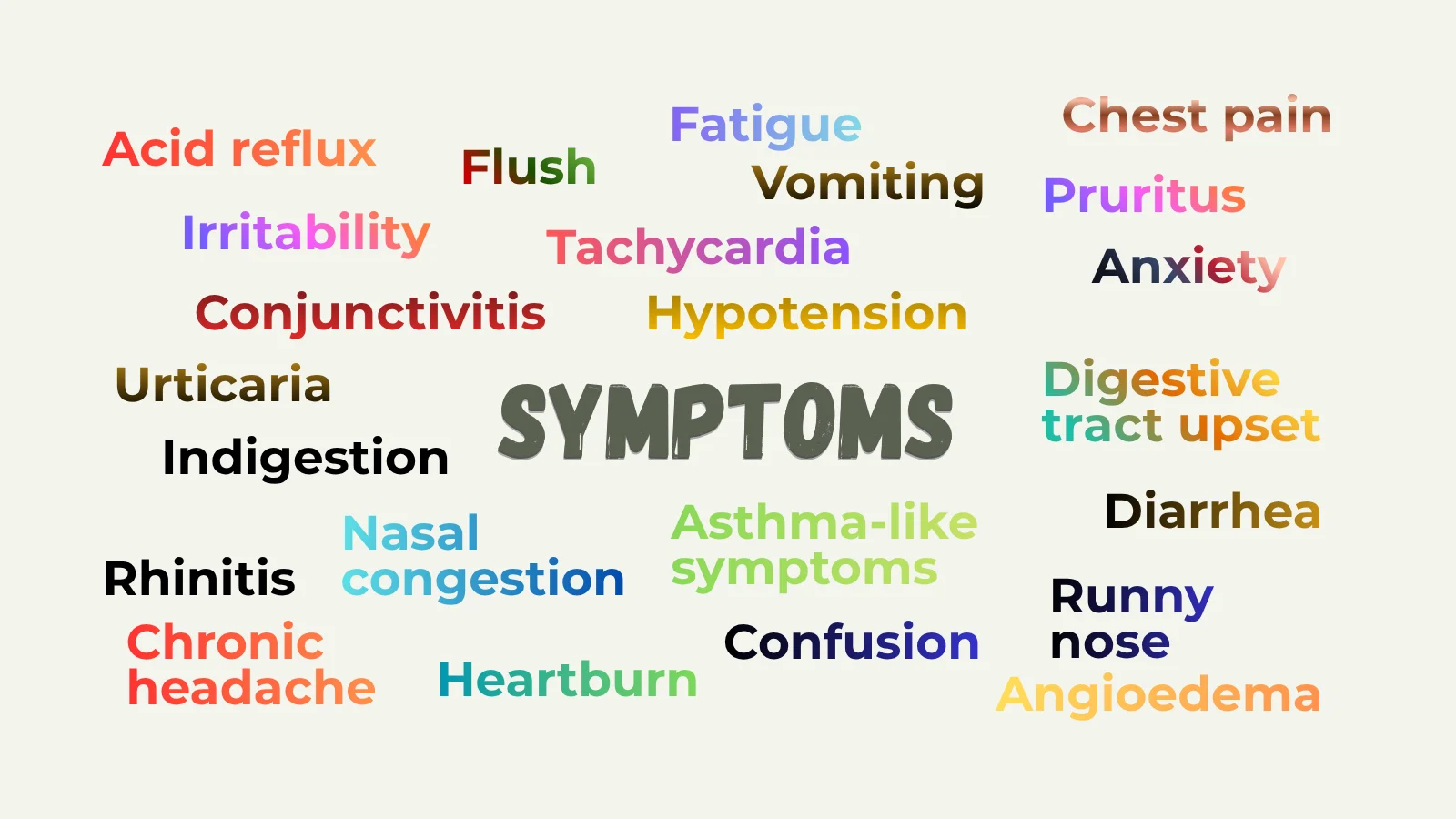
Headaches, skin rashes, bloating, anxiety, and heart palpitations. They seem like four different problems. They may be one. A complete guide to histamine intolerance symptoms by body system.
This content is for informational purposes only and does not constitute medical advice. Always consult a qualified healthcare provider before making changes to your diet or treatment. Histamine tolerance is highly individual.
Stay updated on histamine research
Weekly tips, food alerts, and new articles. Free.
First, an important distinction
Histamine intolerance is not a disease in itself
Before going through the symptoms, there is something worth understanding that most articles on this topic skip entirely: histamine intolerance is not a standalone disease. It is a clinical syndrome — a set of symptoms that appear when the body's ability to process histamine is repeatedly exceeded. And in most cases, there is an underlying reason why that capacity is reduced.
That underlying reason might be reduced DAO enzyme activity due to gut inflammation, an intestinal infection, a genetic variant, certain medications, or hormonal factors. It might be a condition like MCAS (mast cell activation syndrome) or SIBO. It might be years of chronic stress affecting gut function. In many cases it is a combination of factors.
This distinction matters when reading a symptom list, because the symptoms you are about to read are not caused by histamine intolerance as if it were a primary condition. They are often driven by the factors contributing to histamine accumulation in the first place. Histamine intolerance is often the visible surface of a deeper imbalance. Treating only the symptoms without looking for what is driving them tends to produce partial, temporary improvement at best.
With that context in place, here is what elevated histamine actually looks like across different body systems.
Why it goes undetected
Why nobody connects these symptoms to histamine
You have been to the dermatologist for your skin. The gastroenterologist for your digestion. The neurologist for your headaches. And possibly a cardiologist for the palpitations that show up after certain meals. Each one treats their piece of the puzzle. Nobody steps back to look at the whole picture.
This is the defining experience of unrecognized histamine accumulation: symptoms scattered across multiple systems of the body, appearing and disappearing without obvious logic, and consistently attributed to something else. Anxiety. Irritable bowel syndrome. Rosacea. Premenstrual syndrome. Stress.
The reason it gets missed so often is that histamine receptors exist throughout the entire body. When histamine accumulates past your personal threshold, it does not just affect one area. It affects wherever those receptors are most active in you, and that varies from person to person. One person's main symptom is migraines. Another person's is chronic hives. A third person barely has skin symptoms but experiences severe digestive pain and brain fog after every meal.
This variability is not a sign that something rare or mysterious is happening. It is a sign that histamine is doing what histamine does, acting on multiple systems at once. Once you understand that, the scattered picture starts to make sense.
Skin symptoms
What elevated histamine looks like on the skin
The skin is one of the most common places where histamine reactions show up, because it contains a high concentration of mast cells, which are the cells that release histamine in response to triggers.
Urticaria (hives). Raised, itchy welts that can appear anywhere on the body and often move around, disappearing in one area and reappearing in another. They tend to appear after eating trigger foods rather than in response to a specific allergen, and may resolve on their own within hours.
Facial flushing. A sudden redness or warmth in the face, neck, or chest, often appearing shortly after eating, drinking alcohol, or during physical exertion. This tends to happen consistently in the same situations, which makes it easier to connect to a trigger.
Generalized itching. Itching without visible rash, or with mild redness but no defined hives. Often worse at night or after meals.
Rosacea and chronic redness. There is growing evidence suggesting a connection between high histamine load and rosacea. Many people with rosacea notice improvement when they reduce dietary histamine, though the relationship is not fully established and individual responses vary.
Eczema flares. In some individuals, high histamine intake appears to worsen eczema. This does not mean histamine is the root cause of eczema, but it may be a contributing trigger in sensitive individuals.
An important note: skin symptoms related to histamine accumulation are typically dose-dependent. A small amount of a trigger food may cause no reaction, while a larger portion or a combination of trigger foods pushes you over your threshold and symptoms appear. This inconsistency is often what makes it hard to identify the connection.
Digestive symptoms
The gut reactions that often get labeled as IBS
Digestive symptoms are among the most commonly reported, and also the most frequently misattributed, usually to irritable bowel syndrome, specific food intolerances, or stress-related gut issues.
Bloating and abdominal distension. One of the most reported symptoms. Often appears within one to two hours after eating trigger foods and can be significant enough to cause visible distension.
Diarrhea or loose stools. Histamine stimulates intestinal motility, which speeds up the movement of contents through the gut. In sensitive individuals this can cause diarrhea or urgency after meals.
Abdominal cramps and pain. Cramping pain, often in the lower abdomen, that appears after eating and resolves within a few hours. Frequently mistaken for IBS cramping.
Nausea. Can range from mild queasiness to significant nausea after meals.
Constipation. Less commonly discussed, but some individuals experience constipation rather than diarrhea, or alternate between the two.
The overlap with IBS is significant. Some research suggests that histamine-related mechanisms may play a role in a subset of individuals diagnosed with IBS. If your digestive symptoms tend to follow specific food patterns rather than being constant, and particularly if they worsen with fermented foods, alcohol, or leftovers, the histamine connection is worth investigating.
It is also important to understand the relationship between gut health and histamine in the other direction: gut inflammation reduces DAO enzyme production, which further impairs the body's ability to break down histamine. This means that gut health is not just a context for histamine accumulation. In many cases it is the primary driver of it.
Neurological and mental symptoms
The brain symptoms that rarely get connected to food
This is the category that surprises people most. The idea that food could directly affect mood, cognition, and neurological function feels counterintuitive. But histamine is a neurotransmitter, and its effects on the brain are well established in the scientific literature.
Headaches and migraines. One of the clearest connections. Histamine can contribute to vasodilation, one of the mechanisms involved in migraine headaches. Many people with chronic migraines who reduce their histamine load report significant improvement in frequency and severity. Red wine, aged cheese, and chocolate, all classic migraine triggers, are also among the highest-histamine foods.
Brain fog. A sense of mental cloudiness, difficulty concentrating, or feeling mentally slow, often appearing one to two hours after meals. Frequently described as feeling worse after fermented foods or alcohol specifically.
Anxiety and irritability. Histamine has stimulating effects on the nervous system. Elevated levels can produce feelings of anxiety, restlessness, or irritability that seem to appear from nowhere, particularly after meals. Some individuals describe an internal agitation or inability to relax after eating certain foods.
Sleep disturbances. Histamine promotes wakefulness. High histamine levels in the evening after a histamine-heavy dinner can delay sleep onset or cause waking during the night.
Dizziness and vertigo. Some individuals experience dizziness or a sense of spinning, particularly after meals or alcohol. This is related to histamine's effects on blood vessels and the inner ear.
These symptoms are particularly important to recognize because they are almost never attributed to food. A person experiencing anxiety and brain fog is far more likely to be referred for mental health support than to be asked what they ate. Mental health support is always valuable, but if a physiological driver is present, it may remain unaddressed.
Hormonal symptoms
Why symptoms get worse around your cycle
The hormonal connection is one of the most under-discussed aspects of histamine accumulation, and it helps explain why women appear to be affected more frequently, and why symptoms often shift dramatically at different points in the menstrual cycle.
The relationship works in both directions. Estrogen stimulates the release of histamine from mast cells. At the same time, histamine stimulates the production of estrogen. This bidirectional relationship means hormonal fluctuations directly affect histamine levels, and vice versa.
Additionally, estrogen inhibits DAO production. This means that during phases when estrogen is relatively elevated, particularly in the days before ovulation and before menstruation, histamine accumulates more easily because the enzyme that breaks it down is less active.
Premenstrual worsening. Many women notice that all their symptoms worsen significantly in the week before their period: more bloating, more headaches, more skin reactions, more anxiety. This reflects the drop in progesterone, which supports DAO activity, and the relative rise in estrogen that occurs in this phase.
Menstrual cramps. Histamine promotes the production of prostaglandins, which cause uterine contractions. Severe menstrual cramps, particularly when accompanied by other symptoms, may have a histamine component worth exploring.
Perimenopause. As estrogen levels become more erratic during perimenopause, symptoms related to histamine accumulation often become more unpredictable and intense. Many women describe noticing these symptoms for the first time during this period.
This connection is also relevant for anyone using hormonal contraceptives. Estrogen-containing contraceptives can increase histamine load in sensitive individuals, while progesterone-dominant options may have a more neutral effect.
If you notice a clear cyclical pattern to your symptoms, this hormonal connection is worth discussing with a healthcare provider familiar with both areas.
Cardiovascular symptoms
Heart palpitations and low blood pressure after eating
Cardiovascular symptoms are among the less commonly recognized signs of elevated histamine, but they can be among the most alarming, and they are frequently the reason people end up in an emergency room without a clear explanation.
Heart palpitations. A sensation of rapid, fluttering, or pounding heartbeat, often appearing shortly after eating trigger foods or drinking alcohol. Histamine increases heart rate through its action on histamine receptors in cardiac tissue. In sensitive individuals this can be pronounced enough to feel like a significant cardiac event.
Low blood pressure and dizziness. Histamine causes blood vessels to dilate and blood pressure to drop. This can result in lightheadedness or dizziness, particularly when standing up quickly after a meal.
Flushing with rapid heartbeat. The combination of facial flushing and increased heart rate after eating is a particularly characteristic pattern worth noting if it occurs consistently.
These symptoms always warrant medical evaluation to rule out cardiac causes first. When cardiac causes have been excluded and symptoms continue to appear consistently after meals or alcohol, histamine accumulation becomes a reasonable factor to investigate.
The connecting thread
What ties all of this together
The most important thing to understand about these symptoms is that they are cumulative and threshold-dependent. They are not caused by a single food on a single occasion. They appear when the total amount of histamine in your system at any given time exceeds what your body can process.
This is why the same meal can cause a reaction one day and not the next. If you are well-rested, not premenstrual, and have eaten relatively low-histamine foods all day, you might tolerate a glass of wine without issue. If you are sleep-deprived, in the premenstrual phase, and have already eaten fermented foods earlier in the day, that same glass of wine tips you over your threshold.
The variables that raise your total load include dietary histamine intake, DAO-blocking medications, hormonal phase, stress levels, gut inflammation, alcohol, and environmental triggers like mold or chemical sensitivities.
And underneath all of that: whatever is reducing your body's capacity to process histamine in the first place. That is the part that is worth finding. Understanding your symptoms is the first step. Understanding what is driving the accumulation is where lasting improvement comes from.
Tracking your symptoms, food, hormonal phase, stress, and environment over time is what makes it possible to see both levels of the picture: what triggers your reactions day to day, and what underlying patterns are reducing your tolerance over time. Understanding patterns is where clarity begins. Tracking them is how you confirm them.
When to suspect it
Key signs that histamine accumulation may be worth investigating
There is no single symptom that definitively points to this pattern, but certain combinations make it worth looking into:
Symptoms that affect multiple body systems simultaneously or in close succession
Reactions that appear consistently after fermented foods, aged cheeses, alcohol, processed meats, or leftovers
Symptoms that worsen predictably in the premenstrual phase
Headaches or migraines triggered by red wine, aged cheese, or chocolate
Digestive symptoms labeled as IBS that follow specific food patterns rather than being constant
Skin reactions without an identified allergen
Symptoms that improve on antihistamine medications even though no allergy has been identified
Reactions that vary in intensity depending on what else you ate that day
If several of these patterns apply to you, a structured low-histamine elimination diet combined with careful symptom tracking is currently the most practical clinical approach available. A DAO enzyme activity blood test can provide supporting information, though it is not conclusive on its own.
What makes the real difference is not a single test or a single elimination trial. It is consistent tracking of what you eat, how you feel, where you are in your cycle, and what else is going on in your life, over enough time to see real patterns emerge.
Find your personal patterns
If you are struggling to connect your symptoms with specific foods or triggers, structured tracking can make a significant difference. MyHistaMap helps you log meals, symptoms, and reactions so you can work with your own data instead of generic protocols.
What are the most common symptoms of histamine intolerance?
The most commonly reported symptoms include headaches or migraines, skin reactions such as hives or flushing, bloating and digestive discomfort, nasal congestion, heart palpitations, anxiety, and fatigue. Because histamine receptors are distributed throughout the body, symptoms vary significantly between individuals. It is also worth noting that these symptoms are usually a sign of histamine accumulation driven by an underlying factor, rather than a standalone condition.
What does a histamine flare-up feel like?
A flare typically involves a combination of symptoms appearing within minutes to a few hours after consuming trigger foods or drinks. Common descriptions include a sudden headache, facial flushing or warmth, bloating, itching, and a sense of mental fogginess or anxiety. The intensity depends on how much histamine was consumed relative to your personal threshold on that day.
What are the signs of too much histamine in the body?
Signs of elevated histamine include flushing, hives, itching, headaches, nasal congestion, digestive cramps, heart palpitations, low blood pressure, anxiety, and difficulty sleeping. When multiple systems are affected simultaneously after eating, this pattern is particularly worth investigating.
Can histamine intolerance cause anxiety?
Elevated histamine levels can produce feelings of anxiety, restlessness, and internal agitation because histamine is a neurotransmitter with stimulating effects on the nervous system. When this occurs consistently after certain meals or drinks, a histamine connection is worth considering alongside other potential causes.
Why do symptoms get worse before my period?
Estrogen stimulates histamine release and inhibits DAO, the enzyme that breaks down histamine. In the premenstrual phase, when progesterone drops and estrogen is relatively elevated, histamine accumulates more easily. This creates a predictable worsening of symptoms in the week before menstruation for many women.
What organ does histamine affect?
Histamine affects multiple organs because histamine receptors are distributed throughout the body. The main areas affected include the skin, the gastrointestinal tract, the respiratory system, the cardiovascular system, and the brain. This is why elevated histamine can produce such a wide and apparently unrelated range of symptoms across different systems.
At MyHistaMap we curate information from peer reviewed research and recognized medical sources. This content is a reference tool, not a medical prescription.
References
Maintz L, Novak N. Histamine and histamine intolerance. American Journal of Clinical Nutrition, 2007.
Reese I, et al. German guideline for the management of adverse reactions to ingested histamine. Allergologie Select, 2021.
Joneja JMV. Histamine Intolerance: A Comprehensive Guide. Bull Publishing, 2003.
Schnedl WJ, Lackner S, Enko D, et al. Evaluation of symptoms in histamine intolerance. Wiener Medizinische Wochenschrift, 2019.
Comas-Basté O, et al. Histamine intolerance: the current state of the art. Biomolecules, 2020.