This content is for informational purposes only and does not constitute medical advice. Always consult a qualified healthcare provider before making dietary changes. Histamine tolerance is highly individual.
This information applies to histamine intolerance, DAO deficiency, and MCAS only. If you have a confirmed food allergy, this content does not apply to you. Food allergies involve the immune system and can be life-threatening. Please consult your allergist.
Is Blue cheeses a trigger for histamine intolerance?
Blue cheeses scores a 2 out of 3 on the SIGHI Food Compatibility List, placing it in the Moderate category.
Blue cheeses & Histamine, what the evidence says
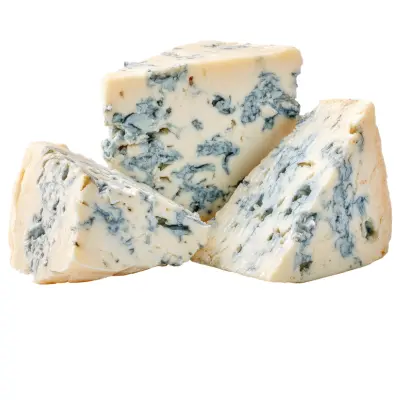
Blue cheese can be particularly challenging for people with histamine intolerance because it is aged for weeks or months. During this time, microorganisms break down proteins and can produce histamine and other substances such as tyramine. The amounts can vary considerably from one cheese to another and even between different batches of the same cheese. In one study of 46 blue-veined cheeses, tyramine reached up to 717 mg/kg and histamine up to 186 mg/kg. A more recent study of retail cheeses found up to 342 mg/kg of histamine and 646 mg/kg of tyramine in Gorgonzola.
Tyramine is different from histamine and can affect the body in a different way. It can cause the release of norepinephrine, a chemical involved in regulating blood pressure. This is particularly important for people taking monoamine oxidase inhibitor (MAOI) medications, because these drugs can prevent the body from breaking down tyramine normally. High amounts of tyramine can then cause a significant rise in blood pressure, an interaction historically known as the "cheese reaction." This is a medication interaction and is separate from histamine intolerance.
Some people also wonder whether the Penicillium mold used to make blue cheese could cause problems independently of histamine and tyramine. There is limited evidence specifically about eating mold-ripened cheese in this context. Research on mold-related immune and mast-cell effects has mainly looked at environmental mold exposure, particularly breathing in mold, which is a different type of exposure from eating blue cheese.
Does preparation change the risk?
Every form of blue cheese goes through the same basic ripening process, and there's no reliable data showing that crumbling, blending, or shortening ripening time brings amine levels down in any consistent way. Cooking doesn't reduce histamine or tyramine once they've formed either.
| Form | Risk Level | Notes |
|---|---|---|
| Roquefort, Gorgonzola, Stilton, Danish Blue | High | Fully ripened wedges; measured histamine and tyramine levels are consistently elevated |
| Blue cheese crumbles or dressing | High | Still made from fully ripened cheese; there's no data showing that blending it with other ingredients lowers its amine content |
| Cooked into sauces or baked dishes | High | Heat doesn't lower histamine or tyramine already present in the cheese |
| Younger or milder blue cheese | High | Shorter ripening is sometimes assumed to mean lower amine levels, but there's no consistent data confirming this across brands and batches |
Note: Risk levels are based on clinical observations and patient reports, not standardized histamine measurements. Individual tolerance varies.
A food score is a reference, not a verdict.
Histamine intolerance is highly individual. A food that triggers symptoms in one person may be tolerated by another, even within the same category.
Strict elimination may help reduce symptoms initially, but long-term progress often depends on gradual reintroduction and pattern recognition. The goal is not to remove more foods over time, but to understand your personal tolerance and expand your diet when possible.
Tracking symptoms, portions, and context such as stress or timing can provide insights that generalized food lists cannot. This is where informed decisions replace fear-based restriction.
How to test your tolerance
 Check with your prescriber if you take an MAOI.
Blue cheese's tyramine content is relevant on its own for people taking monoamine oxidase inhibitor medications, separate from any histamine sensitivity.
 Consider tyramine if migraines are part of your pattern.
Tyramine has been linked to migraine triggers in some people. If blue cheese seems to bring on headaches specifically, tyramine may be a bigger factor than histamine.
 Heat won't lower the amine content.
Melting blue cheese into a sauce or baking it into a dish doesn't reduce the histamine or tyramine already present.
 Expect variation between batches.
Amine levels in ripened cheese can differ considerably even within the same variety, depending on the specific batch and how long it aged.
 Try a fresher cheese if you need the texture.
Fresh, unripened cheeses like mozzarella or young cream cheese go through much less bacterial breakdown and tend to carry a lower amine load.
 Track your own response.
Log the amount and type of blue cheese in MyHistaMap, since reactions can vary by brand and aging time in ways that are hard to predict in advance.
Common questions about Blue cheeses and histamine
Is blue cheese high in histamine, or does it work as a liberator?
Its main concern is direct content rather than a liberator effect. Measured histamine levels in blue-veined cheese can reach several hundred mg/kg, and tyramine levels are often even higher.
Why might blue cheese trigger headaches specifically?
Tyramine, a separate biogenic amine from histamine, promotes the release of norepinephrine and has been linked to migraines in sensitive people. This can happen independently of any histamine reaction.
Does cooking or melting blue cheese lower the risk?
No. Histamine and tyramine are both heat-stable, so cooking, baking, or melting blue cheese doesn't reduce the amount already present.
Is all blue cheese equally high in histamine?
Exact levels vary by cheese type, brand, and batch, sometimes considerably, but every blue cheese has gone through the same ripening process that produces histamine and tyramine. There's no reliable way to predict which specific product is lower without testing your own tolerance carefully.
Some people find these options helpful
Supplements are optional tools, not a solution. Personal tracking and identifying your individual triggers remains the priority.

Where this information comes from
At MyHistaMap we curate information from peer reviewed research and recognized medical sources. This guide is a reference tool, not a medical prescription. Always track your own reactions and consult your healthcare provider.
References
- Reinholds et al., The Occurrence and Dietary Exposure Assessment of Mycotoxins, Biogenic Amines, and Heavy Metals in Mould-Ripened Blue Cheeses, Foods, 2020: measured biogenic amines in 46 blue-veined cheeses, with tyramine reaching up to 717 mg/kg and histamine up to 186 mg/kg. The source for this page's amine concentration figures from that study.
- Pawul-Gruba et al., Prevalence of Biogenic Amines and Their Relation to the Bacterial Content in Ripened Cheeses on the Retail Market in Poland, Foods, 2025: found histamine up to 342 mg/kg and tyramine up to 646 mg/kg in Gorgonzola samples specifically, among 125 ripened cheeses tested. The source for this page's more recent concentration figures.
- Tyramine, StatPearls, NCBI Bookshelf: describes tyramine as an indirectly acting sympathomimetic agent that displaces norepinephrine from nerve terminals, and explains its interaction with monoamine oxidase inhibitor medications. The source for this page's tyramine mechanism and MAOI section.
- Cheese, Allergen Encyclopedia, Thermo Fisher Scientific / Phadia: notes that molds used in cheese manufacture, including Penicillium roqueforti, are not generally associated with human disease outside occupational exposure, where hypersensitivity pneumonitis has been reported from inhalation. The source for this page's note on the difference between inhaled and ingested mold exposure.