This content is for informational purposes only and does not constitute medical advice. Always consult a qualified healthcare provider before making dietary changes. Histamine tolerance is highly individual.
This information applies to histamine intolerance, DAO deficiency, and MCAS only. If you have a confirmed food allergy, this content does not apply to you. Food allergies involve the immune system and can be life-threatening. Please consult your allergist.
Is Egg white a trigger for histamine intolerance?
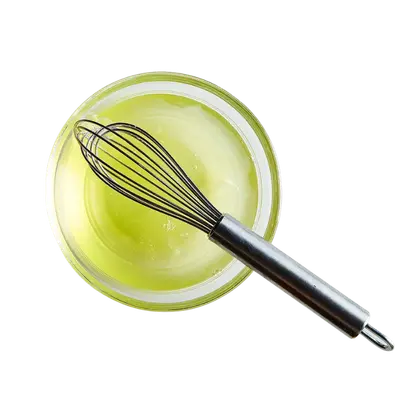
Egg white scores a 1 out of 3 on the SIGHI Food Compatibility List, placing it in the Low category. It is also classified on some reference lists as a potential histamine liberator. This reflects the reference list's classification rather than a confirmed mast-cell mechanism, since research specifically testing this hasn't provided strong support for it.
Egg white & Histamine, what the evidence says
Egg white is sometimes included on lists of potential histamine liberators, even though it is not considered a high-histamine food. It contains little to no histamine itself, but it contains several proteins that can trigger an allergic reaction, particularly ovomucoid and ovalbumin. In people with an egg allergy, these proteins can cause the immune system to release histamine. This is different from showing that egg white triggers histamine release in people with histamine intolerance who are not allergic to eggs.
Egg white contains most of the major allergens found in hen's eggs. Ovomucoid is particularly important because it is resistant to heat and digestion, which helps explain why some people with egg allergy can react even to cooked egg. However, some people with egg allergy tolerate well-cooked or baked egg better than raw or lightly cooked egg, depending on their individual allergy.
Egg yolk contains fewer of the major allergens found in egg white, although it is not completely free of allergens. Alpha-livetin, for example, is a recognized yolk allergen. Some people with egg allergy may therefore tolerate the yolk better, but it should not be assumed to be better tolerated by everyone.
For people with histamine intolerance, this distinction matters because a reaction to egg white may be related to an immune response to its proteins rather than to a high histamine content in the food itself.
Does preparation change the risk?
Cooking method appears to be one of the most relevant variables for egg white tolerance among egg-allergic individuals. Heat, and particularly longer cooking times, may help reduce the reactivity of the proteins involved, which is why thoroughly cooked whites tend to be better tolerated than raw or undercooked forms. Note that some sources report egg white may still act as a mild activator even when cooked, so individual testing remains important.
| Form | Risk Level | Notes |
|---|---|---|
| Raw egg white | High | Associated with the strongest liberator effect in reports |
| Soft-boiled / Poached | High | Partial cooking may reduce some reactivity, though core proteins often remain reactive |
| Hard-boiled / Fried | Moderate | Longer heat exposure may reduce more of the reactivity and is better tolerated by some |
| Baked (in cakes/bread) | Moderate | Prolonged heat and mixing with other ingredients may lower reactivity |
| Egg yolk only | Low | Generally tolerated by more people, though it is not free of allergens itself |
Note: Risk levels are based on clinical observations and patient reports, not standardized histamine measurements. Individual tolerance varies.
A food score is a reference, not a verdict.
Histamine intolerance is highly individual. A food that triggers symptoms in one person may be tolerated by another, even within the same category.
Strict elimination may help reduce symptoms initially, but long-term progress often depends on gradual reintroduction and pattern recognition. The goal is not to remove more foods over time, but to understand your personal tolerance and expand your diet when possible.
Tracking symptoms, portions, and context such as stress or timing can provide insights that generalized food lists cannot. This is where informed decisions replace fear-based restriction.
How to test your tolerance
 Separate the yolk.
If you are in a strict elimination phase, try using only the yolks. They are nutrient-dense and typically well tolerated by those with histamine issues, though not entirely free of egg allergens.
 The power of heat.
Cooking thoroughly, such as hard-scrambled or hard-boiled, may help reduce reactivity if you are symptomatic. Raw or runny whites are generally best approached with caution.
 Watch for hidden whites.
Egg whites are used as clarifying agents in some wines and as binders in gluten-free breads and processed meats, such as some sausages.
- Cross-reactivity.
If you react to egg whites, it may be worth being cautious with other bird eggs, such as quail or duck, since the protein structures are similar enough to prompt a similar response in some people.
 Protein powders.
Egg white protein powders are concentrated sources of the proteins involved in egg allergy, and may be a less obvious trigger for those following fitness routines.
 Tracking protocol.
Track your response carefully. Note the form, quantity, and timing. Look for patterns across multiple trials using MyHistaMap.
Common questions about Egg white and histamine
Is it an allergy or an intolerance?
A true egg allergy involves IgE antibodies and documented histamine release from leukocytes on exposure to egg proteins. A histamine intolerance reaction to egg whites is generally understood as a separate, non-allergic response. The symptoms may look similar, but the underlying pathway is different.
Can I eat the egg yolk?
For most people, the yolk is generally better tolerated than the white, since it contains fewer of the major egg allergens. It isn't completely free of allergens, though, since it contains its own allergen, alpha-livetin.
Why do some people only react to runny eggs?
Heat changes the shape of proteins in the egg white, and longer cooking times in particular have been shown to reduce their reactivity. Some egg-allergic people tolerate well-cooked or baked egg better than raw or lightly cooked egg, though this varies by individual.
Are organic eggs better for histamine?
Organic eggs may support overall health, but the proteins involved in egg allergy and any related liberator effect are a biological property of egg whites in general, regardless of how the chicken was raised.
Some people find these options helpful

Supplements are optional tools, not a solution. Personal tracking and identifying your individual triggers remains the priority.

Where this information comes from
At MyHistaMap we curate information from peer reviewed research and recognized medical sources. This guide is a reference tool, not a medical prescription. Always track your own reactions and consult your healthcare provider.
References
- Clinton, Kemeny, Amlot, Urbanek, Lessof, Histamine release from peripheral blood leucocytes in egg-allergic patients, Clinical Allergy, 1986: found that leukocytes from egg-allergic patients released histamine on exposure to egg proteins including whole egg, ovomucoid, ovalbumin, and ovotransferrin. The source for this page's note that documented histamine release in this context comes from egg allergy research.
- Egg allergy in children, review, Allergy, Asthma & Clinical Immunology: describes ovomucoid (Gal d 1, 11% of egg white protein) as heat- and digestion-stable and the dominant egg allergen, ovalbumin (Gal d 2, 54%) as the most abundant but less stable protein, and identifies alpha-livetin as a recognized egg yolk allergen. The source for this page's allergen structure details and the note that egg yolk is not allergen-free.
- Golias et al., Heat-Induced Structural Changes Affect OVA-Antigen Processing and Reduce Allergic Response in Mouse Model of Food Allergy, PLoS ONE, 2012: found heated ovalbumin induced significantly lower levels of mast cell protease-1, a marker of mast cell activation, compared to native (raw) ovalbumin in a mouse model, though heated ovalbumin still triggered some allergic diarrhea. The source for this page's note that cooking reduces, but doesn't necessarily eliminate, egg white proteins' reactivity.
- Shin, Han, Ahn, The Influence of the Time and Temperature of Heat Treatment on the Allergenicity of Egg White Proteins, Allergy, Asthma & Immunology Research, 2013: found that among raw, fried, boiled, and baked egg white, boiling for 30 minutes produced the most significant reduction in IgE reactivity to ovalbumin and ovomucoid, and that duration of heating mattered more than temperature. The source for this page's note that longer cooking times affect egg white's reactivity more than temperature alone.
- SIGHI (Swiss Interest Group Histamine Intolerance) Food Compatibility List: rates raw egg white as a liberator, noting it is mast cell activating especially raw but even cooked, while egg yolk rates at the lowest histamine level. The source for this page's distinction between egg white and egg yolk.