This content is for informational purposes only and does not constitute medical advice. Always consult a qualified healthcare provider before making dietary changes. Histamine tolerance is highly individual.
This information applies to histamine intolerance, DAO deficiency, and MCAS only. If you have a confirmed food allergy, this content does not apply to you. Food allergies involve the immune system and can be life-threatening. Please consult your allergist.
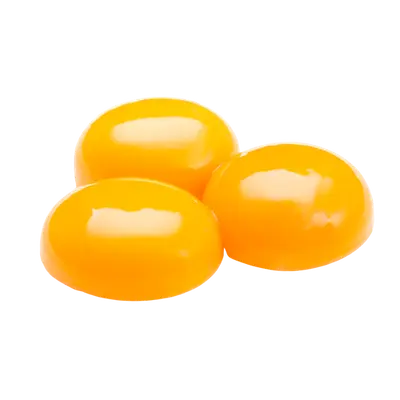
Is Egg yolk a trigger for histamine intolerance?
Egg yolk scores a 0 out of 3 on the SIGHI Food Compatibility List, placing it in the Safe category.
Egg yolk & Histamine, what the evidence says
Egg yolk is generally considered well tolerated in a low-histamine approach. Unlike egg white, which contains most of the major egg allergens, egg yolk does not contain the same major egg-white proteins. It is also one of the richest dietary sources of choline, a nutrient involved in many important functions in the body, although its specific role in histamine-related symptoms is not well established.
Egg yolk also provides vitamin D and vitamin B12, and contains virtually no carbohydrates, making it naturally low in FODMAPs. It provides protein and fat as well.
Freshness is sometimes thought to affect the amount of histamine or other amines in egg yolk, but available research does not show that these compounds simply build up as eggs are stored. One study measured several amines in egg yolk throughout its shelf life and found that putrescine, cadaverine, propylamine, ethylamine, and ethanolamine actually decreased during storage. Storage temperature did not significantly change the levels measured. This does not mean that freshness is unimportant for other reasons, such as taste or food safety, but the amines measured in this study did not increase with storage as might be expected.
Does preparation change the risk?
Most forms of egg yolk tend to be well tolerated. The key variable is complete separation from the egg white; freshness matters more for general food safety and quality than for biogenic amine content specifically.
| Form | Risk Level | Notes |
|---|---|---|
| Fresh raw yolk | Low | Generally well tolerated, but ensure it is completely separated from the white |
| Hard-boiled yolk | Low | A stable option that is simple to separate after cooking |
| Soft-boiled / Poached | Low | Good nutrient bioavailability; generally fine if the white is fully set |
| Pasteurized yolk (liquid) | Moderate | Check for preservatives or citric acid used in commercial processing |
Note: Risk levels are based on clinical observations and patient reports, not standardized histamine measurements. Individual tolerance varies.
A food score is a reference, not a verdict.
Histamine intolerance is highly individual. A food that triggers symptoms in one person may be tolerated by another, even within the same category.
Strict elimination may help reduce symptoms initially, but long-term progress often depends on gradual reintroduction and pattern recognition. The goal is not to remove more foods over time, but to understand your personal tolerance and expand your diet when possible.
Tracking symptoms, portions, and context such as stress or timing can provide insights that generalized food lists cannot. This is where informed decisions replace fear-based restriction.
How to test your tolerance
 The separation technique.
If you are highly sensitive, one option is to hard-boil the egg and then physically remove the yolk. This helps avoid any trace of the raw proteins in the white associated with reactions in sensitive individuals.
 Freshness for quality, not amines.
Buying fresher eggs is still a reasonable general practice for taste and food safety, but measured biogenic amine levels in yolk haven't been shown to rise with storage time, so this isn't a strong reason to avoid slightly older eggs specifically.
 The golden nutrient.
Egg yolks contain lutein and zeaxanthin, antioxidant compounds also found in many other foods, such as leafy greens.
 Avoid ready-to-eat yolks.
Pre-cooked egg products found in salad bars or deli sections often use preservatives that can act as histamine triggers.
 Choline content.
Egg yolks are a natural source of choline, a nutrient involved in several bodily processes. If you're tracking cognitive symptoms, it may be worth noting how egg yolk fits into your overall pattern, though its specific role in histamine-related symptoms is not well established.
 Tracking protocol.
Track your response carefully. Note if you consumed the yolk alone or with the white. Look for patterns across multiple trials using MyHistaMap.
Common questions about Egg yolk and histamine
Is egg yolk safer than the whole egg?
For many people with histamine intolerance, the yolk tends to be better tolerated than the whole egg, since the whole egg includes the white. Individual tolerance still varies.
Does egg yolk contain biotin?
Yes, and unlike the white, which contains avidin, a biotin-blocker, the yolk provides this B-vitamin in a bioavailable form.
Can I eat egg yolk every day?
In the context of a low-histamine approach, egg yolks can be a useful daily source of nutrition for many people, provided there is no underlying egg allergy (IgE).
Is egg yolk a histamine liberator?
The SIGHI food list classifies the yolk separately from the white and does not list it as a liberator, unlike the white. As with any food, individual tolerance can still vary.
Some people find these options helpful
Supplements are optional tools, not a solution. Personal tracking and identifying your individual triggers remains the priority.
Where this information comes from
At MyHistaMap we curate information from peer reviewed research and recognized medical sources. This guide is a reference tool, not a medical prescription. Always track your own reactions and consult your healthcare provider.
References
- Ramos, Pinho, Ferreira, Changes of yolk biogenic amine concentrations during storage of shell hen eggs, Food Chemistry, 2009: measured biogenic amines directly in egg yolk over shelf life and found putrescine, cadaverine, propylamine, ethylamine, and ethanolamine decreased significantly with storage time, while storage temperature had no significant effect. The source for this page's note that egg yolk's amine content does not rise with storage the way it's often assumed to.
- SIGHI (Swiss Interest Group Histamine Intolerance) Food Compatibility List: rates egg yolk at the lowest histamine level and does not classify it as a liberator, unlike raw egg white. The source for this page's distinction between yolk and white.