This content is for informational purposes only and does not constitute medical advice. Always consult a qualified healthcare provider before making dietary changes. Histamine tolerance is highly individual.
This information applies to histamine intolerance, DAO deficiency, and MCAS only. If you have a confirmed food allergy, this content does not apply to you. Food allergies involve the immune system and can be life-threatening. Please consult your allergist.
Is Sweet cream without additives a trigger for histamine intolerance?
Sweet cream without additives scores a 0 out of 3 on the SIGHI Food Compatibility List, placing it in the Safe category.
Sweet cream without additives & Histamine, what the evidence says
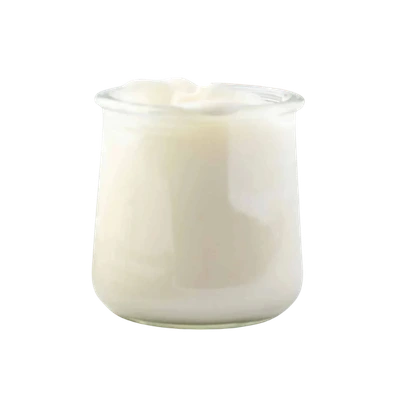
Sweet cream is the fat-rich layer skimmed from fresh milk before any acidification or fermentation occurs. Since it doesn't undergo the long-term protein breakdown typical of aged dairy, it contains no pre-formed biogenic amines. This makes it a common fat source for low-histamine dietary approaches.
Its lactose content and industrial processing are worth some attention. As a fresh dairy product, it remains fairly high in lactose. For those with intestinal permeability concerns or lactose malabsorption, this can contribute to discomfort. Additionally, many commercial heavy creams contain carrageenan or guar gum, both of which are classified as histamine liberators on clinical reference lists; carrageenan in particular has documented effects on histamine receptors and is used in research specifically to trigger histamine-mediated inflammation. These additives are a separate consideration from the cream itself and can cause reactions or digestive discomfort independent of the cream's own low-histamine profile.
Does preparation change the risk?
Pure, additive-free cream is generally the safest option. Commercial versions with stabilizers and coffee creamers introduce additional considerations beyond the cream's naturally low-risk profile.
| Form | Risk Level | Notes |
|---|---|---|
| Fresh / Heavy | Low | Plain cream with no additives |
| UHT (Long-life) | Low | Heat-treated; generally stable amine profile |
| Whipped (can) | Moderate | Contains nitrous oxide, stabilizers, and sugars |
| Coffee creamer | High | Often contains vegetable oils, corn syrup, and natural flavors |
Note: Risk levels are based on clinical observations and patient reports, not standardized histamine measurements. Individual tolerance varies.
A food score is a reference, not a verdict.
Histamine intolerance is highly individual. A food that triggers symptoms in one person may be tolerated by another, even within the same category.
Strict elimination may help reduce symptoms initially, but long-term progress often depends on gradual reintroduction and pattern recognition. The goal is not to remove more foods over time, but to understand your personal tolerance and expand your diet when possible.
Tracking symptoms, portions, and context such as stress or timing can provide insights that generalized food lists cannot. This is where informed decisions replace fear-based restriction.
How to test your tolerance
 Additive scrutiny.
Prioritizing brands labeled heavy cream with only milk or cream as an ingredient is generally a good idea.
 Freshness protocol.
Consuming it within 3 to 5 days of opening helps avoid the development of surface bacteria.
 Lactose management.
Lactase enzymes or lactose-free cream may help if digestive symptoms occur.
 Stabilizer awareness.
Products containing carrageenan (E407) or guar gum (E412) are worth avoiding, since both are classified as histamine liberators on clinical reference lists.
 Tracking protocol.
Use the MyHistaMap app to help differentiate between reactions to dairy fat versus lactose or added stabilizers.
Common questions about Sweet cream without additives and histamine
Is sweet cream safer than sour cream?
Generally, yes. Sour cream is fermented and tends to carry a higher risk of amine buildup than unfermented sweet cream.
Does sweet cream contain histamine liberators?
Pure cream generally doesn't. However, common industrial additives like carrageenan and guar gum, found in many commercial cream products, are specifically classified as histamine liberators on clinical reference lists.
Can sweet cream be consumed during a flare-up?
Tolerance varies; the fat and lactose content may add to overall load depending on individual thresholds.
Some people find these options helpful
Supplements are optional tools, not a solution. Personal tracking and identifying your individual triggers remains the priority.
Where this information comes from
At MyHistaMap we curate information from peer reviewed research and recognized medical sources. This guide is a reference tool, not a medical prescription. Always track your own reactions and consult your healthcare provider.
References
- SIGHI (Swiss Interest Group Histamine Intolerance) Food Compatibility List, version 2024-08-29: rates sweet cream 0 ("tolerated if unfermented," noting it often contains intolerated thickeners such as E407 and E410), rates carrageenan (E407) 2 and marks it L (liberator), and rates guar gum (E412) 1 and marks it L, the basis for the additive-related classifications used on this page.
- The Role of Carrageenan in Inflammatory Bowel Diseases and Allergic Reactions: Where Do We Stand?, Nutrients, 2021: describes carrageenan's well-documented ability to activate innate immune inflammatory pathways, and notes it is widely used in research specifically to induce histamine-mediated inflammation in animal models, supporting the mechanism described on this page.