This content is for informational purposes only and does not constitute medical advice. Always consult a qualified healthcare provider before making dietary changes. Histamine tolerance is highly individual.
This information applies to histamine intolerance, DAO deficiency, and MCAS only. If you have a confirmed food allergy, this content does not apply to you. Food allergies involve the immune system and can be life-threatening. Please consult your allergist.
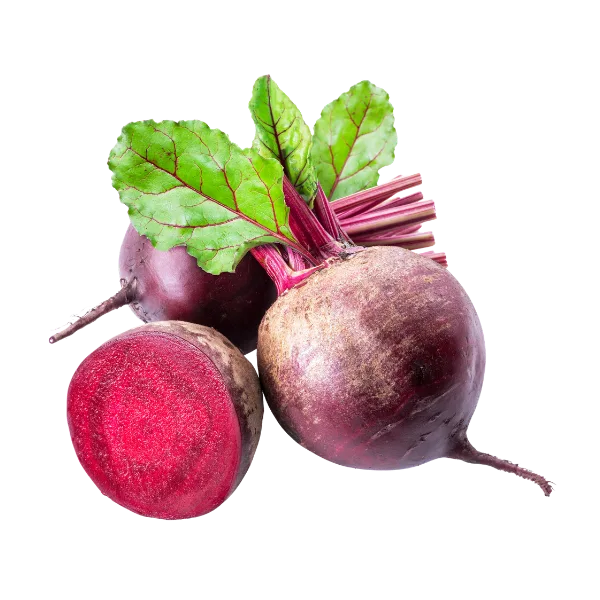
Is Beetroot a trigger for histamine intolerance?
Beetroot scores a 0 out of 3 on the SIGHI Food Compatibility List, placing it in the Safe category.
Beetroot & Histamine, what the evidence says
Beetroot is not considered a significant source of histamine, making it generally suitable for a low-histamine diet. Its main consideration is its oxalate content, which is moderate and may be relevant for people who are prone to kidney stones.
Beetroot gets its deep red color from betalain pigments, mainly betanin. In some people, these pigments are not fully broken down during digestion and can appear in urine or stool as a pink or red color within a few hours after eating beetroot. This is known as beeturia. It is harmless, but it can be mistaken for blood if you are not aware of it.
Beetroot is also a well studied source of dietary nitrates, which the body can convert into nitric oxide, a compound involved in blood vessel relaxation. This effect may be relevant for people monitoring blood pressure, but it is unrelated to histamine.
Does preparation change the risk?
Oxalate content, FODMAP content, and portion size are the main considerations for beetroot.
| Form | Risk Level | Notes |
|---|---|---|
| Cooked, small portion | Low | Cooking reduces oxalate content somewhat compared to raw |
| Canned | Low | Generally lower in FODMAPs than fresh at typical serving sizes |
| Pickled | Moderate | Vinegar-based preservation; check for other added ingredients |
| Raw or juiced | High | Higher oxalate and FODMAP exposure; juicing also concentrates nitrate content |
Note: Risk levels are based on clinical observations and patient reports, not standardized histamine measurements. Individual tolerance varies.
A food score is a reference, not a verdict.
Histamine intolerance is highly individual. A food that triggers symptoms in one person may be tolerated by another, even within the same category.
Strict elimination may help reduce symptoms initially, but long-term progress often depends on gradual reintroduction and pattern recognition. The goal is not to remove more foods over time, but to understand your personal tolerance and expand your diet when possible.
Tracking symptoms, portions, and context such as stress or timing can provide insights that generalized food lists cannot. This is where informed decisions replace fear-based restriction.
How to test your tolerance
 Know about beeturia in advance.
Pink or red urine or stool after eating beets is harmless and affects roughly 10 to 14% of people. Knowing this ahead of time can prevent an unnecessary scare.
 Consider oxalate content if relevant.
Beetroot has a moderate amount of oxalate. If you have a history of kidney stones, this is worth keeping in mind alongside your histamine tracking.
 Check with a doctor if on blood pressure medication.
Beetroot's nitrate content can affect blood pressure. This is a separate consideration from histamine, but worth discussing if you take related medications.
 Cooking may reduce oxalate content somewhat.
Cooked beetroot generally carries a lower oxalate load than raw or juiced beetroot.
 Watch portion size if FODMAPs are a concern.
Beetroot is high in fructans in typical raw servings. Canned beetroot and small portions are generally easier to tolerate.
 Track your response.
Log the form and quantity you use in MyHistaMap to spot your personal pattern.
Common questions about Beetroot and histamine
Is beetroot high in histamine?
No, beetroot isn't linked to meaningful histamine levels.
Why did my urine turn pink after eating beets?
That's beeturia, and it's harmless. It happens because pigment from the beet doesn't get fully broken down before it's excreted. It shows up more often, and more strongly, in people who are iron deficient, since low iron seems to affect how much of that pigment gets absorbed instead of broken down.
Is beeturia a sign of a problem?
No, it's a normal, well-documented, benign phenomenon. That said, if you notice red or pink urine without having eaten beets recently, that's worth checking with a doctor, since it could indicate something else.
Why is beetroot's oxalate content a concern?
Beetroot has a moderate amount of oxalate, mainly a consideration for people with a history of calcium-oxalate kidney stones, not for histamine intolerance specifically.
Does beetroot affect blood pressure?
Beetroot is a well-studied source of dietary nitrates, which the body converts into nitric oxide, a compound involved in relaxing blood vessels. This is unrelated to histamine, but worth knowing if you're on blood pressure medication.
Some people find these options helpful

Supplements are optional tools, not a solution. Personal tracking and identifying your individual triggers remains the priority.

Where this information comes from
At MyHistaMap we curate information from peer reviewed research and recognized medical sources. This guide is a reference tool, not a medical prescription. Always track your own reactions and consult your healthcare provider.
References
- Sauder & Rout, Beeturia, StatPearls (NCBI Bookshelf), 2025: beeturia affects 10-14% of the population, with increased frequency in people who are iron deficient.
- Beeturia and iron absorption, The Lancet, 1999: beeturia occurred in 66-80% of patients with untreated iron-deficiency anemia and resolved in all of them after 8 days of iron therapy.
- Vegetables and Oxalate, Oxalosis and Hyperoxaluria Foundation: reports beets, boiled or steamed, at approximately 57 mg of oxalate per 100 grams and approximately 48 mg in a typical half-cup serving, classified as moderate. The source for this page's oxalate figures.
- How Are Traffic Lights Determined?, Monash University FODMAP Blog: confirms fresh beetroot is high in fructans at typical serving sizes, while canned beetroot tests considerably lower. The source for this page's FODMAP classification.