This content is for informational purposes only and does not constitute medical advice. Always consult a qualified healthcare provider before making dietary changes. Histamine tolerance is highly individual.
This information applies to histamine intolerance, DAO deficiency, and MCAS only. If you have a confirmed food allergy, this content does not apply to you. Food allergies involve the immune system and can be life-threatening. Please consult your allergist.
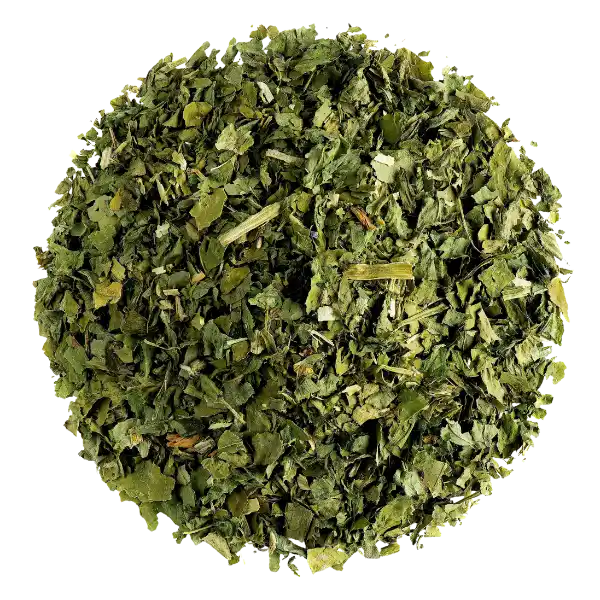
Is Blue fenugreek a trigger for histamine intolerance?
Blue fenugreek scores a 2 out of 3 on the SIGHI Food Compatibility List, placing it in the Moderate category.
Blue fenugreek & Histamine, what the evidence says
Blue fenugreek is considered poorly tolerated for histamine intolerance at typical intake.
Its most significant nutritional consideration is oxalate. Laboratory analysis of dried blue fenugreek herb found an oxalate content of 1.25% by weight, or roughly 1,250 mg per 100 grams. This is exceptionally high for a food. The researchers calculated that consuming 320 to 400 grams of Schabziger cheese flavored with blue fenugreek, or bread made with 2 kg of blue fenugreek-containing flour, would provide about 100 mg of oxalate. These are large amounts that are unlikely in ordinary culinary use, but the finding shows that the herb itself is genuinely high in oxalate and can contribute to the overall oxalate load when used regularly alongside other oxalate-rich foods, teas, or supplements.
Blue fenugreek also contains pinitol, a compound studied for its effects on blood sugar and insulin sensitivity. This is unlikely to be a major consideration from ordinary culinary use, but it is worth keeping in mind with regular or concentrated use alongside diabetes medication, which can also lower blood glucose.
Does preparation change the risk?
Blue fenugreek is a regional herb used in small, specific culinary contexts, but quantity and regularity of use still matter for its oxalate content.
| Form | Risk Level | Notes |
|---|---|---|
| Dried herb, as a seasoning in cheese or bread (traditional small amounts) | Moderate | Poorly tolerated for histamine at typical intake; oxalate contribution is modest at traditional culinary concentrations (2-2.5% in cheese) |
| Regular or larger quantities, alongside other oxalate-rich foods | High | The herb's oxalate content is exceptionally high by weight and can add up meaningfully with regular use |
| ⚠️ Regular or concentrated use if taking diabetes medication | Moderate | Pinitol content has documented blood sugar-lowering effects; worth factoring in alongside medication |
Note: Risk levels are based on clinical observations and patient reports, not standardized histamine measurements. Individual tolerance varies.
A food score is a reference, not a verdict.
Histamine intolerance is highly individual. A food that triggers symptoms in one person may be tolerated by another, even within the same category.
Strict elimination may help reduce symptoms initially, but long-term progress often depends on gradual reintroduction and pattern recognition. The goal is not to remove more foods over time, but to understand your personal tolerance and expand your diet when possible.
Tracking symptoms, portions, and context such as stress or timing can provide insights that generalized food lists cannot. This is where informed decisions replace fear-based restriction.
How to test your tolerance
 Keep amounts modest.
Blue fenugreek is traditionally used in small concentrations (2-2.5% in cheese, a couple grams per 500g of flour in bread). Staying close to traditional amounts keeps oxalate exposure manageable.
 Factor it in if you're managing oxalate intake.
If you're watching oxalate for kidney stones or hyperoxaluria, count blue fenugreek toward your total alongside other oxalate-rich foods, teas, or supplements.
 Check in if you take diabetes medication.
Blue fenugreek contains pinitol, which has documented effects on blood sugar and insulin sensitivity. This mainly matters with regular or concentrated use, not occasional culinary amounts.
 Don't confuse it with fenugreek.
Blue fenugreek (Trigonella caerulea) is a different, more regional plant from common fenugreek (Trigonella foenum-graecum). Don't assume information about one applies to the other.
 Small amounts limit histamine exposure too.
Since blue fenugreek is considered poorly tolerated for histamine intolerance, keeping to the small quantities typical of its traditional use is a reasonable approach.
 Track your response in MyHistaMap.
Log the amount used and any symptoms, since both histamine and oxalate effects are worth distinguishing here.
Common questions about Blue fenugreek and histamine
Is blue fenugreek high in histamine?
It's considered poorly tolerated for histamine intolerance at typical intake.
Is blue fenugreek high in oxalate?
Yes, exceptionally so. Laboratory analysis found the dried herb contains about 1,250 mg of oxalate per 100 grams, one of the higher values measured for any food. Traditional culinary amounts are small, but it's worth factoring in if you're managing oxalate intake.
Can blue fenugreek affect blood sugar?
It contains pinitol, a compound with documented effects on blood sugar and insulin sensitivity. This is more relevant with regular or concentrated use, particularly alongside diabetes medication.
Is blue fenugreek the same as regular fenugreek?
No, they're different plants. Blue fenugreek is Trigonella caerulea, a regional Alpine herb; common fenugreek is Trigonella foenum-graecum, widely used in curry blends. They're not interchangeable.
Some people find these options helpful





Supplements are optional tools, not a solution. Personal tracking and identifying your individual triggers remains the priority.
Where this information comes from
At MyHistaMap we curate information from peer reviewed research and recognized medical sources. This guide is a reference tool, not a medical prescription. Always track your own reactions and consult your healthcare provider.
References
- SIGHI (Swiss Interest Group Histamine Intolerance) Food Compatibility List: classifies blue fenugreek (Trigonella caerulea) with a histamine score of 2 (incompatible, significant symptoms at usual intake).
- Ayvazyan A, Stegemann T, Galarza Pérez M, Pramsohler M, Çiçek SS, Phytochemical Profile of Trigonella caerulea (Blue Fenugreek) Herb and Quantification of Aroma-Determining Constituents, Plants, 2023: direct laboratory measurement (citing Siener, Seidler & Hönow, 2021) placing dried blue fenugreek herb oxalate content at 1.25% by weight, and calculating that 320-400g of blue fenugreek-flavored Schabziger cheese, or bread made with 2kg of blue fenugreek-containing flour, would provide the 100mg daily oxalate limit typically recommended for people with hyperoxaluria. This study also identified pinitol as a major carbohydrate constituent of the herb. The source for this page's oxalate and pinitol sections.
- Hernández-Mijares A et al., A Single Acute Dose of Pinitol from a Naturally-Occurring Food Ingredient Decreases Hyperglycaemia and Circulating Insulin Levels in Healthy Subjects, Food Chemistry, 2013: clinical study confirming pinitol's blood sugar and insulin-lowering effects in humans. The source for this page's note on pinitol's relevance alongside diabetes medication.