This content is for informational purposes only and does not constitute medical advice. Always consult a qualified healthcare provider before making dietary changes. Histamine tolerance is highly individual.
This information applies to histamine intolerance, DAO deficiency, and MCAS only. If you have a confirmed food allergy, this content does not apply to you. Food allergies involve the immune system and can be life-threatening. Please consult your allergist.
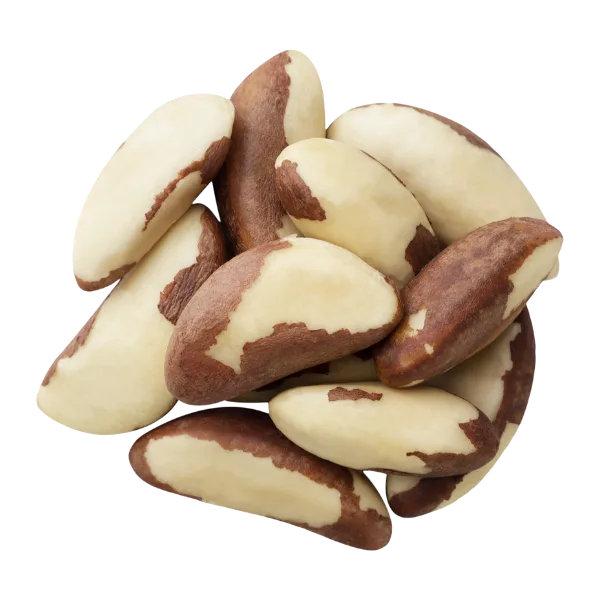
Is Brazil nut a trigger for histamine intolerance?
Brazil nut scores a 0 out of 3 on the SIGHI Food Compatibility List, placing it in the Safe category.
Brazil nut & Histamine, what the evidence says
Brazil nuts are not associated with meaningful histamine content on compatibility reference lists. They carry a separate nutritional consideration because they are exceptionally high in selenium, one of the richest dietary sources of this trace mineral. Laboratory analysis has measured selenium content in the range of 28 to 49 mg per kg, although the amount can vary considerably between individual nuts. Researchers have calculated that a standard 30 g serving can meet or exceed the recommended daily allowance for selenium and, in some cases, the tolerable upper intake level of 400 mcg per day.
This is important because selenium is essential in small amounts, but regular excessive intake can lead to selenosis. Symptoms can include hair loss, brittle nails, gastrointestinal upset, and, in severe cases, more serious effects. A study of preschool children in a selenium-rich region of Brazil who received Brazil nuts as part of school meals found that selenium intake reached potentially toxic levels on days when the nuts were included, although no clinical symptoms of selenium overload were observed in the study.
Does preparation change the risk?
Selenium content, not histamine, is the main variable to watch with Brazil nuts. How many you eat, and how often, matters more than the form.
| Form | Risk Level | Notes |
|---|---|---|
| 1-2 nuts, occasional | Low | Not associated with meaningful histamine content; a reasonable way to meet selenium needs |
| A small handful (5+ nuts), daily | Moderate | Regular servings at this size can approach or exceed the tolerable upper selenium intake |
| Large servings or daily overconsumption | High | Risk of selenosis from cumulative selenium intake, unrelated to histamine |
Note: Risk levels are based on clinical observations and patient reports, not standardized histamine measurements. Individual tolerance varies.
A food score is a reference, not a verdict.
Histamine intolerance is highly individual. A food that triggers symptoms in one person may be tolerated by another, even within the same category.
Strict elimination may help reduce symptoms initially, but long-term progress often depends on gradual reintroduction and pattern recognition. The goal is not to remove more foods over time, but to understand your personal tolerance and expand your diet when possible.
Tracking symptoms, portions, and context such as stress or timing can provide insights that generalized food lists cannot. This is where informed decisions replace fear-based restriction.
How to test your tolerance
 Treat them more like a supplement than a snack.
A few Brazil nuts a day can meet your full selenium needs. Eating a whole bag at once offers no extra benefit and raises the risk of excessive intake.
 Know the numbers.
A standard 30 g serving can meet or exceed both the recommended daily allowance and, in some cases, the tolerable upper intake level for selenium.
- Selenium content varies nut to nut.
Selenium levels can vary considerably between individual Brazil nuts, so exact intake from a handful is hard to predict precisely.
- Watch for signs of overload if eating them regularly.
Hair loss, brittle nails, and gastrointestinal upset can signal selenosis with regular excessive intake, unrelated to histamine.
 Track your response.
Log how many Brazil nuts you eat and how often using MyHistaMap, since frequency matters more than any single serving here.
Common questions about Brazil nut and histamine
Are Brazil nuts high in histamine?
No, Brazil nuts are not associated with meaningful histamine content on compatibility reference lists.
Why are Brazil nuts singled out among nuts?
They are exceptionally high in selenium, one of the richest dietary sources of this trace mineral. A standard 30 g serving can meet or exceed the daily recommended intake, and regular overconsumption can lead to selenium toxicity.
How many Brazil nuts is too many?
Selenium content varies considerably between individual nuts, so there's no single precise number, but researchers have calculated that a standard 30 g serving can approach or exceed the tolerable upper intake level. Treating them as an occasional food rather than a daily handful is a reasonable approach.
What are the symptoms of eating too many Brazil nuts regularly?
Selenosis from excess selenium intake can cause hair loss, brittle nails, and gastrointestinal upset. This is unrelated to histamine intolerance.
Some people find these options helpful





Supplements are optional tools, not a solution. Personal tracking and identifying your individual triggers remains the priority.
Where this information comes from
At MyHistaMap we curate information from peer reviewed research and recognized medical sources. This guide is a reference tool, not a medical prescription. Always track your own reactions and consult your healthcare provider.
References
- Lima LW, Stonehouse GC, Walters C, El Mehdawi AF, Fakra SC, Pilon-Smits EAH, Selenium Accumulation, Speciation and Localization in Brazil Nuts, Plants (MDPI), 2019: measured selenium levels between 28 and 49 mg/kg with up to 8-fold seed-to-seed variation, and calculated that a 30 g serving may exceed the tolerable daily intake or toxicity threshold depending on the nut. The primary source for this page's selenium figures.
- Palmer IS, Herr A, Nelson T, Toxicity of Selenium in Brazil Nuts to Rats, Journal of Food Science, 1982: found high-selenium Brazil nut meal produced toxicity comparable to other dietary selenium sources in animal testing. The source for this page's note on selenium's biological potency in Brazil nuts.
- Martens IBG et al., Selenium status in preschool children receiving a Brazil nut-enriched diet, Nutrition, 2015: found selenium intake reached potentially toxic levels in preschool children on days when Brazil nuts were included in school meals, though no clinical selenosis symptoms were observed. The source for this page's real-world example of selenium intake from Brazil nut consumption.
- Monash University FODMAP Team, Brazil nuts: newly tested for FODMAP content, 2014: lab testing rating Brazil nuts low FODMAP at a full 10-nut (40 g) serving, with only very large servings (over 100 g) reaching high FODMAP levels.