This content is for informational purposes only and does not constitute medical advice. Always consult a qualified healthcare provider before making dietary changes. Histamine tolerance is highly individual.
This information applies to histamine intolerance, DAO deficiency, and MCAS only. If you have a confirmed food allergy, this content does not apply to you. Food allergies involve the immune system and can be life-threatening. Please consult your allergist.
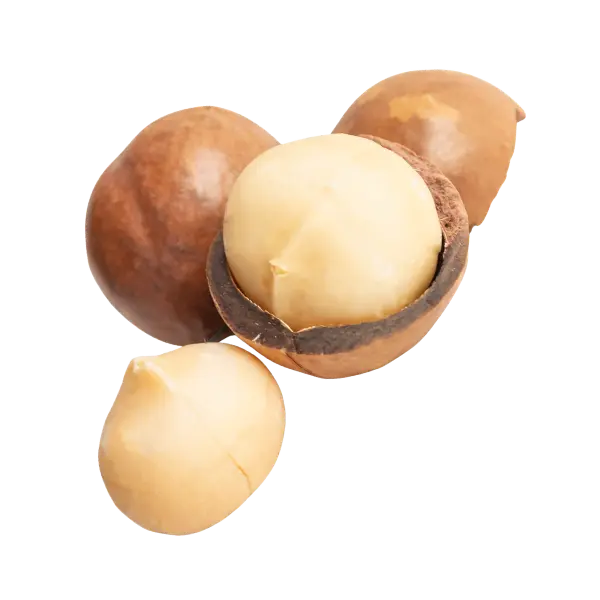
Is Macadamia a trigger for histamine intolerance?
Macadamia scores a 0 out of 3 on the SIGHI Food Compatibility List, placing it in the Safe category.
Macadamia & Histamine, what the evidence says
Macadamia is not associated with meaningful histamine content and is not reported as a histamine liberator, which places it favorably among nuts for a low-histamine approach. Nutritionally, it is particularly rich in monounsaturated fat, with a large proportion of that fat coming from oleic acid and palmitoleic acid (omega-7), a fatty acid found in relatively few other foods.
Macadamia also contains tocotrienols, a form of vitamin E, and squalene, both of which have antioxidant properties. These are general nutritional characteristics rather than effects specific to histamine metabolism. Roasting changes the measurable levels of some of these compounds. Direct laboratory analysis found that roasting increased the available squalene and total phenolic content of macadamia kernels, while tocotrienol content decreased slightly. These changes reflect measurable effects of roasting on the chemical composition of the nuts.
Because macadamia is very high in oil, it is susceptible to oxidative rancidity and other quality changes when stored under unsuitable conditions. Research on macadamia processing has found that excessive moisture and high temperatures during storage can promote internal deterioration and initiate lipid oxidation, making proper drying and storage important for preserving quality.
Does preparation change the risk?
Freshness and roasting method are the main variables that affect tolerance.
| Form | Risk Level | Notes |
|---|---|---|
| Raw macadamia | Low | Generally the best-tolerated form from a histamine standpoint. |
| Dry-roasted | Low | Roasting increases available phenolic and squalene content and does not meaningfully change histamine levels. |
| Oil-roasted / salted | Moderate | Added oils and seasonings may introduce independent triggers. |
| Macadamia butter | Moderate | Concentrated form; check for added ingredients. |
Note: Risk levels are based on clinical observations and patient reports, not standardized histamine measurements. Individual tolerance varies.
A food score is a reference, not a verdict.
Histamine intolerance is highly individual. A food that triggers symptoms in one person may be tolerated by another, even within the same category.
Strict elimination may help reduce symptoms initially, but long-term progress often depends on gradual reintroduction and pattern recognition. The goal is not to remove more foods over time, but to understand your personal tolerance and expand your diet when possible.
Tracking symptoms, portions, and context such as stress or timing can provide insights that generalized food lists cannot. This is where informed decisions replace fear-based restriction.
How to test your tolerance
 Choose raw or plain roasted.
Skip flavored, honey-glazed, or spice-coated varieties, which often introduce unrelated triggers.
 Check freshness.
Its high monounsaturated fat content means macadamia can turn rancid if not stored well, which may cause its own symptoms unrelated to histamine.
 Roasting changes more than flavor.
Roasting measurably increases phenolic and squalene content while slightly reducing tocotrienol content. Neither direction is a histamine concern.
- Avoid flavored blends.
Honey-roasted or chocolate-covered versions add ingredients that are independent variables in your reaction.
 Store away from heat and light.
Cool, dark, airtight storage slows oxidation and helps macadamia stay fresh longer.
 Track your response.
Log the quantity and form you tried using the MyHistaMap app to build a clearer picture over time.
Common questions about Macadamia and histamine
Are macadamia nuts high in histamine?
No. Macadamia is not associated with meaningful histamine content and is not commonly reported as a liberator.
What makes macadamia nutritionally different from other nuts?
It's particularly rich in monounsaturated fat, largely from oleic acid and palmitoleic acid, the latter a fatty acid rarely found in significant amounts elsewhere in the diet.
Does roasting change macadamia's nutritional profile?
Yes. Laboratory analysis found roasting increases available phenolic and squalene content, while tocotrienol content decreases slightly. Histamine levels are not meaningfully affected either way.
Why might I still react to macadamia despite its low histamine profile?
If a reaction occurs, it's worth considering other factors like added ingredients, oil, seasoning, or freshness and rancidity rather than the macadamia itself.
Some people find these options helpful

Supplements are optional tools, not a solution. Personal tracking and identifying your individual triggers remains the priority.
Where this information comes from
At MyHistaMap we curate information from peer reviewed research and recognized medical sources. This guide is a reference tool, not a medical prescription. Always track your own reactions and consult your healthcare provider.
References
- A review of biological functions, health benefits, and possible de novo biosynthetic pathway of palmitoleic acid in macadamia nuts, Trends in Food Science & Technology, 2019: macadamia oil is high in monounsaturated fatty acids, with palmitoleic acid as the second most abundant fatty acid after oleic acid.
- Fatty acid profile, tocopherol, squalene and phytosterol content of walnuts, almonds, peanuts, hazelnuts and the macadamia nut, International Journal of Food Sciences and Nutrition, 2004: macadamia nut oil was confirmed to contain tocopherols, tocotrienols, and squalene alongside its distinctive fatty acid profile.
- Tu XH, Wu BF, Xie Y, et al. A comprehensive study of raw and roasted macadamia nuts: Lipid profile, physicochemical, nutritional, and sensory properties, Food Science & Nutrition, 2021: direct laboratory measurement finding roasting increased available squalene and total phenolic content in macadamia kernels, while tocotrienol content decreased slightly. The source for this page's section on roasting-related nutritional changes.