This content is for informational purposes only and does not constitute medical advice. Always consult a qualified healthcare provider before making dietary changes. Histamine tolerance is highly individual.
This information applies to histamine intolerance, DAO deficiency, and MCAS only. If you have a confirmed food allergy, this content does not apply to you. Food allergies involve the immune system and can be life-threatening. Please consult your allergist.
Is Curd cheese a trigger for histamine intolerance?
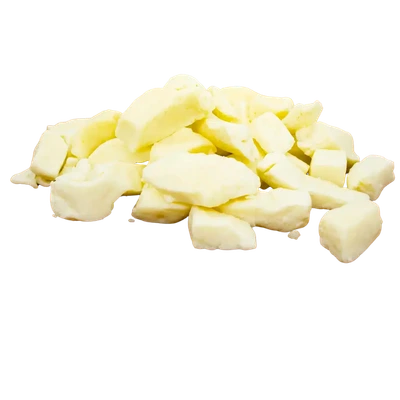
Curd cheese scores a 0 out of 3 on the SIGHI Food Compatibility List, placing it in the Safe category.
Curd cheese & Histamine, what the evidence says
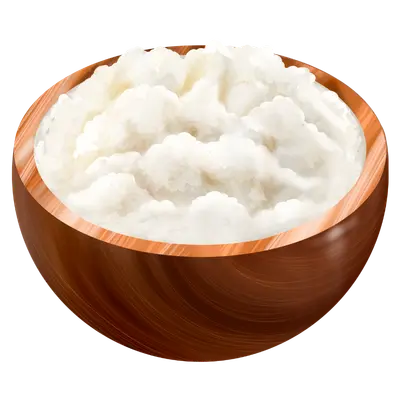
Curd cheese is a fresh, unripened cheese, so there is less time for histamine and other compounds to build up during production. It is made by adding an acid or starter culture to milk, causing the milk proteins to separate into curds. Studies of fresh and unripened cheeses generally find much lower levels of these compounds than in mature cheeses, although the amounts can still vary depending on the cultures used and how the cheese is made.
Lactose is a separate consideration. Because curd cheese is fresh, it contains more lactose than many aged cheeses, where much of the lactose is removed during cheese production and fermentation. Curd cheese and quark have not been studied for FODMAP content as extensively as some other cheeses, but one tested curd cheese contained about 2.9 g of lactose per 100 g. Smaller portions provide less lactose, while larger amounts are more likely to cause digestive symptoms in people who have difficulty digesting it.
Some commercial varieties may also contain thickeners, stabilizers, or preservatives. These ingredients are unrelated to histamine, but some people may experience digestive discomfort from specific additives.
The cultures used to make curd cheese can also vary. Some bacterial strains can produce histamine, while others produce little or none and some may even break it down. This means that seeing "live cultures" on a label does not tell you whether those bacteria produce histamine. Their ability to produce or break down these compounds depends on the particular strains used.
Does preparation change the risk?
Freshness and ingredient simplicity are the most relevant factors for curd cheese. Portion size matters for lactose across all forms.
| Form | Risk Level | Notes |
|---|---|---|
| Fresh / Plain | Low | Minimal processing; no significant amines within a standard serving |
| Dry Curd | Low | Reduced whey content; generally well tolerated |
| Flavored | Moderate | Added ingredients may act as independent triggers |
| Preserved | Moderate | Added salts or acids to extend shelf life |
Note: Risk levels are based on clinical observations and patient reports, not standardized histamine measurements. Individual tolerance varies.
A food score is a reference, not a verdict.
Histamine intolerance is highly individual. A food that triggers symptoms in one person may be tolerated by another, even within the same category.
Strict elimination may help reduce symptoms initially, but long-term progress often depends on gradual reintroduction and pattern recognition. The goal is not to remove more foods over time, but to understand your personal tolerance and expand your diet when possible.
Tracking symptoms, portions, and context such as stress or timing can provide insights that generalized food lists cannot. This is where informed decisions replace fear-based restriction.
How to test your tolerance
 Additive scrutiny.
Select products containing only milk, cream, and active cultures.
 Freshness protocol.
Consume as soon as possible after purchase to avoid spoilage.
- Mind the portion for lactose.
Small portions are generally better tolerated. Opt for lactose-free versions if bloating or digestive distress occurs with larger amounts.
 Storage protocol.
Keep strictly refrigerated; temperature fluctuations can encourage early microbial activity.
 Tracking protocol.
Use MyHistaMap to monitor tolerance compared to other fresh dairy.
Common questions about Curd cheese and histamine
Is curd cheese safer than cottage cheese?
Both are fresh, unaged cheeses with similarly low histamine profiles. The choice generally depends on personal preference and individual lactose tolerance.
Does curd cheese contain biogenic amines?
In its fresh state, levels tend to be negligible since no maturation occurs. The starter culture used can still matter, since some strains produce histamine while others don't.
How much curd cheese is considered low FODMAP?
Curd cheese hasn't been directly lab-tested for FODMAP content the way some other cheeses have. Based on its lactose content, a couple of tablespoons is a reasonable starting portion, while larger amounts are more likely to contain enough lactose to cause digestive symptoms in people who have trouble digesting it.
Can curd cheese be consumed during a flare-up?
Individual tolerance varies; the lactose load may influence the overall digestive response during sensitive periods.
Some people find these options helpful
Supplements are optional tools, not a solution. Personal tracking and identifying your individual triggers remains the priority.
Where this information comes from
At MyHistaMap we curate information from peer reviewed research and recognized medical sources. This guide is a reference tool, not a medical prescription. Always track your own reactions and consult your healthcare provider.
References
- Novella-Rodríguez et al., Distribution of Biogenic Amines and Polyamines in Cheese, Journal of Food Science, 2003: measured biogenic amines and polyamines in unripened cheese and four types of ripened cheese, finding all amines lower in unripened cheese, and concluded unripened cheeses could be considered well-tolerated for histamine- and tyramine-sensitive individuals. The source for this page's note that fresh, unripened cheeses generally have much lower biogenic amine levels than mature cheeses.
- Lactose content of cheese, compiled from Monash University Low FODMAP app data, Food Standards Australia New Zealand NUTTAB Database, and USDA Natural Nutrient Database: reports quark (low fat) at 2.9g lactose per 100g, noting it has not been directly lab-tested for FODMAP content by Monash and that, depending on the product and serving size, it could be moderate. The source for this page's lactose figure and its note that curd cheese/quark's FODMAP status is an estimate rather than a direct lab result.
- Cavaliere et al., Potential Role of Probiotic Strain Lactiplantibacillus plantarum in Control of Histamine Metabolism, Biology, 2025: found L. plantarum LP115 increased DAO secretion and reduced histamine levels in intestinal cell culture, and cites documented histamine-producing strains such as L. reuteri and L. delbrueckii subsp. bulgaricus, illustrating that the ability to produce or degrade histamine is strain-dependent rather than uniform across lactic acid bacteria. The source for this page's note that starter culture strains vary in their effect on histamine.