This content is for informational purposes only and does not constitute medical advice. Always consult a qualified healthcare provider before making dietary changes. Histamine tolerance is highly individual.
This information applies to histamine intolerance, DAO deficiency, and MCAS only. If you have a confirmed food allergy, this content does not apply to you. Food allergies involve the immune system and can be life-threatening. Please consult your allergist.
Is Spinach a trigger for histamine intolerance?
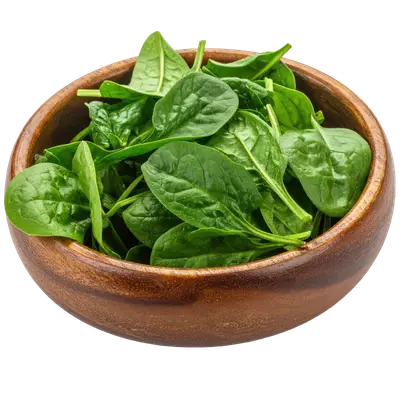
Spinach scores a 2 out of 3 on the SIGHI Food Compatibility List, placing it in the Moderate category.
Spinach & Histamine, what the evidence says
Spinach is one of the fresh vegetables in which measurable amounts of naturally occurring histamine have been documented. Direct measurements in market samples have found histamine ranging from roughly 9.5 to 69.7 mg/kg, with considerable variation between samples. These levels are among the higher amounts reported for non-fermented plant foods.
Histamine levels in spinach have also been shown to increase during refrigerated storage. In one study, histamine increased during storage at 6°C in most trials, although levels decreased again toward the end in two of them. This suggests that storage conditions and freshness can make a meaningful difference in the amount present in a particular batch.
Spinach is also high in oxalates, which may contribute to symptoms in some individuals, although this is a separate consideration from histamine. The combination of measurable histamine and high oxalate content makes spinach particularly relevant for people who are tracking more than one potential dietary trigger.
Because the measured histamine content varies substantially between samples, individual experiences with spinach can also differ. For someone testing their tolerance, the freshness of the spinach and the amount eaten are therefore useful factors to track.
Does preparation change the risk?
Freshness and storage conditions play a major role in histamine levels for spinach.
| Form | Risk Level | Notes |
|---|---|---|
| Fresh (very fresh) | Moderate | May be tolerated in small amounts if consumed immediately |
| Refrigerated (stored) | High | Measured histamine content increases during refrigerated storage |
| Cooked | High | Heat does not reduce histamine already present |
| Frozen | Moderate | Freezing may slow further histamine formation if done quickly after harvest |
Note: Risk levels are based on clinical observations and patient reports, not standardized histamine measurements. Individual tolerance varies.
A food score is a reference, not a verdict.
Histamine intolerance is highly individual. A food that triggers symptoms in one person may be tolerated by another, even within the same category.
Strict elimination may help reduce symptoms initially, but long-term progress often depends on gradual reintroduction and pattern recognition. The goal is not to remove more foods over time, but to understand your personal tolerance and expand your diet when possible.
Tracking symptoms, portions, and context such as stress or timing can provide insights that generalized food lists cannot. This is where informed decisions replace fear-based restriction.
How to test your tolerance
 Prioritize freshness.
If testing, use spinach that is as fresh as possible, ideally the same day it was purchased.
 Avoid leftovers.
Measured histamine levels increase during storage. Cooked spinach left overnight is generally not recommended.
 Start with very small amounts.
Especially if you are highly sensitive. Observe your reaction before increasing the portion.
 Avoid combining with other high-histamine foods.
This helps isolate your response to spinach specifically.
- Consider alternative greens first.
Lettuce or other low-histamine greens may be easier to tolerate during early reintroduction.
 Track your response carefully.
Note timing, quantity, and preparation method. Look for patterns across multiple trials using MyHistaMap.
Common questions about Spinach and histamine
Is spinach high in histamine?
It's one of the few fresh vegetables where measurable, naturally occurring histamine has been documented, with levels varying considerably between samples.
Why does spinach trigger symptoms?
It naturally contains measurable histamine, and levels are sensitive to storage conditions, which can increase amounts over time.
Is cooked spinach better than raw?
Not really. Cooking does not reduce histamine already present. Freshness matters more than whether it's raw or cooked.
Can I eat spinach with histamine intolerance?
Some individuals may tolerate very fresh spinach in small amounts, but many choose to limit or avoid it, especially during early stages, given how much measured histamine content can vary.
Is frozen spinach a better option?
Frozen spinach may be better tolerated than stored fresh spinach if it was frozen quickly after harvest, as freezing may slow further histamine formation.
Some people find these options helpful

Supplements are optional tools, not a solution. Personal tracking and identifying your individual triggers remains the priority.
Where this information comes from
At MyHistaMap we curate information from peer reviewed research and recognized medical sources. This guide is a reference tool, not a medical prescription. Always track your own reactions and consult your healthcare provider.
References
- Lavizzari et al., Occurrence of Biogenic Amines and Polyamines in Spinach and Changes During Storage Under Refrigeration, Journal of Agricultural and Food Chemistry, 2007: measured histamine in 18 market samples of spinach at levels ranging from 9.5 to 69.7 mg/kg, and found that histamine content significantly increased during storage at 6°C in most trials, though it decreased again toward the end of storage in two of them. This is the source for the histamine range and storage-related pattern referenced on this page.
- Sánchez-Pérez et al., Biogenic Amines in Plant-Origin Foods: Are They Frequently Underestimated in Low-Histamine Diets?, Foods (MDPI), 2019: identifies spinach, along with eggplant, tomato, and avocado, as the only nonfermented plant-origin foods with significant, naturally occurring histamine levels, each showing great variability in content. This is the source for spinach's classification as a naturally histamine-containing vegetable referenced on this page.