This content is for informational purposes only and does not constitute medical advice. Always consult a qualified healthcare provider before making dietary changes. Histamine tolerance is highly individual.
This information applies to histamine intolerance, DAO deficiency, and MCAS only. If you have a confirmed food allergy, this content does not apply to you. Food allergies involve the immune system and can be life-threatening. Please consult your allergist.
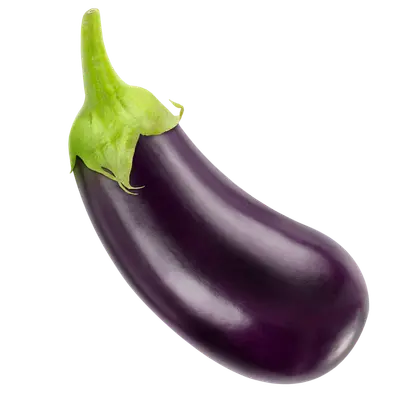
Is Eggplant a trigger for histamine intolerance?
Eggplant scores a 2 out of 3 on the SIGHI Food Compatibility List, placing it in the Moderate category. Some reference sources also suggest it may be a histamine liberator, though even the source itself describes this as unconfirmed or suspected.
Eggplant & Histamine, what the evidence says
Eggplant is one of the few vegetables with actual measured histamine content backing its classification, rather than relying only on clinical observation. A study using fluorometry measured histamine directly across four eggplant varieties, finding levels ranging from 0.89 to 2.41 mg per 100 g. The green round variety consistently measured highest, while the purple round variety had the lowest level. This shows that histamine content can vary substantially between eggplant varieties.
Cooking barely changes this. The same study found only an 11 to 14% reduction in histamine after cooking, suggesting that most of the histamine already present in eggplant remains after heat treatment. Frying, roasting, or boiling therefore won't meaningfully remove it.
Eggplant reactions have also been studied separately from conventional food allergy. In a study of 741 people in India, 9.2% reported adverse reactions after eating eggplant, while 1.4% experienced symptoms within two hours. Only 0.8% of the participants were found to have detectable eggplant-specific IgE, leading the researchers to suggest that some reported reactions could involve histamine or other non-protein components rather than a conventional IgE-mediated allergy. A separate study found that some non-atopic people with greater sensitivity to histamine could have positive skin-prick responses to eggplant extracts, potentially leading to a misdiagnosis of eggplant allergy. Importantly, however, the amount of histamine naturally present in eggplant was not enough to produce a positive skin-prick response in most non-atopic subjects.
True eggplant allergy is also possible. Subsequent research has identified several eggplant proteins capable of triggering IgE responses, including a profilin allergen known as Sola m 1, with several other allergens found particularly in the peel. So a reaction to eggplant should not automatically be assumed to be caused by histamine intolerance; genuine food allergy and sensitivity to histamine can produce different reactions and have different mechanisms.
Does preparation change the risk?
Preparation method has little effect on eggplant's histamine content, since the histamine measured in eggplant is largely heat-stable. Variety and freshness matter more than cooking method.
| Form | Risk Level | Notes |
|---|---|---|
| Fresh | Moderate | Measured histamine content varies substantially by variety; often tolerated in small portions |
| Cooked | Moderate | Cooking only reduces histamine content by about 11 to 14%; most of it remains after cooking |
| Fried / Roasted | Moderate | Histamine content is similar to other cooked forms; combining with oils doesn't add histamine but may affect symptom perception for some |
| Frozen | Moderate | Freezing is unlikely to significantly change the measured histamine content |
| Canned | High | Storage and preservation may add further histamine or amine formation on top of the eggplant's own content |
Note: Risk levels are based on clinical observations and patient reports, not standardized histamine measurements. Individual tolerance varies.
A food score is a reference, not a verdict.
Histamine intolerance is highly individual. A food that triggers symptoms in one person may be tolerated by another, even within the same category.
Strict elimination may help reduce symptoms initially, but long-term progress often depends on gradual reintroduction and pattern recognition. The goal is not to remove more foods over time, but to understand your personal tolerance and expand your diet when possible.
Tracking symptoms, portions, and context such as stress or timing can provide insights that generalized food lists cannot. This is where informed decisions replace fear-based restriction.
How to test your tolerance
 Variety matters.
Histamine content has been measured to vary substantially between eggplant varieties, with some testing nearly three times higher than others. If you react, it may be worth trying a different variety before ruling out eggplant altogether.
 Start with small portions.
Especially if you are highly sensitive. Begin with a small amount and wait 24 to 48 hours to observe any reaction before increasing.
 Avoid combining with other high-histamine foods.
Combining eggplant with other liberators or high-histamine foods can push you over your threshold. Test it in isolation first to accurately assess your personal response.
 Consider your preparation method.
Frying, roasting, or mixing with oils may increase symptom perception for some individuals. Simpler preparations may be better tolerated.
- Consider salicylate sensitivity separately.
Eggplant is high in salicylates. If you also react to aspirin or other salicylate-rich foods, this is worth tracking apart from histamine.
 Track your response carefully.
Note the portion size, preparation method, and timing of any symptoms. Look for patterns across multiple trials using MyHistaMap.
Common questions about Eggplant and histamine
Does the ripeness of eggplant affect reactions?
Variety appears to matter more than ripeness specifically. Measured histamine content has been found to differ substantially between eggplant varieties, which may help explain why reactions are inconsistent from one eggplant to another.
Why does eggplant trigger histamine symptoms?
Unlike many foods on histamine intolerance lists, eggplant's histamine content has actually been measured directly in lab studies, with real variation between varieties.
Does cooking eggplant reduce its histamine content?
Only slightly. A study measuring histamine directly found just an 11 to 14% reduction after cooking, confirming that histamine in eggplant is largely heat-stable.
Is eggplant high in salicylates too?
Yes, it's considered high in salicylates, a separate consideration from histamine, worth knowing if you're also managing salicylate sensitivity.
Is a reaction to eggplant always histamine intolerance?
No. True eggplant allergy also exists, with specific proteins identified, including a profilin called Sola m 1 and other allergens concentrated mainly in the peel. Histamine sensitivity and genuine allergy are different mechanisms and can look different from each other.
Can I eat eggplant with histamine intolerance?
Some individuals tolerate small, fresh portions without symptoms, while others may react even to minimal intake. Since histamine content varies by variety, testing small amounts of different types and tracking your response is the recommended approach.
Some people find these options helpful
Supplements are optional tools, not a solution. Personal tracking and identifying your individual triggers remains the priority.
Where this information comes from
At MyHistaMap we curate information from peer reviewed research and recognized medical sources. This guide is a reference tool, not a medical prescription. Always track your own reactions and consult your healthcare provider.
References
- Harish Babu et al., Higher Histamine Sensitivity in Non-atopic Subjects by Skin Prick Test May Result in Misdiagnosis of Eggplant Allergy, Immunological Investigations, 2008: measured histamine directly in four eggplant varieties using fluorometry, finding levels from 0.89 to 2.41 mg per 100g, with only an 11 to 14% reduction after cooking. The source for this page's histamine concentration and cooking-stability figures.
- Harish Babu, Mahesh & Venkatesh, A Cross-Sectional Study on the Prevalence of Food Allergy to Eggplant (Solanum melongena L.) Reveals Female Predominance, Clinical & Experimental Allergy, 2008: found 9.2% of 741 subjects in India reported adverse reactions to eggplant, while only 0.8% had detectable eggplant-specific IgE. The source for this page's figures on eggplant reaction prevalence and the gap with confirmed IgE allergy.
- Oxalate Content of Egyptian Grown Fruits and Vegetables and Daily Common Herbs, Journal of Food Research, 2014: classifies eggplant in the moderate oxalate concentration group, at 10 to 25 mg oxalic acid per 100 g fresh weight. The source for this page's oxalate classification.
- RPAH Elimination Diet Handbook, Swain, Soutter & Loblay, Royal Prince Alfred Hospital Allergy Unit, 2011: classifies eggplant among vegetables high in salicylates. The source for this page's salicylate classification.
- Identification, Cloning, and Immunological Studies on a Major Eggplant Allergen Sola m 1: A New Member of Profilin Allergen Family, 2020: identified a 17 kDa profilin, Sola m 1, that reacted with IgE antibodies in all tested eggplant-allergic patients and displayed genuine allergenic activity. The source for this page's eggplant allergy section.
- IgE Response to Two New Allergen Proteins of Solanum melongena L. (Eggplant), ScienceDirect: identified polyphenol oxidase proteins as additional eggplant allergens, with most allergens concentrated in the peel rather than the pulp. The source for this page's note on peel-concentrated allergens.