
This content is for informational purposes only and does not constitute medical advice. Always consult a qualified healthcare provider before making dietary changes. Histamine tolerance is highly individual.
This information applies to histamine intolerance, DAO deficiency, and MCAS only. If you have a confirmed food allergy, this content does not apply to you. Food allergies involve the immune system and can be life-threatening. Please consult your allergist.
Is Geheimratskaese a trigger for histamine intolerance?
Geheimratskaese scores a 0 out of 3 on the SIGHI Food Compatibility List, placing it in the Safe category.
Geheimratskaese & Histamine, what the evidence says
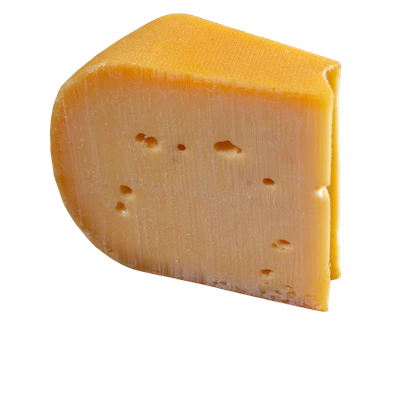
Geheimratskäse is a semi-hard, pasteurized cow's milk cheese from Upper Austria. It is matured for a relatively short period compared with harder cheeses that are aged for many months or years, such as aged Cheddar or Parmesan. For people sensitive to histamine, this is relevant because the longer a cheese matures, the more time microorganisms have to produce and accumulate histamine and other compounds.
There is no published research specifically measuring the histamine content of Geheimratskäse, so its exact histamine level has not been established. Its relatively short aging time provides a reasonable basis for expecting less accumulation than in much older cheeses, but this is an inference rather than a direct measurement. The amount can also vary depending on the microorganisms involved and the conditions used to make and store the cheese.
Storage is another consideration because these compounds can change depending on how a cheese is handled after production. Individual tolerance can also vary from one person to another.
Does preparation change the risk?
Geheimratskäse is typically sold as a single standardized product with a relatively short maturation period, rather than in a range of aging levels like some other semi-hard cheeses. Its shorter aging time relative to hard, long-matured cheeses is the main reason to expect a potentially lower biogenic amine load, though this hasn't been directly measured.
| Form | Risk Level | Notes |
|---|---|---|
| Standard block | Low | Relatively short maturation period for a semi-hard cheese; histamine content not directly measured. |
| Pre-sliced / packaged | Low | Same underlying cheese; check the label for added preservatives. |
| If aged beyond the standard period | Moderate | Would follow the same pattern as other semi-hard cheeses, with amine levels potentially rising the longer it ripens. |
Note: Risk levels are based on clinical observations and patient reports, not standardized histamine measurements. Individual tolerance varies.
A food score is a reference, not a verdict.
Histamine intolerance is highly individual. A food that triggers symptoms in one person may be tolerated by another, even within the same category.
Strict elimination may help reduce symptoms initially, but long-term progress often depends on gradual reintroduction and pattern recognition. The goal is not to remove more foods over time, but to understand your personal tolerance and expand your diet when possible.
Tracking symptoms, portions, and context such as stress or timing can provide insights that generalized food lists cannot. This is where informed decisions replace fear-based restriction.
How to test your tolerance
 Check the origin.
Geheimratskäse is an Austrian semi-hard cheese (Schnittkäse) with a relatively short maturation period compared to hard, long-aged cheeses.
 Safe storage.
Keep it well-wrapped in the refrigerator to help prevent external mold growth, which could introduce amines.
 Culinary use.
Its relatively short aging time makes it a reasonable substitute for standard aged Gouda or Edam in recipes calling for a semi-hard melting cheese.
 Fresh slicing.
Whenever possible, buy the block and slice it as needed to maintain freshness.
 Tracking protocol.
Use the MyHistaMap app to confirm that your individual tolerance remains stable over time.
Common questions about Geheimratskaese and histamine
Is it suitable for those with tyramine sensitivity?
There's no published research measuring tyramine specifically in Geheimratskäse. Its relatively short aging time gives a reasonable basis for expecting lower levels than harder, longer-aged cheeses, but this is an inference, not confirmed data.
Why is it recommended as a substitute for Gouda?
It offers a similar creamy texture and mild flavor, and its shorter aging time gives it a reasonable edge over standard aged Gouda, which typically matures much longer and has more time to accumulate biogenic amines.
Are there any specific additives to watch for?
It's worth checking the label for lysozyme (E1105) if you have an egg allergy, or nitrates (E251/E252), which can sometimes be used in industrial batches, as with other semi-hard cheeses.
How should I reintroduce this after an elimination phase?
Starting with a small, 20g portion outside of any flare-up period can help you verify how your own system responds to it.
Some people find these options helpful


Supplements are optional tools, not a solution. Personal tracking and identifying your individual triggers remains the priority.

Where this information comes from
At MyHistaMap we curate information from peer reviewed research and recognized medical sources. This guide is a reference tool, not a medical prescription. Always track your own reactions and consult your healthcare provider.
References
- Schärdinger Geheimratskäse Cheese, Piccantino product listing: confirms Geheimratskäse as a semi-hard, pasteurized cow's milk cheese (Schnittkäse) from Upper Austria. The source for this page's description of the cheese itself.
- Kandasamy et al., Quantitative Analysis of Biogenic Amines in Different Cheese Varieties Obtained from the Korean Domestic and Retail Markets, Metabolites (MDPI), 2021: fresh and less-aged cheeses generally had much lower total biogenic amine levels than longer-ripened cheeses, reflecting the limited time available for microflora to produce these compounds before consumption. The source for this page's general note on the relationship between aging time and biogenic amine accumulation.