This content is for informational purposes only and does not constitute medical advice. Always consult a qualified healthcare provider before making dietary changes. Histamine tolerance is highly individual.
This information applies to histamine intolerance, DAO deficiency, and MCAS only. If you have a confirmed food allergy, this content does not apply to you. Food allergies involve the immune system and can be life-threatening. Please consult your allergist.
Is Stinging nettle / Nettle a trigger for histamine intolerance?
Stinging nettle / Nettle scores a 2 out of 3 on the SIGHI Food Compatibility List, placing it in the Moderate category. Some reference sources also suggest it may be a histamine liberator, though even the source itself describes this as unconfirmed or suspected.
Stinging nettle / Nettle & Histamine, what the evidence says
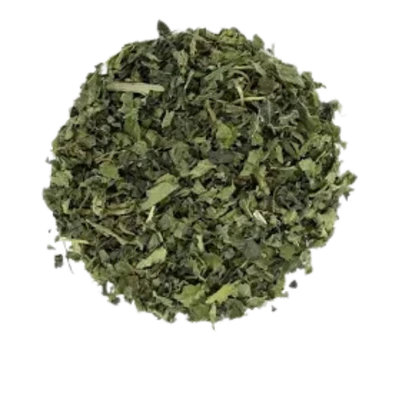
Nettle (Urtica dioica) presents a somewhat unique situation for histamine-sensitive individuals. It is rich in quercetin, a flavonoid studied for its ability to stabilize mast cells and reduce the release of histamine. Nettle has also been used traditionally for seasonal allergies and inflammatory conditions, although research on its clinical effectiveness for these uses remains limited.
The fresh plant is very different from nettle after cooking or drying. The stinging hairs covering fresh nettle leaves release a mixture containing histamine, acetylcholine, and serotonin when they penetrate the skin, causing the plant's characteristic sting. Cooking or drying destroys the structure of these hairs and removes the mechanical sting.
However, the histamine involved in the sting should not be confused with the histamine content of the edible leaf itself. Processing removes the stinging mechanism, but it does not provide evidence that all naturally occurring histamine or other biogenic amines in the plant tissue have been eliminated. For someone tracking histamine sensitivity, cooked, dried, or steeped nettle is therefore worth treating as a separate form from the fresh plant rather than assuming that processing makes it completely histamine-free.
Does preparation change the risk?
The form and preparation of nettle can meaningfully influence its risk level. Heat reduces but does not fully eliminate the amine content, making raw nettle the most reactive form.
| Form | Risk Level | Notes |
|---|---|---|
| Fresh (raw) | High | Contains active histamine and acetylcholine; generally best avoided |
| Infusion (tea) | Moderate | Heat reduces the load, but residual amines can still trigger symptoms in some people |
| Cooked / Boiled | Moderate | Denatures the sting but does not fully eliminate the amine content |
| Root extract | Moderate | Different chemical profile than the leaves, but still carries some risk of reaction |
Note: Risk levels are based on clinical observations and patient reports, not standardized histamine measurements. Individual tolerance varies.
A food score is a reference, not a verdict.
Histamine intolerance is highly individual. A food that triggers symptoms in one person may be tolerated by another, even within the same category.
Strict elimination may help reduce symptoms initially, but long-term progress often depends on gradual reintroduction and pattern recognition. The goal is not to remove more foods over time, but to understand your personal tolerance and expand your diet when possible.
Tracking symptoms, portions, and context such as stress or timing can provide insights that generalized food lists cannot. This is where informed decisions replace fear-based restriction.
How to test your tolerance
 The paradox principle.
Nettle is anti-inflammatory, but it's also a source of histamine. Many people find it best to try it once their overall histamine load is relatively low.
 Extended boiling.
If you choose to consume it, boiling for at least 10 minutes may help reduce some of the heat-sensitive amines.
 Oxalate caution.
Beyond histamine, nettle can be notably high in oxalates, though measured levels vary enormously between studies, from nearly negligible to very high depending on growing conditions and origin. This is a separate consideration for those managing urinary tract or joint sensitivity.
 Isolated quercetin.
To get some of the anti-inflammatory benefits with less histamine exposure, a purified quercetin supplement instead of the whole plant is worth considering.
 Tracking protocol.
Use the MyHistaMap app to help figure out whether your reaction is more immediate (histamine-related) or delayed (possibly oxalate or salicylate-related).
Common questions about Stinging nettle / Nettle and histamine
Is nettle suitable for frequent consumption?
Generally not ideal for daily use in sensitive individuals, given its combination of histamine content and oxalate levels that can run quite high, though this varies considerably by source.
Why is nettle often recommended for allergies if it contains histamine?
Mostly because of its quercetin content, though clinical evidence for nettle itself as an allergy treatment is limited. For those with reduced DAO activity, the histamine in the plant can sometimes trigger the very symptoms someone is trying to avoid.
Does heat make nettle risk-free?
Not entirely. Heat neutralizes the mechanical sting, but it does not fully remove the biogenic amines from the plant tissue.
Some people find these options helpful
Supplements are optional tools, not a solution. Personal tracking and identifying your individual triggers remains the priority.
Where this information comes from
At MyHistaMap we curate information from peer reviewed research and recognized medical sources. This guide is a reference tool, not a medical prescription. Always track your own reactions and consult your healthcare provider.
References
- Stinging Nettle, LiverTox, NCBI Bookshelf, NIH: confirms that the stinging rash from fresh nettle leaves comes from histamine, acetylcholine, and other irritants injected by sharp trichomes, and that processing the leaves destroys the stinging spicules, allowing the plant to be consumed without the mechanical sting.
- Bagade, Pant & Pandey, Nutritional and Antinutritional Profiling of Stinging Nettle (Urtica dioica L.), International Journal of Food Science and Nutrition, 2021: reported an average oxalate content of approximately 2780 mg per 100g in nettle collected from different areas of Uttarakhand, India, describing oxalate as significantly higher in nettle than in most foods. Other studies have measured much lower levels in nettle, illustrating substantial variability depending on growing conditions and origin. This is the source for nettle's classification as a relevant oxalate source alongside its histamine content.
- Weng et al., Quercetin Is More Effective than Cromolyn in Blocking Human Mast Cell Cytokine Release, PLOS ONE, 2012: found that quercetin significantly inhibited histamine and cytokine release from human cultured mast cells, supporting its role as a mast cell stabilizer.