This content is for informational purposes only and does not constitute medical advice. Always consult a qualified healthcare provider before making dietary changes. Histamine tolerance is highly individual.
This information applies to histamine intolerance, DAO deficiency, and MCAS only. If you have a confirmed food allergy, this content does not apply to you. Food allergies involve the immune system and can be life-threatening. Please consult your allergist.
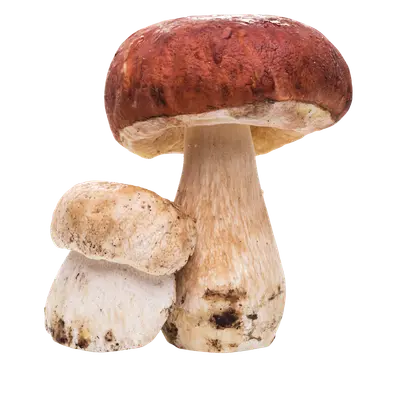
Is Cep / Porcini a trigger for histamine intolerance?
Cep / Porcini scores a 2 out of 3 on the SIGHI Food Compatibility List, placing it in the Moderate category.
Cep / Porcini & Histamine, what the evidence says
Porcini mushrooms carry a histamine consideration on reference lists, without the specific liberator marking used for a few other mushroom species like chanterelles. Fresh porcini aren't necessarily loaded with pre-formed histamine themselves, but mushrooms as a category are generally treated as moderate-to-high risk on these lists, and freshness plays a large role in how much amine content can build up over time.
Porcini also contain notable amounts of mannitol, a sugar alcohol the body can't fully absorb, as well as chitin, an indigestible structural fiber that makes up much of the mushroom's cell walls. Both can be harder to process for sensitive digestive systems, contributing to bloating or discomfort that isn't necessarily related to histamine. Ongoing digestive stress, however, could indirectly affect how well the body handles histamine overall.
Does preparation change the risk?
Freshness is one of the most important variables for porcini tolerance. Drying, canning, and long-term storage all tend to increase amine concentration compared to fresh or frozen forms.
| Form | Risk Level | Notes |
|---|---|---|
| Fresh porcini | Moderate | Generally the gentlest way to consume; look for firm, recently harvested mushrooms |
| Dried porcini | High | The drying process and storage time tend to concentrate amines |
| Frozen porcini | Moderate | Generally better than dried; freezing helps limit further amine accumulation |
| Canned / Jarred in oil | High | Long-term storage may facilitate amine development |
| Porcini powder | High | Highly concentrated; even a small amount can add up quickly |
Note: Risk levels are based on clinical observations and patient reports, not standardized histamine measurements. Individual tolerance varies.
A food score is a reference, not a verdict.
Histamine intolerance is highly individual. A food that triggers symptoms in one person may be tolerated by another, even within the same category.
Strict elimination may help reduce symptoms initially, but long-term progress often depends on gradual reintroduction and pattern recognition. The goal is not to remove more foods over time, but to understand your personal tolerance and expand your diet when possible.
Tracking symptoms, portions, and context such as stress or timing can provide insights that generalized food lists cannot. This is where informed decisions replace fear-based restriction.
How to test your tolerance
 Freshness is important.
Mushrooms tend to degrade quickly, so choosing porcini that are firm with no signs of softening or dark spots is generally a good idea.
 The drying difference.
Dried porcini are a common culinary staple, but for those managing histamine intolerance, the concentration of amines during dehydration tends to make them notably riskier than fresh ones.
 Cooking method.
Cooking porcini thoroughly is generally recommended, since it helps break down some of the complex fibers, like chitin, making them a bit easier on the gut.
 Mannitol awareness.
Since they're notable in mannitol, those with SIBO or IBS alongside histamine intolerance may want to limit portion size to help avoid digestive discomfort.
 Tracking protocol.
Use MyHistaMap to help figure out if your reaction is more likely histamine-related or more digestive, possibly related to mannitol and fermentation.
Common questions about Cep / Porcini and histamine
Are porcini safer than white mushrooms?
White button mushrooms carry a lower histamine consideration on reference lists than porcini, which fall into a higher risk category alongside most other mushroom varieties.
Can I use porcini oil?
If the oil is purely infused for aroma, it might be well tolerated, but if it contains pieces of dried mushroom, it's worth treating with more caution.
Do porcini mushrooms contain salicylates?
Generally not much. Most mushrooms are naturally low in salicylates, which can make them a reasonable flavor option for those with salicylate sensitivity but not histamine intolerance.
Why are dried porcini so reactive?
As the water evaporates, amino acids and any trace amines become more concentrated, and the aging process during storage can allow for further bacterial activity.
Some people find these options helpful

Supplements are optional tools, not a solution. Personal tracking and identifying your individual triggers remains the priority.
Where this information comes from
At MyHistaMap we curate information from peer reviewed research and recognized medical sources. This guide is a reference tool, not a medical prescription. Always track your own reactions and consult your healthcare provider.
References
- SIGHI (Swiss Interest Group Histamine Intolerance) Food Compatibility List: lists porcino mushroom (Boletus edulis) with a histamine value of 2, without a liberator ('L') marking, unlike some other mushroom species on the same list. This is the source for porcini's histamine classification referenced on this page.
- Vetter, Chitin Content of Cultivated Mushrooms, Food Chemistry, 2007 (citing Manzi et al., 2004): reports chitin levels of 68 to 102 mg per gram of dry matter in Boletus spp. mixtures, and notes that chitin generally accounts for up to 80-90% of dry matter in mushroom cell walls. This is the source for the chitin content referenced on this page.
- Nutritional and Pharmacological Significance of Boletus edulis: identifies mannitol as one of the primary free sugars consistently present in Boletus edulis across growing regions. This is the source for the mannitol content referenced on this page.