This content is for informational purposes only and does not constitute medical advice. Always consult a qualified healthcare provider before making dietary changes. Histamine tolerance is highly individual.
This information applies to histamine intolerance, DAO deficiency, and MCAS only. If you have a confirmed food allergy, this content does not apply to you. Food allergies involve the immune system and can be life-threatening. Please consult your allergist.
Is Psyllium seed husks a trigger for histamine intolerance?
Psyllium seed husks scores a 0 out of 3 on the SIGHI Food Compatibility List, placing it in the Safe category.
Psyllium seed husks & Histamine, what the evidence says
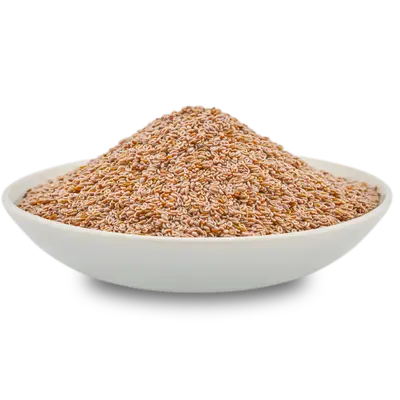
Psyllium is a therapeutic fiber derived from the seeds of the Plantago ovata plant. It is generally considered low-risk from a histamine standpoint since it contains no meaningful amounts of biogenic amines. Its primary function is as a bulk-forming laxative: when mixed with water, it forms a gel that increases stool bulk and helps regulate intestinal transit. Because psyllium can also affect how substances move through the digestive tract, it has been proposed that it might influence the absorption of dietary histamine or other fermentation byproducts, but research specifically examining this effect is still limited.
That said, psyllium can sometimes cause temporary bloating or discomfort, particularly when introduced too quickly or without enough water. It is classified as low FODMAP and is not rapidly fermented, but its ability to absorb water and increase stool bulk can make some people feel more pressure or fullness while their digestive system adjusts. For most people, its more established benefit is simply supporting regular bowel movements, which can be useful when constipation or slow transit is contributing to digestive discomfort.
Does preparation change the risk?
The form and ingredients of psyllium products vary meaningfully. Pure husk is generally the gentlest choice; flavored or commercial versions often contain hidden triggers.
| Form | Risk Level | Notes |
|---|---|---|
| Psyllium husk (whole) | Low | Generally the gold standard; high fiber content, easy to monitor dosage |
| Psyllium powder | Low | More concentrated; can clump in the gut if not mixed with enough water |
| Capsules | Low | Convenient for dosing, but worth checking for problematic binders |
| Flavored supplements | High | Often contain citric acid, artificial sweeteners, or orange flavors |
| Baked in GF bread | Low | Acts as a gluten replacer; generally well tolerated when hydrated during baking |
Note: Risk levels are based on clinical observations and patient reports, not standardized histamine measurements. Individual tolerance varies.
A food score is a reference, not a verdict.
Histamine intolerance is highly individual. A food that triggers symptoms in one person may be tolerated by another, even within the same category.
Strict elimination may help reduce symptoms initially, but long-term progress often depends on gradual reintroduction and pattern recognition. The goal is not to remove more foods over time, but to understand your personal tolerance and expand your diet when possible.
Tracking symptoms, portions, and context such as stress or timing can provide insights that generalized food lists cannot. This is where informed decisions replace fear-based restriction.
How to test your tolerance
 The hydration rule.
Psyllium can absorb many times its weight in water. Not drinking enough fluid alongside it can lead to constipation, which some people find contributes to bacterial overgrowth and increased symptoms.
 Start slow.
Starting with a small amount, like a quarter teaspoon, and increasing gradually may help your gut adjust to the new fiber intake more comfortably.
 Check the ingredients.
Many commercial psyllium products contain dyes or artificial sweeteners that can be triggers for those with histamine issues, so pure husk is often a gentler choice.
 The binder effect.
Psyllium can bind to some medications and supplements, so spacing it out from DAO enzymes or other treatments by a couple of hours is a reasonable general practice.
 Cooking with psyllium.
In gluten-free and lower-histamine baking, psyllium can provide the stretch that's often missing, and can be a gentler binder alternative to egg whites for many people.
 Tracking protocol.
Track your response carefully. Note your water intake and any changes in bloating or transit time. Look for patterns across multiple trials using MyHistaMap.
Common questions about Psyllium seed husks and histamine
Is psyllium a FODMAP?
Not really. Unlike inulin or chicory root, psyllium is largely non-fermentable. It's generally considered one of the gentler fiber options for those with both histamine intolerance and SIBO.
Why do I feel bloated after taking psyllium?
This is usually related to insufficient water intake or trapped gas behind the fiber bulk, rather than a direct histamine reaction.
Can psyllium help with diarrhea?
For many people, yes. Because it's a bulking agent, it absorbs excess water in the colon, which can help normalize transit for those whose histamine intolerance includes loose stools.
Is psyllium a histamine liberator?
Not that we know of. Psyllium doesn't have well-established liberator properties.
Does psyllium contain salicylates?
It tends to contain quite low levels, which can make it a gentler option than some other fiber sources, like almond flour or flaxseed, for salicylate-sensitive individuals.
Some people find these options helpful

Supplements are optional tools, not a solution. Personal tracking and identifying your individual triggers remains the priority.
Where this information comes from
At MyHistaMap we curate information from peer reviewed research and recognized medical sources. This guide is a reference tool, not a medical prescription. Always track your own reactions and consult your healthcare provider.
References
- SIGHI (Swiss Interest Group Histamine Intolerance) Food Compatibility List: lists psyllium seed husks with a histamine value of 0, noting it can be useful for both constipation and diarrhea. This is the source for psyllium's low-histamine classification referenced on this page.
- Jalanka et al., The Effect of Psyllium Husk on Intestinal Microbiota in Constipated Patients and Healthy Controls: describes psyllium husk as a gel-forming fiber with limited digestibility that traps water in the intestine, increasing stool water and easing transit. This is the source for the gel-forming and laxative mechanism referenced on this page.