This content is for informational purposes only and does not constitute medical advice. Always consult a qualified healthcare provider before making dietary changes. Histamine tolerance is highly individual.
This information applies to histamine intolerance, DAO deficiency, and MCAS only. If you have a confirmed food allergy, this content does not apply to you. Food allergies involve the immune system and can be life-threatening. Please consult your allergist.
Is Young Gouda cheese a trigger for histamine intolerance?
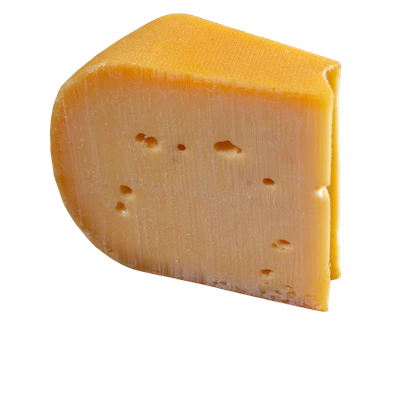
Young Gouda cheese scores a 0 out of 3 on the SIGHI Food Compatibility List, placing it in the Safe category.
Young Gouda cheese & Histamine, what the evidence says
Young Gouda, known as "jonge kaas" in Dutch, is typically ripened for about four weeks. Its relatively short ripening period generally results in lower levels of histamine and tyramine than the same cheese after prolonged aging, although the actual amine content can vary with the bacterial cultures, production conditions, and storage history. Young Gouda is therefore treated quite differently from aged Gouda on histamine reference lists.
Young Gouda also has a higher moisture content than aged Gouda, which reflects its shorter ripening period and gives it a softer texture. Storage matters as well: once purchased, the cheese can continue to mature and change over time, particularly if kept for an extended period. For someone monitoring histamine tolerance, choosing a genuinely young Gouda and using it while it is still fresh makes more sense than assuming all Gouda has the same amine profile.
Does preparation change the risk?
The maturation period is one of the most important factors for histamine risk in Gouda. The youngest varieties tend to be the gentlest for sensitive individuals.
| Form | Risk Level | Notes |
|---|---|---|
| Young (Jong, ~4 weeks) | Low | Officially the shortest ripening category; generally the gentlest amine profile |
| Young-Mature (Jong-belegen, ~8-10 weeks) | Moderate | Amine levels tend to begin rising as ripening continues |
| Grated / Shredded | Moderate | Higher surface area and additives can increase reactivity for some |
| Smoked Gouda | High | Processing and flavorings often involve additional triggers |
Note: Risk levels are based on clinical observations and patient reports, not standardized histamine measurements. Individual tolerance varies.
A food score is a reference, not a verdict.
Histamine intolerance is highly individual. A food that triggers symptoms in one person may be tolerated by another, even within the same category.
Strict elimination may help reduce symptoms initially, but long-term progress often depends on gradual reintroduction and pattern recognition. The goal is not to remove more foods over time, but to understand your personal tolerance and expand your diet when possible.
Tracking symptoms, portions, and context such as stress or timing can provide insights that generalized food lists cannot. This is where informed decisions replace fear-based restriction.
How to test your tolerance
 Label literacy.
Looking for the word "Young" or "Jong" is generally helpful. "Belegen" or "Oud" indicate longer maturation and higher amine potential.
 Surface hygiene.
Cutting off the outer layer or rind of the cheese before consuming may help, since this area tends to be more exposed to bacteria.
 Airtight storage.
Once opened, wrapping it tightly in parchment paper and keeping it in the coldest part of the fridge can help slow further ripening.
- Freeze for extra safety.
If you can't consume the block quickly, portioning and freezing it can help stop the enzymatic process that creates amines.
 Tracking protocol.
Use MyHistaMap to confirm that your threshold for semi-hard cheeses remains stable over time.
Common questions about Young Gouda cheese and histamine
Is Young Gouda lower in lactose than other cheeses?
Not particularly. Lactose drops mainly during long aging, so young Gouda actually contains more lactose than aged Gouda, which can become nearly lactose-free after 6+ months. Young Gouda is not typically considered a low-lactose choice.
Why is pre-shredded Young Gouda somewhat riskier?
Pre-shredded cheeses use anti-caking agents like potato starch or cellulose. Additionally, the increased surface area allows for somewhat faster bacterial growth and oxidation, which can affect tolerance even if the cheese itself is young.
Can I use Young Gouda in melted dishes?
Yes, it's generally considered one of the gentler melting cheeses for a low-histamine approach, making it a good substitute for mozzarella or cheddar in warm recipes.
How can I tell if my Gouda has aged too much in the fridge?
If the texture has become notably harder, or if white crystals (calcium lactate) begin to form on the surface, the cheese has continued to ripen and its amine level may have risen.
Some people find these options helpful


Supplements are optional tools, not a solution. Personal tracking and identifying your individual triggers remains the priority.
Where this information comes from
At MyHistaMap we curate information from peer reviewed research and recognized medical sources. This guide is a reference tool, not a medical prescription. Always track your own reactions and consult your healthcare provider.
References
- SIGHI-Leaflet Histamine Elimination Diet: names young Gouda explicitly among well-tolerated fresh dairy products, while listing aged Gouda under the avoid category alongside other long-matured cheeses. This is the source for the young-versus-aged Gouda distinction referenced on this page.
- Gouda Cheese - the Yellow Motor?, The British Society, The Netherlands: confirms the official Dutch maturation categories: 'jonge kaas' (young cheese) matured for 4 weeks, and 'jong belegen' (young-matured) for 8-10 weeks. This is the source for the precise ripening timeline referenced on this page.
- 9 Cheeses That Are Low in Lactose, GoodRx: explains that lactose in cheese decreases with longer aging, so young Gouda contains more lactose than aged Gouda, which has very little. This is the source for the lactose correction referenced on this page.