This content is for informational purposes only and does not constitute medical advice. Always consult a qualified healthcare provider before making dietary changes. Histamine tolerance is highly individual.
This information applies to histamine intolerance, DAO deficiency, and MCAS only. If you have a confirmed food allergy, this content does not apply to you. Food allergies involve the immune system and can be life-threatening. Please consult your allergist.
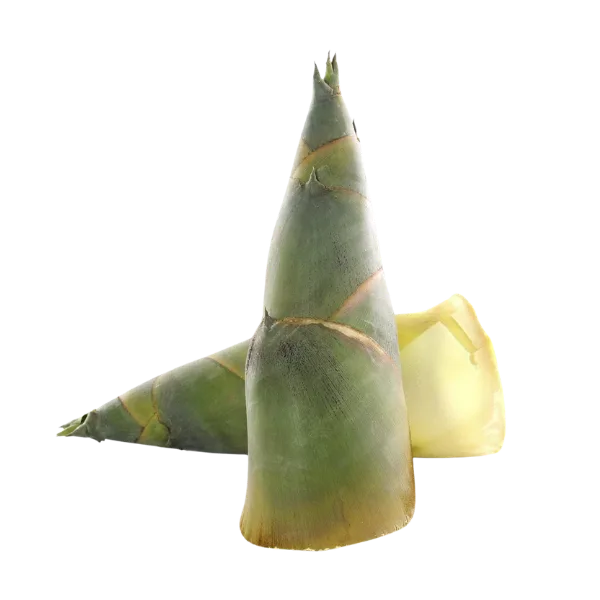
Is Bamboo shoots a trigger for histamine intolerance?
Bamboo shoots's histamine classification isn't conclusive; available reference sources don't agree or don't have enough data to assign a confident score.
Bamboo shoots & Histamine, what the evidence says
Bamboo shoots should be cooked thoroughly before eating. Raw shoots contain taxiphyllin, a cyanogenic glycoside that can vary widely in concentration depending on the species. Boiling breaks down this compound and is an important step in making fresh bamboo shoots safe to eat. This isn't a histamine consideration, but a basic food-safety requirement that applies regardless of histamine sensitivity.
There is no well-established, consistent data on the histamine content of bamboo shoots, so they are best treated as an unknown rather than assumed to behave like better-studied vegetables. If you're tracking histamine-related reactions, this makes individual testing and response tracking particularly useful.
Oxalate is another relevant consideration. Published analyses have found levels ranging from roughly 112 to 462 milligrams per 100 grams depending on the species, and preparation methods such as boiling and soaking can measurably reduce the amount of oxalate.
Does preparation change the risk?
Preparation is a genuine safety requirement for bamboo shoots, not just a matter of preference.
| Form | Risk Level | Notes |
|---|---|---|
| Raw, unprocessed | High | Never eat raw; contains taxiphyllin, a cyanogenic glycoside requiring cooking to break down |
| Boiled, fresh | Moderate | Thorough boiling addresses the safety concern; oxalate content is also reduced by boiling and soaking |
| Canned / pre-cooked | Moderate | Already processed for safety; histamine content remains an unknown, worth individual testing |
| Fermented (sour bamboo) | High | Fermentation is more likely to raise biogenic amine levels, similar to other fermented vegetables |
Note: Risk levels are based on clinical observations and patient reports, not standardized histamine measurements. Individual tolerance varies.
A food score is a reference, not a verdict.
Histamine intolerance is highly individual. A food that triggers symptoms in one person may be tolerated by another, even within the same category.
Strict elimination may help reduce symptoms initially, but long-term progress often depends on gradual reintroduction and pattern recognition. The goal is not to remove more foods over time, but to understand your personal tolerance and expand your diet when possible.
Tracking symptoms, portions, and context such as stress or timing can provide insights that generalized food lists cannot. This is where informed decisions replace fear-based restriction.
How to test your tolerance
 Never eat raw bamboo shoots.
Raw shoots contain taxiphyllin, a cyanogenic glycoside that must be broken down through thorough boiling before eating. This is a basic food-safety step, not optional.
 Treat histamine content as unknown.
There's no well-established data on bamboo shoots' histamine content, so introduce it cautiously and track your own response rather than assuming it behaves like better-studied vegetables.
 Boiling and soaking also reduce oxalate.
Beyond the safety requirement, these preparation methods measurably lower the oxalate content of bamboo shoots.
 Approach fermented bamboo with more caution.
Sour or fermented bamboo shoots are more likely to carry elevated biogenic amine levels than freshly boiled shoots.
 Track your response carefully.
Given the limited histamine data available, logging your experience with the MyHistaMap app is particularly useful here.
Common questions about Bamboo shoots and histamine
Can I eat bamboo shoots raw?
No. Raw shoots contain taxiphyllin, a cyanogenic glycoside that must be broken down through thorough boiling before eating. This is a basic food-safety requirement, unrelated to histamine.
Is bamboo shoots high in histamine?
There isn't well-established, consistent data on this. It's reasonable to treat it as an unknown and introduce it cautiously, tracking your own response.
Is bamboo shoots high in oxalate?
It can be a meaningful source, with published levels ranging from roughly 112 to 462 milligrams per 100 grams depending on species. Boiling and soaking measurably reduce this.
Are canned bamboo shoots already safe to eat?
Yes, canned or pre-cooked bamboo shoots have already been processed to address the taxiphyllin safety concern.
Some people find these options helpful





Supplements are optional tools, not a solution. Personal tracking and identifying your individual triggers remains the priority.
Where this information comes from
At MyHistaMap we curate information from peer reviewed research and recognized medical sources. This guide is a reference tool, not a medical prescription. Always track your own reactions and consult your healthcare provider.
References
- SIGHI (Swiss Interest Group Histamine Intolerance) Food Compatibility List, version 2024-08-29: marks bamboo shoots with '?', meaning insufficient or contradictory information, rather than a numeric compatibility score. This is the source for treating bamboo shoots' histamine content as an unknown on this page.
- Anti-nutrients in bamboo shoots, Foods (MDPI), 2024: reports that bamboo shoots contain taxiphyllin, a cyanogenic glycoside concentrated at the shoot tip that is highly unstable and easily decomposed in boiling water, and that oxalate content ranges from 112.2 to 462.0 mg per 100g fresh weight depending on species, with processing treatments generally decreasing oxalate levels.
- Effects of Processing on Antinutrients, Bioactives and Functional Properties of Bamboo Shoots (Bambusa beecheyana): found that extended boiling (60 minutes) reduced soluble oxalate levels by 89% and uric acid by 86%, while washing alone produced only slight reductions. This is the source for the boiling and soaking oxalate-reduction claim referenced on this page.
- Bamboo Shoot Allergy, Allergy Resources: describes bamboo shoots as a low-FODMAP food that is low in salicylates and contains a moderate amount of lectins, citing research on a specific lectin isolated from Phyllostachys pubescens shoots.