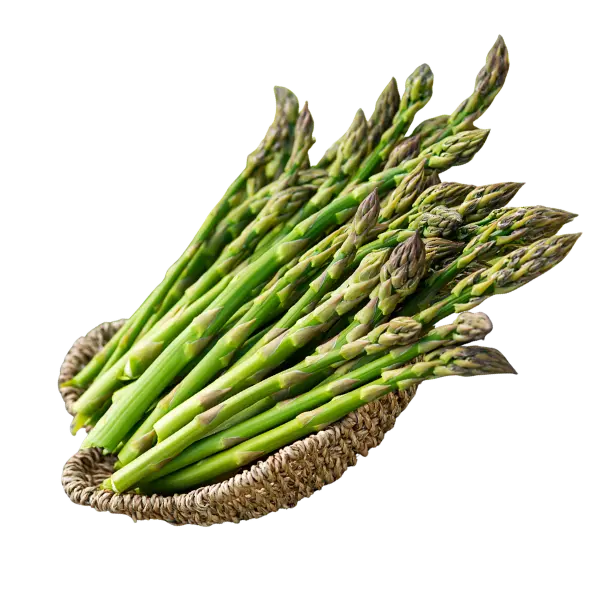
This content is for informational purposes only and does not constitute medical advice. Always consult a qualified healthcare provider before making dietary changes. Histamine tolerance is highly individual.
This information applies to histamine intolerance, DAO deficiency, and MCAS only. If you have a confirmed food allergy, this content does not apply to you. Food allergies involve the immune system and can be life-threatening. Please consult your allergist.
Is Asparagus a trigger for histamine intolerance?
Asparagus scores a 0 out of 3 on the SIGHI Food Compatibility List, placing it in the Safe category.
Asparagus & Histamine, what the evidence says
Asparagus isn't associated with meaningful histamine content, which puts it favorably on a low-histamine approach. Its main practical consideration is fructans, a type of FODMAP that can cause bloating or digestive discomfort in sensitive people at typical serving sizes, independent of histamine.
Asparagus also contains a small amount of oxalate, about 5 mg in a typical half-cup serving, which is low compared to high-oxalate vegetables like spinach.
On top of that, asparagus contains asparagusic acid, a sulfur-containing compound found naturally in asparagus. When digested, it breaks down into volatile sulfur compounds that can produce a distinctive urine odor, sometimes quite soon after eating. Not everyone notices it, and that's normal. It's a well-documented, harmless phenomenon unrelated to histamine.
Does preparation change the risk?
Portion size is the main variable affecting FODMAP tolerance.
| Form | Risk Level | Notes |
|---|---|---|
| Small portion | Low | Smaller servings are usually easier to tolerate from a fructan standpoint |
| Standard serving | High | Fructan content becomes more noticeable at typical serving sizes |
| Canned or pickled | Moderate | Preservation liquid and additives may introduce independent triggers |
Note: Risk levels are based on clinical observations and patient reports, not standardized histamine measurements. Individual tolerance varies.
A food score is a reference, not a verdict.
Histamine intolerance is highly individual. A food that triggers symptoms in one person may be tolerated by another, even within the same category.
Strict elimination may help reduce symptoms initially, but long-term progress often depends on gradual reintroduction and pattern recognition. The goal is not to remove more foods over time, but to understand your personal tolerance and expand your diet when possible.
Tracking symptoms, portions, and context such as stress or timing can provide insights that generalized food lists cannot. This is where informed decisions replace fear-based restriction.
How to test your tolerance
 Watch your portion size.
Asparagus is high in fructans. A small serving of a few spears is generally better tolerated than a full portion.
 The urine smell is normal.
If you notice it, that's just a harmless sulfur compound breaking down, not a histamine issue.
 Separate digestive symptoms from histamine reactions.
Bloating after asparagus is more likely related to fructan content than histamine.
- Introduce gradually.
If you suspect fructan sensitivity, start with a small amount and increase slowly to find your tolerance level.
 Track your response.
Log portion size and any digestive symptoms in MyHistaMap to spot patterns over time.
Common questions about Asparagus and histamine
Is asparagus high in histamine?
No, asparagus isn't linked to meaningful histamine levels.
Why does asparagus make my urine smell?
Asparagus contains asparagusic acid, a sulfur compound that breaks down during digestion into compounds with a strong smell. It's a well-documented, harmless phenomenon.
Why doesn't everyone notice this smell?
It comes down to two separate things: how efficiently someone's body metabolizes the compound, and whether they're genetically able to smell it in the first place. Some people produce the odor but simply can't detect it.
Why might asparagus cause bloating if it's low histamine?
Asparagus is high in fructans, a type of FODMAP. This can cause digestive symptoms independent of histamine, especially at standard serving sizes.
Is asparagus high in oxalate?
It contains a small amount, about 5 mg in a typical half-cup serving, which is low compared to high-oxalate vegetables like spinach.
Some people find these options helpful

Supplements are optional tools, not a solution. Personal tracking and identifying your individual triggers remains the priority.
Where this information comes from
At MyHistaMap we curate information from peer reviewed research and recognized medical sources. This guide is a reference tool, not a medical prescription. Always track your own reactions and consult your healthcare provider.
References
- Markt et al., Sniffing out significant 'Pee values': genome wide association study of asparagus anosmia, BMJ, 2016: a genome-wide association study of over 6,900 people found a specific gene variant (near the OR2M7 olfactory receptor gene) linked to the inability to smell the odor, and found that both odor production and odor detection vary independently between people.
- Vegetables and Oxalate, Oxalosis and Hyperoxaluria Foundation: reports asparagus, boiled or steamed, at approximately 6 mg of oxalate per 100 grams and approximately 5 mg in a typical half-cup serving, classified as low. The source for this page's oxalate figures.