This content is for informational purposes only and does not constitute medical advice. Always consult a qualified healthcare provider before making dietary changes. Histamine tolerance is highly individual.
This information applies to histamine intolerance, DAO deficiency, and MCAS only. If you have a confirmed food allergy, this content does not apply to you. Food allergies involve the immune system and can be life-threatening. Please consult your allergist.
Is Blackcurrants a trigger for histamine intolerance?
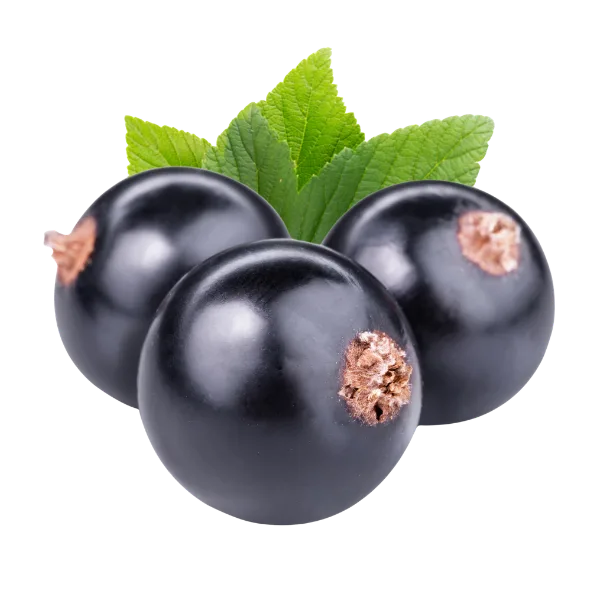
Blackcurrants scores a 0 out of 3 on the SIGHI Food Compatibility List, placing it in the Safe category.
Blackcurrants & Histamine, what the evidence says
Blackcurrant is low in histamine and is generally well tolerated by people managing histamine intolerance. What sets it apart nutritionally is its unusually high content of vitamin C and anthocyanins. Blackcurrants are among the richer dietary sources of both, although the exact amounts vary considerably between varieties and growing conditions. Studies have reported vitamin C concentrations ranging from roughly 50 to 280 milligrams per 100 grams, while their anthocyanin content is also particularly high compared with many other commonly eaten berries.
Vitamin C has a documented, though not fully settled, relationship with histamine. Some human research has found that supplemental vitamin C can lower circulating histamine levels, although the doses used in those studies are much higher than what you would normally obtain from a serving of blackcurrants. Eating blackcurrants therefore provides vitamin C as part of the diet, but it should not be assumed that a normal serving will produce the same histamine-related effects seen with supplemental doses.
Blackcurrant seed oil is a separate product from the berry itself, extracted from the seeds and valued for its gamma-linolenic acid (GLA) content. Research on its effects on allergic and inflammatory conditions has produced mixed results. One randomized, double-blind trial found that supplementation with blackcurrant seed oil during pregnancy and breastfeeding temporarily reduced the prevalence and severity of atopic dermatitis in infants at 12 months, although the difference was no longer significant at 24 months. These results are interesting, but they don't establish an effect of blackcurrant seed oil on histamine intolerance.
A separate clinical trial tested a polysaccharide extracted from blackcurrant, rather than the seed oil, in people with Japanese cedar pollen allergy. The study was small, and although it did not find significant differences between the groups in weekly symptom scores, some measures of symptom aggravation and quality of life favored the blackcurrant polysaccharide group. Again, this was a specific extract studied for seasonal pollen allergy, not the whole berry and not histamine intolerance.
Does preparation change the risk?
Blackcurrant's histamine profile stays low across most fresh and lightly processed forms. Fermentation is the main thing that changes the picture.
| Form | Risk Level | Notes |
|---|---|---|
| Fresh blackcurrants | Low | Naturally low in histamine and well tolerated by most people |
| Blackcurrant juice or puree, freshly made | Low | Fine when consumed soon after preparation |
| Blackcurrant jam or cordial | Low | Check for added ingredients, but the fruit itself isn't a concern |
| Cassis (blackcurrant liqueur) or wine | Moderate | Fermentation and alcohol content raise the histamine and biogenic amine profile compared to the fresh fruit |
Note: Risk levels are based on clinical observations and patient reports, not standardized histamine measurements. Individual tolerance varies.
A food score is a reference, not a verdict.
Histamine intolerance is highly individual. A food that triggers symptoms in one person may be tolerated by another, even within the same category.
Strict elimination may help reduce symptoms initially, but long-term progress often depends on gradual reintroduction and pattern recognition. The goal is not to remove more foods over time, but to understand your personal tolerance and expand your diet when possible.
Tracking symptoms, portions, and context such as stress or timing can provide insights that generalized food lists cannot. This is where informed decisions replace fear-based restriction.
How to test your tolerance
 Keep supplement doses in perspective.
Research on vitamin C and histamine, or on blackcurrant seed oil and inflammation, generally uses concentrated doses well beyond what a normal serving of the fruit provides.
 Enjoy it fresh, juiced, or as jam.
These are the most straightforward ways to include blackcurrant, since the fruit itself doesn't carry a histamine concern.
 Be mindful of cassis and blackcurrant wine.
Fermented blackcurrant products carry more uncertainty than the fresh fruit, juice, or jam.
 Don't confuse the berry with the seed oil.
Blackcurrant seed oil is a separate extracted product studied for its GLA content, with mixed results for allergic conditions. It's a different question from whether the fruit itself is well tolerated.
 Think of it as one food-based vitamin C source among several.
Since vitamin C content varies a lot by variety and season, blackcurrant is a good addition to a varied diet rather than a single go-to source.
 Track how you feel.
Log fresh blackcurrant separately from cassis, wine, or supplements in MyHistaMap, since these forms aren't equivalent.
Common questions about Blackcurrants and histamine
Is blackcurrant high in histamine?
No. Blackcurrant is low in histamine and generally well tolerated by people managing histamine intolerance.
Does the vitamin C in blackcurrant help with histamine intolerance?
Some research has linked supplemental vitamin C to lower circulating histamine levels, but the doses studied are much higher than what a typical serving of blackcurrant provides, so this shouldn't be assumed to happen from eating the fruit alone.
Is blackcurrant seed oil the same as eating blackcurrants?
No. Blackcurrant seed oil is a separate extracted product studied for its gamma-linolenic acid content, with mixed results for conditions like atopic dermatitis. It's a different question from the histamine profile of the fruit itself.
Is cassis or blackcurrant wine as low-risk as fresh blackcurrants?
No. Fermentation tends to raise histamine and other biogenic amine content, so cassis and blackcurrant wine carry more uncertainty than the fresh fruit, juice, or jam.
Some people find these options helpful





Supplements are optional tools, not a solution. Personal tracking and identifying your individual triggers remains the priority.
Where this information comes from
At MyHistaMap we curate information from peer reviewed research and recognized medical sources. This guide is a reference tool, not a medical prescription. Always track your own reactions and consult your healthcare provider.
References
- SIGHI (Swiss Interest Group Histamine Intolerance) Food Compatibility List: rates blackcurrant as well tolerated. The source for blackcurrant's low-risk classification referenced on this page.
- Aprifel nutritional composition data and Hietaranta et al., Background Information for Breeding: High Variation in Vitamin C in Finnish Currant and Gooseberry Collections, 2010: report blackcurrant vitamin C content ranging from approximately 49 to 280 mg per 100g depending on variety and growing conditions. The source for the vitamin C range referenced on this page.
- Linnamaa et al., Blackcurrant Seed Oil for Prevention of Atopic Dermatitis in Newborns: A Randomized, Double-Blind, Placebo-Controlled Trial, Clinical & Experimental Allergy, 2010: found significantly lower atopic dermatitis prevalence in the blackcurrant seed oil group at 12 months (33.0% vs. 47.3%, P=0.035), with no significant difference remaining at 24 months (P=0.18). The source for the seed oil and atopic dermatitis findings referenced on this page.
- Dejima et al., Effects of Polysaccharide Derived from Black Currant on Relieving Clinical Symptoms of Japanese Cedar Pollinosis: A Randomized Double-Blind, Placebo-Controlled Trial, Bioscience, Biotechnology, and Biochemistry, 2007: a small trial that did not find significant differences in weekly symptom scores between groups, though some secondary measures favored the blackcurrant polysaccharide group. The source for the pollinosis trial referenced on this page.