This content is for informational purposes only and does not constitute medical advice. Always consult a qualified healthcare provider before making dietary changes. Histamine tolerance is highly individual.
This information applies to histamine intolerance, DAO deficiency, and MCAS only. If you have a confirmed food allergy, this content does not apply to you. Food allergies involve the immune system and can be life-threatening. Please consult your allergist.
Is Blueberries a trigger for histamine intolerance?
Blueberries scores a 0 out of 3 on the SIGHI Food Compatibility List, placing it in the Safe category.
Blueberries & Histamine, what the evidence says
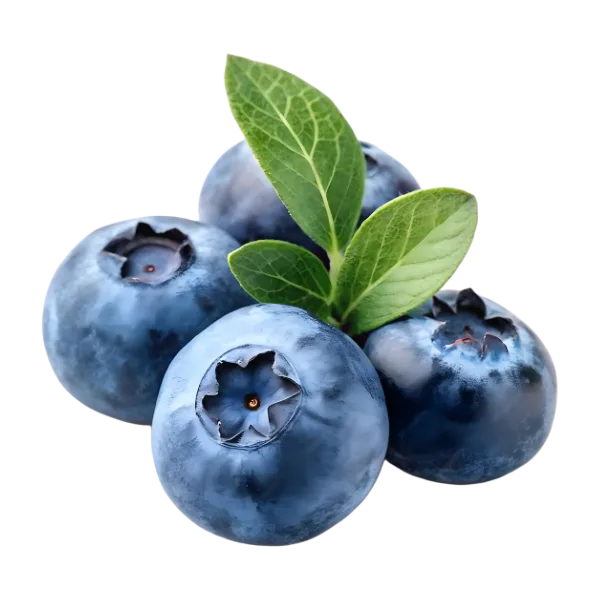
Blueberry is low in histamine and is generally well tolerated by people managing histamine intolerance. Like many berries, it is naturally rich in anthocyanins and other polyphenols, but blueberries also contain a less commonly discussed compound called pterostilbene, a close chemical relative of resveratrol.
Pterostilbene has been studied for its antioxidant and anti-inflammatory properties more broadly, but there is also research looking directly at its effects on histamine. A 2020 study found that pterostilbene reduced histamine release and calcium influx in cultured mast cells and reduced allergic reactions in mice by affecting a specific signaling pathway involved in mast cell activation. This is a direct finding related to histamine and mast cell activity, rather than an extrapolation from general anti-inflammatory effects. However, the study was conducted in cell cultures and animals, so it does not tell us whether eating blueberries produces the same effect in people.
Pterostilbene is present in blueberries in relatively small amounts, and the amount can vary depending on the blueberry variety and the study. Even with a documented mechanism in cell and animal research, a normal serving of blueberries would provide much less pterostilbene than the concentrated amounts used in the study.
Does preparation change the risk?
Blueberry's histamine profile stays low across most fresh and lightly processed forms.
| Form | Risk Level | Notes |
|---|---|---|
| Fresh blueberries | Low | Naturally low in histamine and well tolerated by most people |
| Frozen blueberries | Low | Freezing shortly after picking preserves the fruit's low-histamine profile |
| Blueberry jam or puree | Low | Check for added ingredients, but the fruit itself isn't a concern |
| Blueberries stored past their prime, soft or moldy | Moderate | As with most fresh fruit, spoilage is associated with rising amine levels |
Note: Risk levels are based on clinical observations and patient reports, not standardized histamine measurements. Individual tolerance varies.
A food score is a reference, not a verdict.
Histamine intolerance is highly individual. A food that triggers symptoms in one person may be tolerated by another, even within the same category.
Strict elimination may help reduce symptoms initially, but long-term progress often depends on gradual reintroduction and pattern recognition. The goal is not to remove more foods over time, but to understand your personal tolerance and expand your diet when possible.
Tracking symptoms, portions, and context such as stress or timing can provide insights that generalized food lists cannot. This is where informed decisions replace fear-based restriction.
How to test your tolerance
 Inspect before eating a handful.
Check for soft or moldy berries, especially at the bottom of the container, before eating.
 Freeze what you won't eat soon.
Freezing shortly after purchase is a simple way to keep blueberries at their freshest for later use.
 Keep pterostilbene research in perspective.
The amounts used in laboratory studies are far more concentrated than what a normal serving of blueberries provides. Eating them for enjoyment and general nutrition makes more sense than expecting a specific histamine effect.
 Vary your berries.
Rotating blueberries with other low-histamine fruits gives you a broader range of polyphenols and compounds without relying on just one source.
 Don't treat it as a treatment.
The mast cell research on pterostilbene is real, but it comes from cell and animal studies. Enjoy blueberries as a low-histamine food, not as a substitute for medical management.
 Track freshness.
In MyHistaMap, note how fresh the blueberries were when you ate them, since spoiled or moldy fruit is a more likely source of any reaction than the fruit itself.
Common questions about Blueberries and histamine
Is blueberry high in histamine?
No. Blueberry is low in histamine and generally well tolerated by people managing histamine intolerance.
Does blueberry help with histamine intolerance?
A compound in blueberries called pterostilbene has been shown to reduce histamine release from mast cells in cell and animal studies. This is a real finding, but it hasn't been tested in people eating blueberries, and the amounts in a normal serving are much smaller than what was used in the research.
What is pterostilbene?
It's a compound related to resveratrol, found in blueberries in relatively small and variable amounts. It has been studied for antioxidant and anti-inflammatory effects, including direct research on mast cells and histamine release.
Can I rely on blueberries to reduce histamine symptoms?
Not based on current evidence. The relevant research was done in cell cultures and animals using concentrated amounts, not in people eating whole blueberries.
Some people find these options helpful





Supplements are optional tools, not a solution. Personal tracking and identifying your individual triggers remains the priority.
Where this information comes from
At MyHistaMap we curate information from peer reviewed research and recognized medical sources. This guide is a reference tool, not a medical prescription. Always track your own reactions and consult your healthcare provider.
References
- SIGHI (Swiss Interest Group Histamine Intolerance) Food Compatibility List: rates blueberries as well tolerated. The source for blueberry's low-risk classification referenced on this page.
- Pterostilbene Inhibits FcεRI Signaling through Activation of the LKB1/AMPK Pathway in Allergic Response, Journal of Agricultural and Food Chemistry, 2020: found that pterostilbene reduced histamine release and calcium influx in cultured mast cells and inhibited mast cell-mediated allergic reactions in mice. The source for the pterostilbene and mast cell findings referenced on this page.
- Pterostilbene content in blueberries has been reported to range from roughly 99 to 520 nanograms per gram depending on variety, a small amount relative to the concentrations used in laboratory research. The source for this page's note on pterostilbene's naturally small and variable concentration in the fruit.