This content is for informational purposes only and does not constitute medical advice. Always consult a qualified healthcare provider before making dietary changes. Histamine tolerance is highly individual.
This information applies to histamine intolerance, DAO deficiency, and MCAS only. If you have a confirmed food allergy, this content does not apply to you. Food allergies involve the immune system and can be life-threatening. Please consult your allergist.
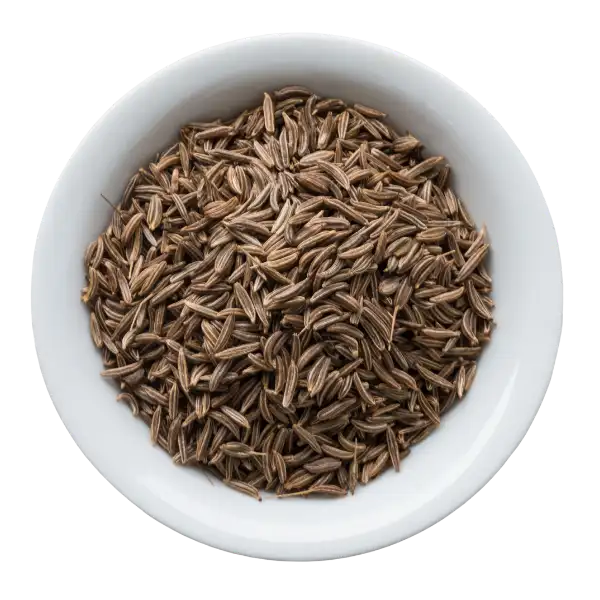
Is Caraway a trigger for histamine intolerance?
Caraway scores a 0 out of 3 on the SIGHI Food Compatibility List, placing it in the Safe category.
Caraway & Histamine, what the evidence says
Caraway is not associated with meaningful histamine content and is generally well tolerated.
Its most distinctive consideration involves levothyroxine. A published case report described a patient taking levothyroxine whose TSH rose sharply to 60.3 mIU/L after starting caraway and returned to normal after caraway was stopped, without changing the levothyroxine dose. A second case was then observed when one of the researchers, who also had hypothyroidism and was taking levothyroxine, tested caraway herself. Her TSH rose from 2.3 to 26 mIU/L after two weeks and reached 110 mIU/L after six weeks of caraway use, then gradually fell after caraway was discontinued. The exact mechanism is unknown, and these cases have not established a confirmed interaction in larger clinical studies. However, the repeated pattern is worth being aware of with regular or concentrated caraway use, particularly if thyroid levels become unexpectedly difficult to control.
Separately, caraway is high in both oxalates and salicylates, considerations unrelated to histamine and relevant for anyone managing those sensitivities.
Does preparation change the risk?
Quantity and regularity matter for caraway's thyroid consideration; the documented cases involved concentrated or repeated intake, not occasional culinary use.
| Form | Risk Level | Notes |
|---|---|---|
| Occasional culinary seasoning | Low | Not associated with meaningful histamine content; typical spice-level amounts are far below the concentrated doses in documented case reports |
| Regular use as a seasoning | Moderate | High in oxalates and salicylates; worth factoring in if managing those sensitivities |
| ⚠️ Concentrated or capsule form, if taking levothyroxine | High | Documented case reports describe a sharp TSH rise with concentrated caraway use; worth discussing with a healthcare provider |
Note: Risk levels are based on clinical observations and patient reports, not standardized histamine measurements. Individual tolerance varies.
A food score is a reference, not a verdict.
Histamine intolerance is highly individual. A food that triggers symptoms in one person may be tolerated by another, even within the same category.
Strict elimination may help reduce symptoms initially, but long-term progress often depends on gradual reintroduction and pattern recognition. The goal is not to remove more foods over time, but to understand your personal tolerance and expand your diet when possible.
Tracking symptoms, portions, and context such as stress or timing can provide insights that generalized food lists cannot. This is where informed decisions replace fear-based restriction.
How to test your tolerance
 Be aware of the levothyroxine connection.
Documented case reports describe a sharp TSH rise with regular or concentrated caraway use in people taking levothyroxine. If your thyroid levels become hard to control, mention any regular caraway use to your doctor.
 Occasional seasoning amounts are a different picture.
The documented cases involved concentrated or repeated caraway use, not the small amounts typical of everyday cooking.
 Factor in oxalates and salicylates separately.
Caraway is high in both. If you're managing either sensitivity alongside histamine, this is worth tracking.
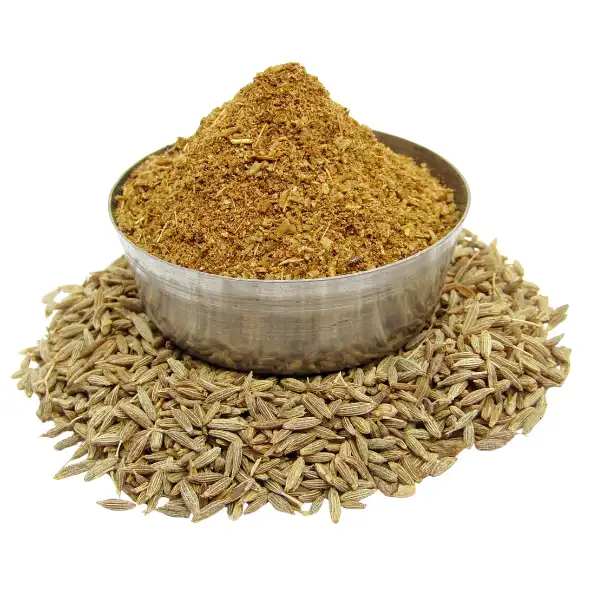
 Don't confuse it with cumin or black caraway.
Caraway (Carum carvi) is a different plant from both cumin (Cuminum cyminum) and black caraway/Nigella sativa. Information about one doesn't apply to the others.
 Keep concentrated forms in mind.
Caraway capsules, extracts, or large regular doses are a different consideration than a pinch used to season a dish.
 Track your response in MyHistaMap.
Log the amount and regularity of caraway use, especially if you take thyroid medication.
Common questions about Caraway and histamine
Is caraway high in histamine?
No, caraway is not associated with meaningful histamine content and is generally well tolerated.
Can caraway affect thyroid medication?
There's a documented consideration specifically with levothyroxine. Case reports describe a sharp rise in TSH with concentrated or regular caraway use in people taking levothyroxine, resolving after stopping it. This hasn't been confirmed in larger studies, but it's worth discussing with a healthcare provider if you take this medication.
Is caraway high in oxalates or salicylates?
Yes, both. These are separate considerations from histamine, relevant for anyone managing oxalate or salicylate sensitivity.
Is caraway the same as cumin?
No, they're different plants and are sometimes confused due to visual and flavor similarity. Caraway is Carum carvi; cumin is Cuminum cyminum. They're not interchangeable.
Some people find these options helpful





Supplements are optional tools, not a solution. Personal tracking and identifying your individual triggers remains the priority.
Where this information comes from
At MyHistaMap we curate information from peer reviewed research and recognized medical sources. This guide is a reference tool, not a medical prescription. Always track your own reactions and consult your healthcare provider.
References
- SIGHI (Swiss Interest Group Histamine Intolerance) Food Compatibility List: classifies caraway (Carum carvi) with a histamine score of 0, noting its positive digestive effect and cautioning not to confuse it with cumin.
- Naghibi SM, Ramezani M, Ayati N, Zakavi SR, Carum induced hypothyroidism: an interesting observation and an experiment, DARU Journal of Pharmaceutical Sciences, 2015: case report of a levothyroxine-treated patient whose TSH rose to 60.3 mIU/L after starting caraway (with yarrow) and normalized after stopping it, followed by a self-experiment by one of the researchers (also on levothyroxine) whose TSH rose from 2.3 to 26 mIU/L after two weeks and to 110 mIU/L after six weeks of caraway use. The source for this page's levothyroxine interaction section.
- Addendum to Assessment Report on Carum carvi L., fructus and aetheroleum, European Medicines Agency (EMA): reviews the same case reports and concludes the evidence, currently limited to these cases with an unknown mechanism, is not sufficient to revise the official monographs on caraway. The source for this page's note on the current strength of the evidence.
- Oxalate Content of Egyptian Grown Fruits and Vegetables, Journal of Food Research, 2014: direct laboratory measurement placing caraway seed oxalate content at 900 mg/100g dry weight. The source for this page's oxalate section.
- RPAH Elimination Diet Handbook, Swain, Soutter & Loblay, Royal Prince Alfred Hospital Allergy Unit: classifies caraway among herbs and spices high in salicylates. The source for this page's salicylate section.