This content is for informational purposes only and does not constitute medical advice. Always consult a qualified healthcare provider before making dietary changes. Histamine tolerance is highly individual.
This information applies to histamine intolerance, DAO deficiency, and MCAS only. If you have a confirmed food allergy, this content does not apply to you. Food allergies involve the immune system and can be life-threatening. Please consult your allergist.
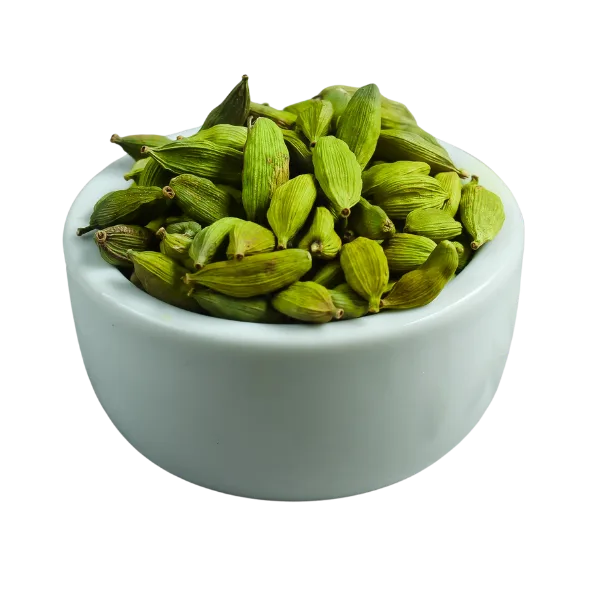
Is Cardamom a trigger for histamine intolerance?
Cardamom scores a 0 out of 3 on the SIGHI Food Compatibility List, placing it in the Safe category.
Cardamom & Histamine, what the evidence says
Cardamom is not associated with meaningful histamine content and is generally well tolerated.
A meta-analysis of eight randomized clinical trials found that cardamom supplementation modestly but significantly lowered blood pressure and reduced several markers of inflammation. The studies used about 3 grams of cardamom daily for 8 to 16 weeks, rather than the small amounts normally used as a culinary spice, and the researchers noted that the overall evidence remains limited. This is worth keeping in mind for anyone taking blood pressure medication and using cardamom regularly or in concentrated amounts, since the effects could potentially add to those of treatment.
Cardamom is also considered high in salicylates. Its oxalate content is exceptionally high when measured per 100 grams, with one laboratory analysis finding about 4,014 mg per 100 grams of dried green cardamom. The quantity normally used as a spice is much smaller, so typical culinary use contributes far less oxalate than the per-100-gram figure suggests.
Does preparation change the risk?
Quantity and regularity matter for cardamom's blood pressure effect and its oxalate content alike.
| Form | Risk Level | Notes |
|---|---|---|
| Occasional culinary seasoning | Low | Not associated with meaningful histamine content; typical spice amounts keep oxalate intake far below the per-100g figure |
| Regular use as a seasoning | Moderate | High in salicylates; worth factoring in if managing that sensitivity |
| ⚠️ Regular or concentrated supplement use (around 3g/day), if taking blood pressure medication | Moderate | Clinical trials at this dose found a modest blood pressure-lowering effect, which could add to medication's effect |
Note: Risk levels are based on clinical observations and patient reports, not standardized histamine measurements. Individual tolerance varies.
A food score is a reference, not a verdict.
Histamine intolerance is highly individual. A food that triggers symptoms in one person may be tolerated by another, even within the same category.
Strict elimination may help reduce symptoms initially, but long-term progress often depends on gradual reintroduction and pattern recognition. The goal is not to remove more foods over time, but to understand your personal tolerance and expand your diet when possible.
Tracking symptoms, portions, and context such as stress or timing can provide insights that generalized food lists cannot. This is where informed decisions replace fear-based restriction.
How to test your tolerance
 Check in if you take blood pressure medication and use cardamom regularly.
Clinical trials at supplement doses (around 3g daily) found a modest blood pressure-lowering effect. This mainly matters with regular or concentrated use, not occasional seasoning.
 Don't worry about the per-100g oxalate figure.
Cardamom's oxalate content looks extreme by weight (about 4,014 mg/100g), but the small amount used as a spice keeps actual intake modest.
 Factor in salicylates separately.
Cardamom is considered high in salicylates. If you're managing salicylate sensitivity alongside histamine, this is worth tracking.
 Occasional culinary use is a reasonable default.
The clinical evidence for cardamom's effects is based on regular supplementation, not the amounts typical of everyday cooking.
 Watch for oxalate stacking if you're managing oxalate intake.
If you're watching total oxalate for kidney stones or hyperoxaluria, factor cardamom in alongside other high-oxalate foods and spices with regular use.
 Track your response in MyHistaMap.
Log the amount and regularity of cardamom use, especially if you take blood pressure medication.
Common questions about Cardamom and histamine
Is cardamom high in histamine?
No, cardamom is not associated with meaningful histamine content and is generally well tolerated.
Can cardamom affect blood pressure medication?
It's worth being aware of with regular or concentrated use. Clinical trials using about 3 grams daily found a modest blood pressure-lowering effect, which could add to the effect of medication. Occasional culinary amounts weren't the dose studied.
Is cardamom high in oxalates?
By weight, yes, exceptionally so, at about 4,014 mg per 100 grams in one analysis of dried green cardamom. But the small amount typically used as a spice means actual intake from culinary use is far lower than that figure suggests.
Is cardamom high in salicylates?
Yes, cardamom is considered high in salicylates, relevant for anyone managing salicylate sensitivity alongside histamine.
Some people find these options helpful





Supplements are optional tools, not a solution. Personal tracking and identifying your individual triggers remains the priority.
Where this information comes from
At MyHistaMap we curate information from peer reviewed research and recognized medical sources. This guide is a reference tool, not a medical prescription. Always track your own reactions and consult your healthcare provider.
References
- SIGHI (Swiss Interest Group Histamine Intolerance) Food Compatibility List: classifies cardamom with a histamine score of 0.
- Heydarian A et al., Effect of cardamom consumption on inflammation and blood pressure in adults: A systematic review and meta-analysis of randomized clinical trials, Food Science & Nutrition, 2024: meta-analysis of eight RCTs (3g/day cardamom, 8-16 weeks) finding statistically significant but modest reductions in systolic and diastolic blood pressure and inflammatory markers, with the authors noting the evidence base remains limited. The source for this page's blood pressure section.
- Total and soluble oxalate content of some Indian spices, Plant Foods for Human Nutrition, 2012: direct laboratory measurement placing green cardamom's total oxalate content at 4,014 mg/100g dry matter, the highest of ten spices tested. The source for this page's oxalate section.
- RPAH Elimination Diet Handbook, Swain, Soutter & Loblay, Royal Prince Alfred Hospital Allergy Unit: classifies cardamom among herbs and spices high in salicylates. The source for this page's salicylate section.