This content is for informational purposes only and does not constitute medical advice. Always consult a qualified healthcare provider before making dietary changes. Histamine tolerance is highly individual.
This information applies to histamine intolerance, DAO deficiency, and MCAS only. If you have a confirmed food allergy, this content does not apply to you. Food allergies involve the immune system and can be life-threatening. Please consult your allergist.
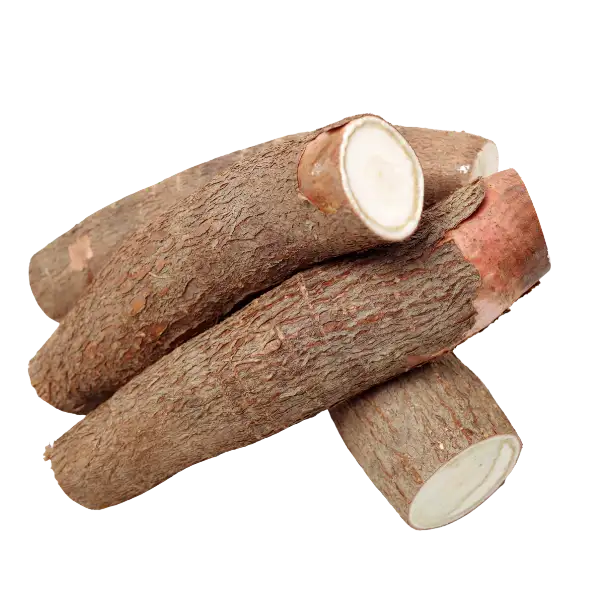
Is Cassava a trigger for histamine intolerance?
Cassava's histamine classification isn't conclusive; available reference sources don't agree or don't have enough data to assign a confident score.
Cassava & Histamine, what the evidence says
Cassava carries a documented risk that has nothing to do with histamine: a genuine allergy through cross-reactivity with natural rubber latex, part of what's known as latex-fruit syndrome. Researchers identified a specific cassava allergen called Man e 5, which shares structural features with Hev b 5, a major latex allergen. In people who are allergic to latex, this cross-reactivity has caused real allergic reactions to cassava, including documented cases of anaphylaxis after eating boiled cassava. This is a true IgE-mediated allergy, not a histamine intolerance symptom, and it's worth knowing regardless of how someone reacts to histamine if they have a known latex allergy.
Separately, cassava is high in oxalates. Laboratory measurements have reported raw cassava root at around 1.26 to 1.29 g of oxalate per 100 grams, although values can vary between studies. This matters most for people also managing oxalate intake or a history of calcium-oxalate kidney stones.
Fresh cassava root itself isn't associated with meaningful histamine content. However, some traditional cassava products go through extended fermentation as part of their preparation, and this matters for histamine specifically. Research on tucupi, a fermented cassava broth traditional to the Brazilian Amazon, found that histamine forms during the fermentation stage itself, with measured levels reaching as high as 66.8 mg per liter in some commercial samples. This is a preparation-dependent risk rather than a property of cassava as a raw ingredient, and it wouldn't apply to cassava that's simply boiled, baked, or used as a non-fermented flour.
Does preparation change the risk?
How cassava is prepared changes both its safety profile and its histamine relevance. Raw cassava is never safe to eat regardless of histamine tolerance, and fermented preparations carry a separate histamine consideration that fresh, cooked cassava doesn't.
| Form | Risk Level | Notes |
|---|---|---|
| Raw cassava | High | Contains natural cyanide-producing compounds; must never be eaten raw, regardless of histamine intolerance |
| Boiled or baked cassava, fresh | Low | Not associated with meaningful histamine once properly cooked; the main other consideration is oxalate content |
| Cassava flour or tapioca starch (non-fermented) | Low | Processed starch, not fermented; minimal histamine relevance |
| Fermented cassava products (e.g. tucupi, long-fermented starches) | Moderate | Fermentation can generate measurable histamine, as directly measured in tucupi |
Note: Risk levels are based on clinical observations and patient reports, not standardized histamine measurements. Individual tolerance varies.
A food score is a reference, not a verdict.
Histamine intolerance is highly individual. A food that triggers symptoms in one person may be tolerated by another, even within the same category.
Strict elimination may help reduce symptoms initially, but long-term progress often depends on gradual reintroduction and pattern recognition. The goal is not to remove more foods over time, but to understand your personal tolerance and expand your diet when possible.
Tracking symptoms, portions, and context such as stress or timing can provide insights that generalized food lists cannot. This is where informed decisions replace fear-based restriction.
How to test your tolerance
 Never eat cassava raw.
Raw cassava contains natural cyanide-producing compounds and must always be properly peeled and cooked. This applies regardless of histamine intolerance.
 Know your latex allergy status.
If you're allergic to latex, cassava carries a real cross-reactivity risk through latex-fruit syndrome, independent of how you tolerate histamine.
 Favor fresh, non-fermented cassava.
Boiled or baked cassava root, or plain flour and starch, avoid the fermentation-related histamine risk that fermented preparations carry.
 Be cautious with fermented cassava products.
Dishes like tucupi or long-fermented cassava starches can develop meaningful histamine during fermentation.
- Watch oxalate intake if relevant.
Cassava's oxalate content is on the higher side. Worth keeping in mind alongside your histamine tracking if you have a history of kidney stones.
 Track preparation method in MyHistaMap.
Since fresh versus fermented is the main variable for histamine specifically, logging how your cassava was prepared helps spot your personal pattern.
Common questions about Cassava and histamine
Is cassava high in histamine?
Fresh, properly cooked cassava isn't associated with meaningful histamine content. Fermented cassava products, however, can develop measurable histamine during fermentation.
Why would cassava cause an allergic reaction if I'm allergic to latex?
Cassava contains an allergen called Man e 5 that shares structural features with a major latex allergen. This cross-reactivity, part of latex-fruit syndrome, has caused documented allergic reactions, including anaphylaxis, in people with a latex allergy.
Can I eat raw cassava?
No. Raw cassava contains natural cyanide-producing compounds and must always be properly peeled and cooked before eating, regardless of histamine intolerance.
Is fermented cassava, like tucupi or long-fermented starches, a bigger histamine concern than fresh cassava?
Yes. Research measuring fermented cassava products found histamine forms during the fermentation stage itself. Fresh, boiled, or baked cassava doesn't carry this same risk.
Some people find these options helpful





Supplements are optional tools, not a solution. Personal tracking and identifying your individual triggers remains the priority.
Where this information comes from
At MyHistaMap we curate information from peer reviewed research and recognized medical sources. This guide is a reference tool, not a medical prescription. Always track your own reactions and consult your healthcare provider.
References
- Santos KS, Galvão CE, Gadermaier G, et al. Allergic reactions to manioc (Manihot esculenta Crantz): Identification of novel allergens with potential involvement in latex-fruit syndrome, Journal of Allergy and Clinical Immunology, 2011: identified Man e 5, a cassava allergen with structural cross-reactivity to Hev b 5, a major latex allergen. The primary source for this page's latex-fruit syndrome section.
- Galvão CE, Iwai LK, Andrade ME, Kalil J, Morato FF, Latex allergy and cross-reactivity to manioc: report of 2 cases, Journal of Allergy and Clinical Immunology, 2004 (abstract): describes two patients allergic to latex who developed anaphylactic reactions after eating boiled cassava, with confirmed cross-reactivity between latex and cassava on RAST inhibition testing. The source for this page's reference to documented anaphylaxis cases after eating cooked cassava.
- Total and Free Hydrogen Cyanide Content and Profile of Bioactive Amines in Commercial Tucupi, a Traditionally Derived Cassava Product Widely Consumed in Northern Brazil, 2023: direct measurement finding histamine ranging from 0.5 to 66.8 mg/L across commercial tucupi samples, a fermented cassava broth. The source for this page's fermentation and histamine section.
- Influence of spontaneous fermentation of manipueira on bioactive amine and carotenoid profiles during tucupi production: found histamine and tyramine specifically formed during the later stage (16 to 24 hours) of cassava fermentation in tucupi production. The source for this page's note that histamine formation is tied to the fermentation stage itself.
- Oxalate Content of Selected Foods, lafeber.com veterinary nutrition resource: compiled laboratory data placing raw cassava at 1.26 g of oxalic acid per 100 g, among the higher-oxalate foods measured. One of two sources for this page's oxalate figures.
- Determination of the nutritional and anti-nutritional content of cassava tubers and leaves in Jos North Local Government Area of Plateau State, Nigeria, 2022: independent laboratory measurement finding oxalate at 1.29 g per 100 g in cassava tubers. The second source for this page's oxalate figures, corroborating the range from an independent measurement.
- Systematic review of hydrogen cyanide levels in cassava and cassava-based products, Frontiers in Sustainable Food Systems, 2025: confirms raw cassava contains cyanogenic compounds requiring processing to reduce to safe levels, per FAO/WHO standards. The source for this page's note on the safety risk of raw cassava.