This content is for informational purposes only and does not constitute medical advice. Always consult a qualified healthcare provider before making dietary changes. Histamine tolerance is highly individual.
This information applies to histamine intolerance, DAO deficiency, and MCAS only. If you have a confirmed food allergy, this content does not apply to you. Food allergies involve the immune system and can be life-threatening. Please consult your allergist.
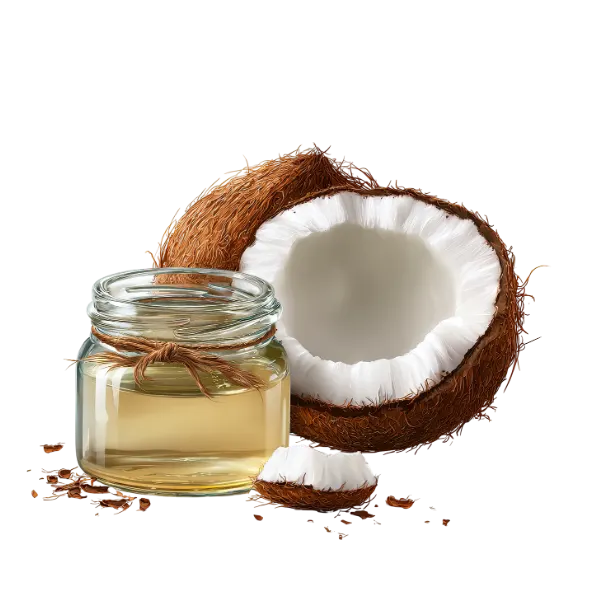
Is Coconut oil a trigger for histamine intolerance?
Coconut oil scores a 0 out of 3 on the SIGHI Food Compatibility List, placing it in the Safe category.
Coconut oil & Histamine, what the evidence says
Coconut oil isn't associated with meaningful histamine content and is generally considered compatible with a low-histamine approach. Roughly half of its fat content is lauric acid, a medium-chain fatty acid metabolized somewhat differently than the long-chain fats found in most other oils. Shorter medium-chain fatty acids, like those in some other MCT sources, tend to be absorbed more directly through the portal circulation to the liver. Lauric acid sits at the upper edge of that range, though, and research suggests a meaningful portion of it is actually absorbed the same way long-chain fats are, through the lymphatic system rather than the portal vein. This structural nuance is a general nutritional characteristic rather than something specific to histamine metabolism, but it's a more accurate picture than treating coconut oil's fat as uniformly "fast-absorbing."
Salicylate content is a separate consideration, and the evidence here is genuinely mixed. The RPAH Elimination Diet Handbook, a clinical resource widely used for salicylate sensitivity, classifies coconut oil as high in salicylates and amines based on patient elimination and rechallenge testing. Direct chemical evidence is more limited. A 2017 laboratory study found salicylic acid in refined olive oil below the limit of detection, though we couldn't locate a comparable analysis for coconut oil itself. Taken together, the available evidence doesn't clearly resolve the question. If salicylate sensitivity is a concern, clinical elimination approaches and individual response may currently be more informative than laboratory data alone.
Does preparation change the risk?
Processing level doesn't meaningfully change the salicylate consideration for coconut oil.
| Form | Risk Level | Notes |
|---|---|---|
| Virgin / unrefined | Low | Not a histamine concern; salicylate content remains a separate, unresolved consideration |
| Refined coconut oil | Low | Same histamine profile as virgin coconut oil |
| Flavored or infused | Moderate | Added ingredients may introduce independent triggers |
Note: Risk levels are based on clinical observations and patient reports, not standardized histamine measurements. Individual tolerance varies.
A food score is a reference, not a verdict.
Histamine intolerance is highly individual. A food that triggers symptoms in one person may be tolerated by another, even within the same category.
Strict elimination may help reduce symptoms initially, but long-term progress often depends on gradual reintroduction and pattern recognition. The goal is not to remove more foods over time, but to understand your personal tolerance and expand your diet when possible.
Tracking symptoms, portions, and context such as stress or timing can provide insights that generalized food lists cannot. This is where informed decisions replace fear-based restriction.
How to test your tolerance
 Consider salicylate sensitivity if reactions occur.
Evidence on coconut oil's salicylate content is mixed, but if you react despite its histamine-neutral profile, this is worth exploring separately, especially if you also react to aspirin or other salicylate-rich foods.
- Choose virgin or refined based on preference.
Both share the same favorable histamine profile; the choice mainly comes down to flavor and processing preference.
 Stable for cooking.
Its high saturated fat content, mostly medium-chain, makes it resistant to oxidation at higher temperatures compared to many unsaturated oils.
 Track your response.
If you suspect a reaction, log the amount and any other foods eaten alongside it using MyHistaMap.
Common questions about Coconut oil and histamine
Is coconut oil high in histamine?
No. Coconut oil isn't associated with meaningful histamine content and is generally considered compatible with a low-histamine approach.
What makes coconut oil's fat structure different?
About half its fat content is lauric acid, a medium-chain fatty acid. Shorter MCTs are absorbed more directly via the portal circulation, but lauric acid is a partial exception, with a meaningful portion following the same lymphatic pathway as long-chain fats. This is a general nutritional distinction, not a histamine-specific one.
Why might I react to coconut oil if it is histamine-neutral?
Salicylate content is one possibility, though the evidence here is mixed. A clinical elimination diet resource classifies coconut oil as high in salicylates, while direct chemical testing hasn't been done on coconut oil specifically. If you're also salicylate-sensitive, this is worth exploring separately.
Does refining change coconut oil's histamine profile?
No, both virgin and refined coconut oil share the same favorable histamine profile.
Some people find these options helpful

Supplements are optional tools, not a solution. Personal tracking and identifying your individual triggers remains the priority.
Where this information comes from
At MyHistaMap we curate information from peer reviewed research and recognized medical sources. This guide is a reference tool, not a medical prescription. Always track your own reactions and consult your healthcare provider.
References
- Medium-Chain Triglyceride, ScienceDirect Topics (overview of MCT absorption pathways): describes how medium-chain fatty acids are typically absorbed directly via the hepatic portal circulation without requiring chylomicron formation, unlike long-chain fatty acids.
- Bach & Babayan et al., Determination of the route of medium-chain and long-chain fatty acid absorption by direct measurement in the rat: found no evidence of preferential portal absorption for lauric acid specifically, with 51% of the labeled lauric acid recovered from the lymphatics versus under 1% from the portal vein, the source for this page's note that lauric acid behaves differently from shorter-chain MCTs.
- The RPAH Elimination Diet Handbook (Royal Prince Alfred Hospital Allergy Unit, 2011), a clinical resource used for salicylate sensitivity testing, classifies coconut oil as high in salicylates and amines, the source for this page's note on the clinical classification of coconut oil.
- Kęszycka et al., Overall Content of Salicylic Acid and Its Derivatives in Food, Journal of Agricultural and Food Chemistry, 2017: measured salicylic acid in refined olive oil below the limit of detection using direct chemical analysis, illustrating the discrepancy this page notes between clinical elimination-diet classifications and laboratory measurement for oils in this category.