This content is for informational purposes only and does not constitute medical advice. Always consult a qualified healthcare provider before making dietary changes. Histamine tolerance is highly individual.
This information applies to histamine intolerance, DAO deficiency, and MCAS only. If you have a confirmed food allergy, this content does not apply to you. Food allergies involve the immune system and can be life-threatening. Please consult your allergist.
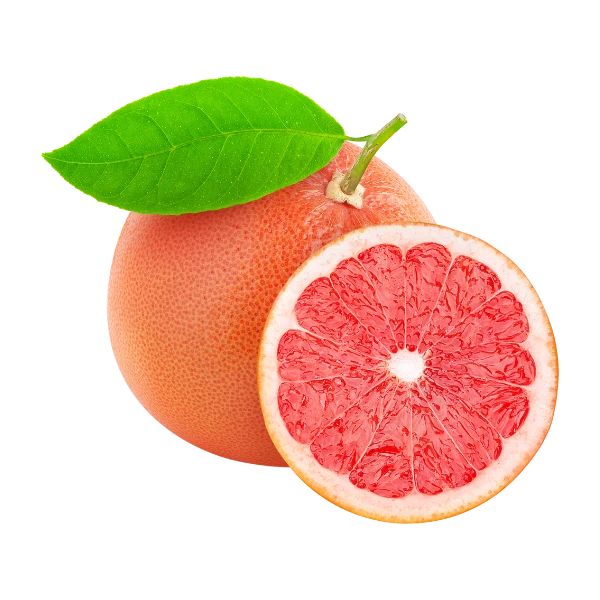
Is Grapefruit a trigger for histamine intolerance?
Grapefruit scores a 2 out of 3 on the SIGHI Food Compatibility List, placing it in the Moderate category. It is also classified on some reference lists as a potential histamine liberator. This reflects the reference list's classification rather than a confirmed mast-cell mechanism, since research specifically testing this hasn't provided strong support for it.
Grapefruit & Histamine, what the evidence says
Grapefruit carries one of the best-known and most extensively studied food-drug interactions in medicine, and it has nothing to do with histamine intolerance, although it is directly relevant to some medications used by people with allergies. Grapefruit contains furanocoumarins that can cause mechanism-based, essentially irreversible inhibition of an enzyme called CYP3A4 in the wall of the small intestine. This enzyme normally metabolizes many medications before they are fully absorbed. When intestinal CYP3A4 is inhibited, more of certain drugs can enter the bloodstream, potentially raising their levels and increasing the risk of side effects.
This interaction affects a wide range of medications, including some statins, calcium channel blockers, immunosuppressants, benzodiazepines, and other drugs. It has also involved antihistamines, but the effect depends on the specific medication. The older antihistamine terfenadine is a classic example: grapefruit juice increased its absorption and prolonged the QT interval, contributing to concern about potentially dangerous cardiac arrhythmias. Terfenadine was subsequently withdrawn from the market because of its proarrhythmic risk. More recent antihistamines can behave differently. For example, grapefruit juice can actually reduce the absorption of fexofenadine by interfering with intestinal drug transporters, potentially making the medication less effective.
The effect is also not necessarily limited to the exact moment grapefruit is consumed. Because the inhibition of intestinal CYP3A4 involves loss of functional enzyme, the body needs time to produce new enzyme. Human studies have found that intestinal CYP3A activity generally recovers within about three days after a single exposure to grapefruit juice. The exact duration and clinical importance vary with the medication, the amount of grapefruit consumed, and individual factors.
Not every medication is affected, and not every drug interaction involves an increase in drug levels. Some medications can become more concentrated in the bloodstream, while others can be absorbed less effectively. If you take prescription or over-the-counter medication regularly, check whether grapefruit or grapefruit juice is listed as an interaction on the medication information or ask your pharmacist or doctor before making grapefruit a regular part of your diet.
Separate from this drug interaction, grapefruit's histamine content itself hasn't raised the same level of concern in reference lists as its medication interaction profile.
Does preparation change the risk?
For grapefruit, the medication interaction is the main documented consideration, separate from histamine, and it applies to the fruit and its juice similarly.
| Form | Risk Level | Notes |
|---|---|---|
| Fresh grapefruit or juice, no interacting medications | Low | No established histamine concern; the medication interaction doesn't apply if you take no affected drugs |
| Any amount, taking a medication with a known grapefruit interaction | High | This is a drug interaction consideration, not a histamine one. Check with your pharmacist or doctor first. |
| Grapefruit consumed within days of starting or stopping an interacting medication | Moderate | The CYP3A4 effect can persist for about three days after grapefruit is consumed |
Note: The higher-risk rows here reflect a well-documented drug interaction, not standardized histamine measurements. This is separate from histamine intolerance.
A food score is a reference, not a verdict.
Histamine intolerance is highly individual. A food that triggers symptoms in one person may be tolerated by another, even within the same category.
Strict elimination may help reduce symptoms initially, but long-term progress often depends on gradual reintroduction and pattern recognition. The goal is not to remove more foods over time, but to understand your personal tolerance and expand your diet when possible.
Tracking symptoms, portions, and context such as stress or timing can provide insights that generalized food lists cannot. This is where informed decisions replace fear-based restriction.
How to test your tolerance
 Check your medications before eating grapefruit regularly.
Look at the medication label or ask your pharmacist whether grapefruit is listed as an interaction, especially if you take statins, calcium channel blockers, immunosuppressants, or certain other regular medications.
 Ask specifically about your antihistamine.
The interaction depends on the specific medication. Some antihistamines can have increased levels with grapefruit, while others, like fexofenadine, can be absorbed less effectively. Don't assume the effect goes one direction.
- Timing alone may not solve the interaction.
For some medications, the CYP3A4 effect can last about three days after grapefruit is consumed, so spacing out grapefruit and a dose by a few hours isn't always enough.
 Watch for new or unusual side effects.
If you start eating grapefruit regularly while on a prescription medication, be alert to new side effects and mention grapefruit consumption to your doctor.
- This isn't a histamine consideration.
Unlike most entries on this site, grapefruit's more pressing issue is a medication interaction unrelated to dietary histamine.
 Note any medications you take alongside your food tracking.
If you're logging grapefruit in MyHistaMap, it's worth keeping a personal note about which medications you're taking, given how this interaction depends on the specific drug.
Common questions about Grapefruit and histamine
Is grapefruit high in histamine?
That's not the main concern with this fruit. Grapefruit's histamine content hasn't raised particular concern in reference lists. Its more pressing issue is a well-documented interaction with many medications.
Can I eat grapefruit if I take an antihistamine?
It depends on which one. Grapefruit increased levels of the older antihistamine terfenadine, which was later withdrawn from the market due to heart rhythm risks, while it can reduce the absorption of fexofenadine, a more commonly used antihistamine today. Check with your pharmacist about your specific medication.
Does grapefruit only interact with medications if eaten at the same time?
Not necessarily. Because the interaction involves the body needing time to replace an inhibited enzyme, the effect for some medications can last around three days after grapefruit was last consumed.
Which medications are most affected by grapefruit?
Statins, calcium channel blockers, immunosuppressants, benzodiazepines, and some antihistamines are among the medication classes with documented grapefruit interactions, though not every drug in these classes is affected the same way.
Some people find these options helpful





Supplements are optional tools, not a solution. Personal tracking and identifying your individual triggers remains the priority.
Where this information comes from
At MyHistaMap we curate information from peer reviewed research and recognized medical sources. This guide is a reference tool, not a medical prescription. Always track your own reactions and consult your healthcare provider.
References
- Grapefruit Juice and Some Drugs Don't Mix, U.S. FDA: describes the CYP3A4 mechanism, lists affected medication classes including statins and calcium channel blockers, and confirms fexofenadine as an example where grapefruit reduces rather than increases drug absorption. The source for the general interaction and the FDA's fexofenadine example referenced on this page.
- Review of Grapefruit Juice-Drug Interactions Mediated by Intestinal CYP3A4 Inhibition: describes furanocoumarin-mediated mechanism-based, irreversible inhibition of intestinal CYP3A4 and lists terfenadine among historically affected antihistamines. The source for the CYP3A4 mechanism and terfenadine reference on this page.
- Bailey et al., Fruit Juice Inhibition of Uptake Transport: A New Type of Food-Drug Interaction, British Journal of Clinical Pharmacology, 2010: found grapefruit juice reduced fexofenadine oral bioavailability by roughly half through inhibition of the intestinal transporter OATP1A2, a distinct mechanism from CYP3A4 inhibition. The source for the fexofenadine-specific finding referenced on this page.
- Human studies on intestinal CYP3A4 recovery have found that enzyme activity generally returns to baseline within approximately three days following a single exposure to grapefruit juice, since new enzyme must be synthesized in the intestinal lining. The source for the three-day recovery period referenced on this page.