This content is for informational purposes only and does not constitute medical advice. Always consult a qualified healthcare provider before making dietary changes. Histamine tolerance is highly individual.
This information applies to histamine intolerance, DAO deficiency, and MCAS only. If you have a confirmed food allergy, this content does not apply to you. Food allergies involve the immune system and can be life-threatening. Please consult your allergist.
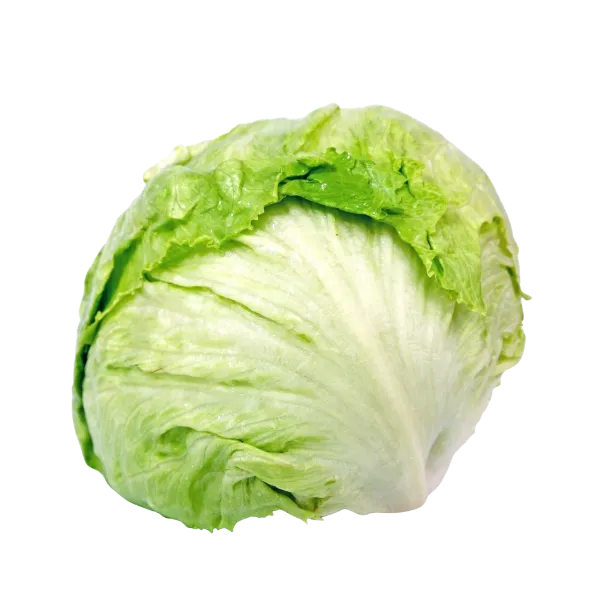
Is Lettuce iceberg a trigger for histamine intolerance?
Lettuce iceberg scores a 0 out of 3 on the SIGHI Food Compatibility List, placing it in the Safe category.
Lettuce iceberg & Histamine, what the evidence says
Iceberg lettuce is not associated with meaningful histamine content and is generally low in other plant compounds relevant to sensitive individuals, making it one of the more consistently well-tolerated vegetables.
All lettuce, including iceberg, contains trace amounts of lactucin, a bitter compound found in lactucarium, the milky sap historically harvested from wild lettuce (Lactuca virosa) and used since antiquity as a mild sedative, sometimes called "lettuce opium." The scale matters here: wild lettuce contains much higher concentrations of these compounds than cultivated lettuce, and among common lettuce varieties, iceberg and romaine tend to have some of the lowest lactucin levels, generally lower than looser-leaf varieties such as butterhead or red leaf lettuce.
Eating iceberg lettuce has no meaningful sedative effect. The historical connection comes from a different plant and much higher concentrations of these compounds, not from the lettuce typically eaten in a salad.
Does preparation change the risk?
Iceberg lettuce's histamine profile is consistent across preparation.
| Form | Risk Level | Notes |
|---|---|---|
| Fresh, raw | Low | Not associated with meaningful histamine content; consistently low across other plant compounds. |
| Pre-chopped / bagged | Low | Same profile; check for freshness and any added preservatives on the label. |
Note: Risk levels are based on clinical observations and patient reports, not standardized histamine measurements. Individual tolerance varies.
A food score is a reference, not a verdict.
Histamine intolerance is highly individual. A food that triggers symptoms in one person may be tolerated by another, even within the same category.
Strict elimination may help reduce symptoms initially, but long-term progress often depends on gradual reintroduction and pattern recognition. The goal is not to remove more foods over time, but to understand your personal tolerance and expand your diet when possible.
Tracking symptoms, portions, and context such as stress or timing can provide insights that generalized food lists cannot. This is where informed decisions replace fear-based restriction.
How to test your tolerance
 One of the more reliably low-risk vegetables.
Iceberg lettuce is consistently low across histamine, oxalates, salicylates, and lectins, making it a dependable everyday option.
 The "lettuce opium" connection is trivia, not a concern.
The compound involved is present in trace amounts in garden lettuce and concentrated in a different, wild relative plant. It has no practical relevance to eating a salad.
 Check bagged, pre-chopped versions for additives.
Plain iceberg lettuce is favorable; some pre-packaged salad mixes include dressings or preservatives worth checking.
 Track your response if trying it new.
Even well-tolerated vegetables are worth a brief note in the MyHistaMap app when first introduced.
Common questions about Lettuce iceberg and histamine
Is iceberg lettuce high in histamine?
No. Iceberg lettuce is not associated with meaningful histamine content and is generally low across other plant compounds as well.
Does lettuce actually contain something like opium?
All lettuce contains trace amounts of a compound related to lactucarium, historically sourced from a wild relative and used as a mild sedative. Garden lettuce, including iceberg, contains far too little to have any meaningful effect.
Is iceberg lettuce different from other lettuce types in this respect?
Yes, iceberg and romaine tend to have some of the lowest concentrations of this compound among lettuce varieties, generally lower than looser-leaf types like butterhead or red leaf lettuce.
Is iceberg lettuce a good everyday choice?
Yes, it's one of the more consistently low-risk vegetables across multiple plant compounds, making it a reliable base for meals.
Some people find these options helpful


Supplements are optional tools, not a solution. Personal tracking and identifying your individual triggers remains the priority.
Where this information comes from
At MyHistaMap we curate information from peer reviewed research and recognized medical sources. This guide is a reference tool, not a medical prescription. Always track your own reactions and consult your healthcare provider.
References
- Wesolowska et al., Analgesic and Sedative Activities of Lactucin and Some Lactucin-Like Guaianolides in Mice, Journal of Ethnopharmacology, 2006: lactucin was first isolated from the latex of wild lettuce (Lactuca virosa) in the mid-19th century; the dried latex, known as lactucarium or lettuce opium, was used throughout Europe for centuries, with its analgesic, antitussive, and sedative properties attributed to lactucin and its ester lactucopicrin.
- What makes lettuce bitter?, University of New Hampshire Extension: crisphead (iceberg) and romaine lettuce varieties are less likely to become bitter than butterhead or red and green leaf lettuces, reflecting lower levels of the bitter sesquiterpene lactones lactucin and lactucopicrin.