This content is for informational purposes only and does not constitute medical advice. Always consult a qualified healthcare provider before making dietary changes. Histamine tolerance is highly individual.
This information applies to histamine intolerance, DAO deficiency, and MCAS only. If you have a confirmed food allergy, this content does not apply to you. Food allergies involve the immune system and can be life-threatening. Please consult your allergist.
Is Mustard seeds a trigger for histamine intolerance?
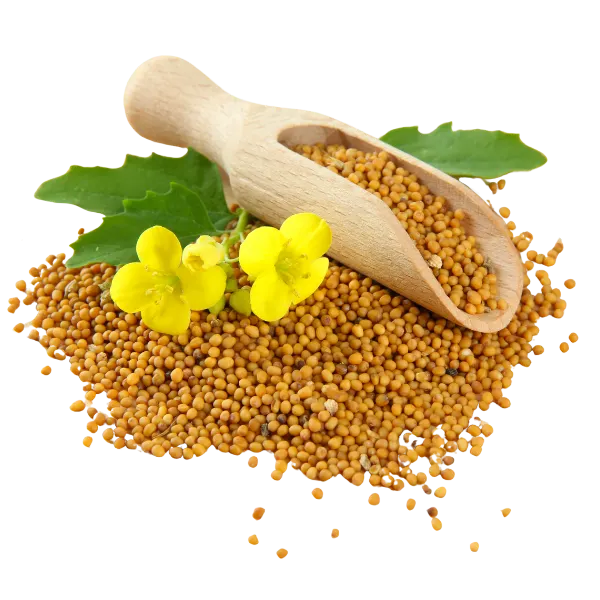
Mustard seeds scores a 2 out of 3 on the SIGHI Food Compatibility List, placing it in the Moderate category. It is also classified on some reference lists as a potential histamine liberator. This reflects the reference list's classification rather than a confirmed mast-cell mechanism, since research specifically testing this hasn't provided strong support for it.
Mustard seeds & Histamine, what the evidence says
Mustard seeds are poorly tolerated for histamine intolerance and are also classified as a potential histamine liberator.
Their more distinctive consideration involves skin contact. Mustard seeds and powder release allyl isothiocyanate when mixed with water, the compound responsible for their characteristic pungency. This makes mustard plasters, a traditional folk remedy applied directly to the skin for congestion or muscle pain, a genuine burn risk. Published case reports describe second-degree chemical burns following prolonged application of mustard plasters, including cases involving treatment for osteoarthritis pain. This risk applies specifically to topical use, not to eating mustard seeds or prepared mustard.
Does preparation change the risk?
How mustard seeds are used, eaten versus applied to skin, changes the risk picture entirely.
| Form | Risk Level | Notes |
|---|---|---|
| Whole or ground seed, culinary amounts | Moderate | Poorly tolerated for histamine intolerance with a liberator designation |
| Prepared mustard (condiment), typical amounts | Moderate | Same histamine consideration as the seed itself |
| Mustard plaster or paste applied to skin, brief contact | Moderate | Allyl isothiocyanate is a skin irritant; even short exposure can cause discomfort |
| Mustard plaster or paste applied to skin, prolonged contact | High | Case reports describe second-degree chemical burns from prolonged topical application |
Note: Risk levels are based on clinical observations and patient reports, not standardized histamine measurements. Individual tolerance varies.
A food score is a reference, not a verdict.
Histamine intolerance is highly individual. A food that triggers symptoms in one person may be tolerated by another, even within the same category.
Strict elimination may help reduce symptoms initially, but long-term progress often depends on gradual reintroduction and pattern recognition. The goal is not to remove more foods over time, but to understand your personal tolerance and expand your diet when possible.
Tracking symptoms, portions, and context such as stress or timing can provide insights that generalized food lists cannot. This is where informed decisions replace fear-based restriction.
How to test your tolerance
 Know the liberator designation.
Mustard seeds carry a histamine liberator classification, meaning they're associated with triggering histamine release rather than simply containing histamine themselves.
 Never leave a mustard plaster on for long.
Allyl isothiocyanate can cause second-degree chemical burns with prolonged skin contact. If trying this traditional remedy, limit application time and check the skin frequently.
- Watch for skin irritation even with brief contact.
Mustard plasters create a warming sensation intentionally, but this can escalate to burning or blistering, especially on sensitive skin.
- Eating mustard is a separate consideration from skin exposure.
The burn risk applies specifically to topical use, not to culinary consumption of mustard seeds or prepared mustard.
 Keep culinary amounts modest.
Given mustard's poor histamine tolerance, smaller amounts as a condiment or spice are more manageable.
 Track your response in MyHistaMap.
Log how you used mustard (culinary or topical) and any symptoms.
Common questions about Mustard seeds and histamine
Are mustard seeds high in histamine?
Mustard seeds are poorly tolerated for histamine intolerance and carry a designation suggesting they may act as a histamine liberator.
Can mustard plasters burn the skin?
Yes. Published case reports describe second-degree chemical burns from mustard plasters, particularly with prolonged application. Allyl isothiocyanate, released when mustard seeds or powder are mixed with water, is a genuine skin irritant.
Is eating mustard as risky as applying it to skin?
No, the burn risk is specific to topical use. Eating mustard seeds or prepared mustard doesn't carry this particular risk, though the histamine considerations still apply.
How long is safe to leave a mustard plaster on?
Traditional guidance suggests very brief application, but case reports of burns have occurred even within roughly an hour. Checking the skin frequently and removing it promptly at the first sign of irritation is important.
Some people find these options helpful





Supplements are optional tools, not a solution. Personal tracking and identifying your individual triggers remains the priority.
Where this information comes from
At MyHistaMap we curate information from peer reviewed research and recognized medical sources. This guide is a reference tool, not a medical prescription. Always track your own reactions and consult your healthcare provider.
References
- SIGHI (Swiss Interest Group Histamine Intolerance) Food Compatibility List: classifies mustard, mustard seeds, and mustard seed powder with a histamine score of 2 and a liberator (L) designation.
- Tartar DM, Parsi K, Sharon VR, Second degree burn to mustard powder, Dermatology Online Journal, 2017: case report of second-degree skin burns in a 61-year-old woman after a topical mustard plaster was left in place for one hour. The source for this page's burn case section.
- Yabanoglu H, Akbulut S, Karakayali F, Phytocontact Dermatitis due to Mustard Seed Mimicking Burn Injury: Report of a Case, Case Reports in Medicine, 2012: case report of second-degree burn from a mustard seed mixture applied for osteoarthritis pain treatment. The source for this page's second case reference.