This content is for informational purposes only and does not constitute medical advice. Always consult a qualified healthcare provider before making dietary changes. Histamine tolerance is highly individual.
This information applies to histamine intolerance, DAO deficiency, and MCAS only. If you have a confirmed food allergy, this content does not apply to you. Food allergies involve the immune system and can be life-threatening. Please consult your allergist.
Is Onion a trigger for histamine intolerance?
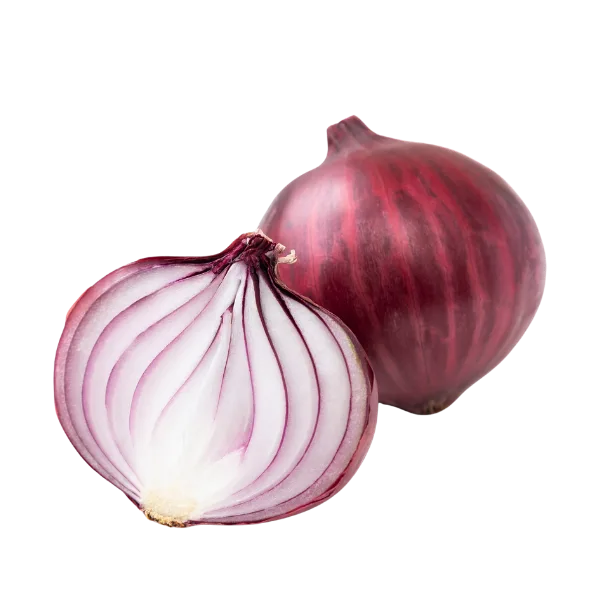
Onion scores a 1 out of 3 on the SIGHI Food Compatibility List, placing it in the Low category. It is also classified on some reference lists as a potential histamine liberator. This reflects the reference list's classification rather than a confirmed mast-cell mechanism, since research specifically testing this hasn't provided strong support for it.
Onion & Histamine, what the evidence says
Onion is not considered high in histamine, but some reference lists note that it may become poorly tolerated in larger quantities, a pattern sometimes attributed to a liberator effect: the idea that a food can trigger the body's own mast cells to release histamine, independent of how much histamine the food itself contains. This means portion size may matter more for onion than for many other low-histamine foods.
Separately, and somewhat at odds with this, onion is also one of the richer dietary sources of quercetin, a plant compound studied in laboratory research for its ability to calm mast cells and reduce the release of histamine and other inflammatory compounds. In one cell-culture study, quercetin performed as well as, or in some measures better than, cromolyn, a mast cell stabilizer. It's worth being clear about the limits of this research: these findings come from cells in a lab, not clinical trials in people with histamine intolerance, and the amount of quercetin absorbed from eating onion is far below the concentrated doses used in these studies. It's a genuinely interesting detail about onion, not a reason to expect it to offset a potential liberator effect in practice.
Does preparation change the risk?
Onion variety and preparation both affect histamine consideration, with fermentation making the biggest difference.
| Form | Risk Level | Notes |
|---|---|---|
| White onion | Low | Listed separately from regular onion, without the liberator marking |
| Small amount, cooked (regular onion) | Low | Generally well tolerated in modest quantities |
| Large quantities (regular onion) | Moderate | Specifically noted as poorly tolerated at higher amounts, a pattern linked to the liberator effect |
| Vinegar-pickled onion | Moderate | Does not undergo bacterial fermentation, but the underlying liberator effect of onion still applies |
| Fermented pickled onion | High | Fermentation can produce real histamine, not just the liberator effect seen in fresh onion |
Note: Risk levels are based on clinical observations and patient reports, not standardized histamine measurements. Individual tolerance varies.
A food score is a reference, not a verdict.
Histamine intolerance is highly individual. A food that triggers symptoms in one person may be tolerated by another, even within the same category.
Strict elimination may help reduce symptoms initially, but long-term progress often depends on gradual reintroduction and pattern recognition. The goal is not to remove more foods over time, but to understand your personal tolerance and expand your diet when possible.
Tracking symptoms, portions, and context such as stress or timing can provide insights that generalized food lists cannot. This is where informed decisions replace fear-based restriction.
How to test your tolerance
 Watch your portion size.
Onion may become poorly tolerated in large amounts, something that isn't obvious from a low-histamine rating alone.
 White onion may be a gentler starting point.
It's listed separately from regular onion, without the liberator marking, making it a reasonable place to start testing tolerance.
- Watch out for pickled onion.
Fermented pickled onion can develop real histamine through fermentation, not just the liberator effect seen in fresh onion. Vinegar-pickled onion, which isn't fermented, is a different story, though the liberator effect can still apply.
- Know about quercetin, but don't overstate it.
Onion is a notable dietary source of quercetin, studied for its calming effect on mast cells in lab settings. It's an interesting detail, not a reason to expect onion to offset its own liberator effect.
 Track your response by quantity.
Since amount matters more for onion than for many low-histamine foods, log portions, not just presence or absence, using MyHistaMap.
Common questions about Onion and histamine
Is onion high in histamine?
No. Onion isn't considered high in histamine, but some reference lists note that it may become poorly tolerated in larger quantities, possibly due to a liberator effect.
Why is portion size called out for onion?
Unlike many low-histamine foods, onion may be less well tolerated in larger quantities. This is sometimes attributed to a liberator effect, in which a food is thought to trigger histamine release independent of its own histamine content.
Is white onion better tolerated than regular onion?
It may be. SIGHI lists white onion separately, without the liberator marking that applies to regular onion, so it can be a reasonable starting point for testing.
Is pickled onion worse than fresh onion?
It can be, depending on how it is prepared. Fermented onion can develop biogenic amines during fermentation, while vinegar-pickled onion does not undergo the same type of fermentation. For that reason, it's useful to track fermented and vinegar-pickled onion separately rather than treating them as the same food.
Does onion's quercetin content cancel out its liberator effect?
Not necessarily in practice. Quercetin has been studied in laboratory settings for its effects on mast cells, but most of that research uses concentrated doses far beyond what eating onion provides.
Some people find these options helpful
Supplements are optional tools, not a solution. Personal tracking and identifying your individual triggers remains the priority.
Where this information comes from
At MyHistaMap we curate information from peer reviewed research and recognized medical sources. This guide is a reference tool, not a medical prescription. Always track your own reactions and consult your healthcare provider.
References
- SIGHI (Swiss Interest Group Histamine Intolerance) Food Compatibility List: lists onion with a histamine score of 1, marked 'L' (confirmed liberator), with the specific remark 'Incompatible in large quantities.' White onion is listed separately with a score of 0 and no liberator marking. Pickled vegetables are listed separately with a score of 2, marked 'H' (rich in histamine) and '?' (liberator status uncertain/suspected, not confirmed). These are the sources for the liberator classification, white onion distinction, and pickled onion risk level referenced on this page.
- Weng et al., Quercetin Is More Effective than Cromolyn in Blocking Human Mast Cell Cytokine Release and Inhibits Contact Dermatitis and Photosensitivity in Humans, PLoS One, 2012: found that quercetin was more effective than cromolyn at inhibiting histamine and inflammatory cytokine release from cultured human mast cells. This is cell-culture research, not a clinical trial in people with histamine intolerance, and is the source for the quercetin/cromolyn comparison referenced on this page.
- New Mexico State University, Healthy Facts (Onion): reports onion quercetin content of roughly 22 to 52 mg per 100 grams depending on variety, and cites Wageningen Agricultural University research showing quercetin absorption from onion is higher than from tea or apples. This is the source for onion's status as a notable dietary source of quercetin referenced on this page.