This content is for informational purposes only and does not constitute medical advice. Always consult a qualified healthcare provider before making dietary changes. Histamine tolerance is highly individual.
This information applies to histamine intolerance, DAO deficiency, and MCAS only. If you have a confirmed food allergy, this content does not apply to you. Food allergies involve the immune system and can be life-threatening. Please consult your allergist.
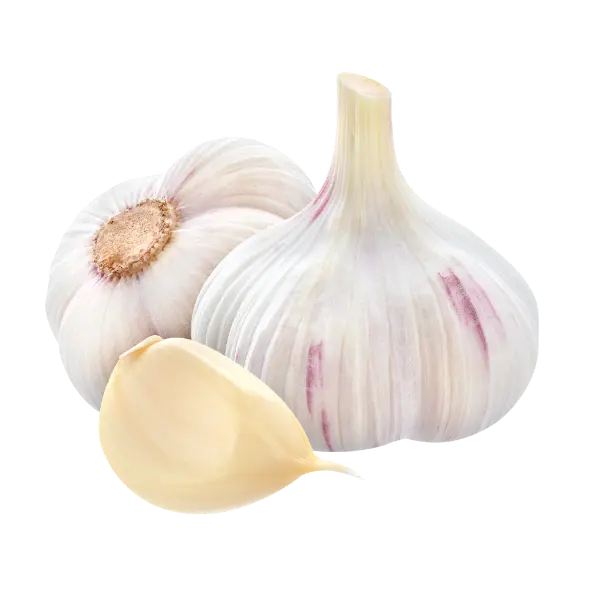
Is Garlic a trigger for histamine intolerance?
Garlic scores a 1 out of 3 on the SIGHI Food Compatibility List, placing it in the Low category.
Garlic & Histamine, what the evidence says
Garlic is not associated with meaningful histamine content. Much of its distinctive flavor and research interest comes from allicin, a compound that, like broccoli's sulforaphane, is not present in the intact clove. Garlic stores a stable precursor called alliin separately from an enzyme called alliinase. When the clove is crushed, chopped, or chewed, the cells are disrupted, allowing the two to combine and form allicin within a short time.
This has a practical consequence: heat quickly inactivates alliinase, so adding garlic directly to a hot pan produces less allicin than crushing or chopping it and letting it sit for about ten minutes before cooking. Allicin itself is also unstable and breaks down into other organosulfur compounds over time. None of this changes garlic's histamine profile, but it explains why preparation timing matters when the goal is to preserve allicin.
Does preparation change the risk?
Preparation method affects allicin content but not histamine level.
| Form | Risk Level | Notes |
|---|---|---|
| Fresh, cooked | Low | Generally well tolerated after cooking, per histamine research. |
| Crushed and rested before cooking | Low | Same favorable profile; allows more allicin to form before heat inactivates the enzyme. |
| Raw garlic | Moderate | Some people tolerate raw garlic less well than cooked, independent of its allicin content. |
| Jarred, pre-minced | Moderate | May contain preservatives or citric acid; check the label. |
Note: Risk levels are based on clinical observations and patient reports, not standardized histamine measurements. Individual tolerance varies.
A food score is a reference, not a verdict.
Histamine intolerance is highly individual. A food that triggers symptoms in one person may be tolerated by another, even within the same category.
Strict elimination may help reduce symptoms initially, but long-term progress often depends on gradual reintroduction and pattern recognition. The goal is not to remove more foods over time, but to understand your personal tolerance and expand your diet when possible.
Tracking symptoms, portions, and context such as stress or timing can provide insights that generalized food lists cannot. This is where informed decisions replace fear-based restriction.
How to test your tolerance
 Chop or crush it, then wait.
Letting garlic sit for about 10 minutes after chopping or crushing, before adding it to heat, allows more allicin to form before the enzyme responsible is inactivated by cooking.
 Cooking is generally well tolerated.
Garlic is specifically noted as usually well tolerated once cooked in histamine research, more so than in its raw form for some people.
 Check jarred, pre-minced garlic.
These products often contain preservatives like citric acid, which some sensitive individuals tolerate less well than fresh garlic.
 Track your response.
If you notice a difference between raw and cooked garlic, log this with the MyHistaMap app to clarify your personal pattern.
Common questions about Garlic and histamine
Is garlic high in histamine?
No, garlic is not associated with meaningful histamine content and is generally described as well tolerated after cooking.
What is allicin and why does chopping technique matter?
Allicin forms when alliin, stored in intact garlic cells, combines with the enzyme alliinase once the cells are physically disrupted. Cooking inactivates this enzyme, so letting chopped or crushed garlic rest for about 10 minutes before cooking allows more allicin to form.
Is raw garlic different from cooked garlic for tolerance?
Some people tolerate cooked garlic better than raw, independent of allicin content. Cooking is specifically noted as generally well tolerated in histamine research.
Should I worry about pre-minced garlic in a jar?
These products often contain preservatives such as citric acid, which is worth checking on the label if you are sensitive to additives beyond garlic itself.
Some people find these options helpful

Supplements are optional tools, not a solution. Personal tracking and identifying your individual triggers remains the priority.
Where this information comes from
At MyHistaMap we curate information from peer reviewed research and recognized medical sources. This guide is a reference tool, not a medical prescription. Always track your own reactions and consult your healthcare provider.
References
- Bioavailability, Health Benefits, and Delivery Systems of Allicin: A Review, Journal of Agricultural and Food Chemistry, 2024: allicin is converted from alliin by the enzyme alliinase only upon damage to the garlic clove, confirming that it does not exist in meaningful amounts in the intact bulb.
- Allicin: Chemistry and Biological Properties, Molecules, 2014: allicin is produced upon tissue damage from alliin through a reaction catalyzed by alliinase, and separate research on allicin's stability found it degrades over time once formed, which is why timing before heat exposure affects the final amount available.