This content is for informational purposes only and does not constitute medical advice. Always consult a qualified healthcare provider before making dietary changes. Histamine tolerance is highly individual.
This information applies to histamine intolerance, DAO deficiency, and MCAS only. If you have a confirmed food allergy, this content does not apply to you. Food allergies involve the immune system and can be life-threatening. Please consult your allergist.
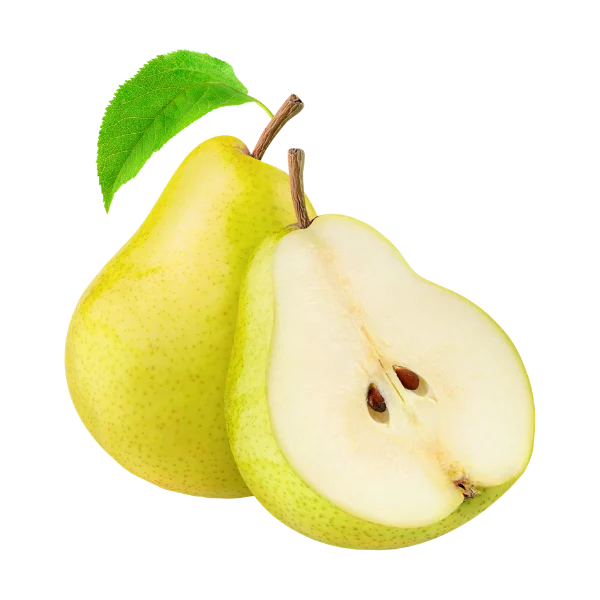
Is Pear a trigger for histamine intolerance?
Pear scores a 1 out of 3 on the SIGHI Food Compatibility List, placing it in the Low category.
Pear & Histamine, what the evidence says
Pear carries a well-documented digestive consideration unrelated to histamine: it contains fructose in excess of glucose and is also high in sorbitol, a sugar alcohol. Both are FODMAPs, a group of carbohydrates that some people absorb poorly. When these carbohydrates are not absorbed efficiently in the small intestine, they can reach the colon, where gut bacteria ferment them and produce gas, while their osmotic effects can draw water into the bowel. This can lead to bloating, abdominal discomfort, gas, and loose stools.
This matters for people with histamine intolerance because the gastrointestinal symptoms can look very similar. If you experience bloating, gas, cramping, or diarrhea after eating pear, fructose and sorbitol intolerance or poor tolerance of FODMAPs are worth considering alongside histamine as possible explanations. The symptoms themselves cannot tell you which mechanism is responsible. A doctor or dietitian familiar with gastrointestinal disorders can help determine whether FODMAP sensitivity is contributing to your symptoms and can guide a structured elimination and reintroduction process.
Processing also deserves some distinction. Drying fruit removes water and therefore concentrates its sugars and FODMAPs by weight, while canning and other processing methods can change how much of these carbohydrates remains in the fruit or moves into the surrounding liquid. Canned pears, pear juice, and dried pears should therefore not automatically be assumed to have the same FODMAP content as fresh pear. Products made with syrup or concentrated fruit juice can also contain additional sources of excess fructose.
Separate from this digestive consideration, pear is generally regarded as a low-histamine food, although some reference systems include a note about other biogenic amines.
Does preparation change the risk?
For pear, fructose/sorbitol content varies by processing and is the main digestive consideration, separate from its generally low histamine profile.
| Form | Risk Level | Notes |
|---|---|---|
| Fresh pear, small portion | Low | Generally low in histamine; smaller portions reduce FODMAP load for those sensitive to fructose/sorbitol |
| Fresh pear, full portion | Moderate | High fructose and sorbitol content can cause digestive symptoms in sensitive individuals, unrelated to histamine |
| Dried pear | Moderate | Drying concentrates sugars by weight; don't assume the same FODMAP load as fresh fruit |
| Canned pear in syrup or pear juice concentrate | Moderate | May contain additional added fructose beyond what's naturally in the fruit |
Note: The moderate-risk rows reflect FODMAP/digestive considerations, not standardized histamine measurements. This is separate from histamine intolerance.
A food score is a reference, not a verdict.
Histamine intolerance is highly individual. A food that triggers symptoms in one person may be tolerated by another, even within the same category.
Strict elimination may help reduce symptoms initially, but long-term progress often depends on gradual reintroduction and pattern recognition. The goal is not to remove more foods over time, but to understand your personal tolerance and expand your diet when possible.
Tracking symptoms, portions, and context such as stress or timing can provide insights that generalized food lists cannot. This is where informed decisions replace fear-based restriction.
How to test your tolerance
 Consider FODMAPs if gut symptoms don't fit your histamine pattern.
Bloating, gas, or diarrhea after pear could reflect fructose or sorbitol intolerance rather than histamine. The symptoms alone can't tell you which.
 Talk to a dietitian about a structured elimination process.
A professional familiar with FODMAP sensitivity can help you figure out whether this is contributing to your symptoms, separate from histamine tracking.
 Try a smaller portion.
If pear seems to cause digestive symptoms, a smaller amount may be better tolerated than a full pear.
 Don't assume dried or canned pear matches fresh pear.
Drying concentrates sugars, and canned or syrup-packed products may contain added fructose. Check labels if this matters to you.
- Keep the two considerations separate in your tracking.
Pear's low-histamine reputation and its FODMAP content are two different things. Both are worth knowing about.
 Log gut symptoms with detail.
In MyHistaMap, note portion size and specific symptoms after pear, since this can help distinguish a FODMAP pattern from a histamine one over time.
Common questions about Pear and histamine
Is pear high in histamine?
No, pear is generally regarded as a low-histamine food, though some reference systems include a note about other biogenic amines.
Why does pear sometimes cause bloating or gas?
Pear is high in fructose in excess of glucose and in sorbitol, both FODMAPs that some people absorb poorly. This can cause digestive symptoms unrelated to histamine.
How can I tell if my pear symptoms are from histamine or FODMAPs?
The symptoms alone often can't tell you which. A doctor or dietitian familiar with FODMAP sensitivity can help you work through a structured elimination and reintroduction process.
Is dried or canned pear the same as fresh for digestive purposes?
Not necessarily. Drying concentrates sugars by weight, and canned or syrup-packed pear may contain added fructose, so these shouldn't be assumed to match fresh pear's FODMAP content.
Some people find these options helpful





Supplements are optional tools, not a solution. Personal tracking and identifying your individual triggers remains the priority.
Where this information comes from
At MyHistaMap we curate information from peer reviewed research and recognized medical sources. This guide is a reference tool, not a medical prescription. Always track your own reactions and consult your healthcare provider.
References
- Monash University FODMAP research: identifies pear as high in excess fructose and sorbitol, both FODMAPs that can cause bloating, gas, and altered bowel habits through poor small-intestine absorption and colonic fermentation. Monash notes that fructose breath test results indicating malabsorption don't necessarily confirm that fructose is causing an individual's symptoms. The source for the FODMAP content and testing caveat referenced on this page.
- SIGHI (Swiss Interest Group Histamine Intolerance) Food Compatibility List: rates pear as well tolerated with a note on other amines. The source for pear's histamine classification referenced on this page.