This content is for informational purposes only and does not constitute medical advice. Always consult a qualified healthcare provider before making dietary changes. Histamine tolerance is highly individual.
This information applies to histamine intolerance, DAO deficiency, and MCAS only. If you have a confirmed food allergy, this content does not apply to you. Food allergies involve the immune system and can be life-threatening. Please consult your allergist.
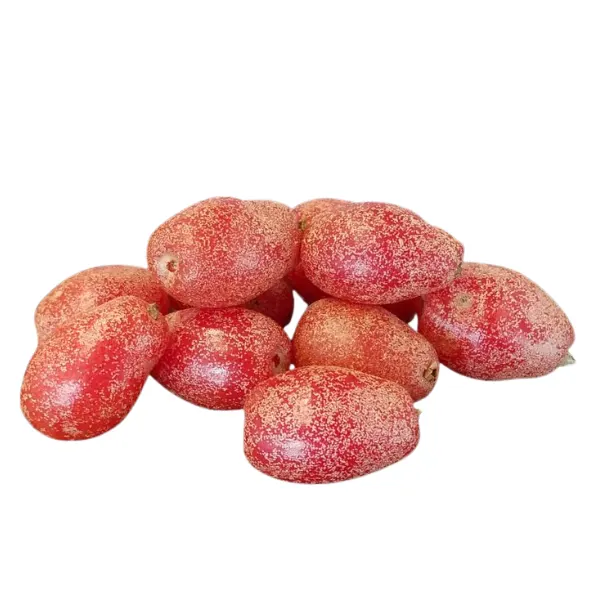
Is Russian olive / oleaster a trigger for histamine intolerance?
Russian olive / oleaster scores a 0 out of 3 on the SIGHI Food Compatibility List, placing it in the Safe category.
Russian olive / oleaster & Histamine, what the evidence says
Russian olive, also called Elaeagnus angustifolia or oleaster, doesn't have a well-established histamine classification in the reference lists commonly used for this kind of information. What's more unusual about this fruit is real clinical research on osteoarthritis, connected to its long traditional use in Iranian folk medicine for inflammatory and rheumatic conditions.
Several randomized, placebo-controlled trials, mostly conducted in Iran, have tested Russian olive fruit extract, in various preparations including whole fruit powder and medulla (inner fruit) powder, for knee osteoarthritis. In these specific trials, researchers reported pain and function outcomes similar to those seen with standard doses of acetaminophen or ibuprofen, though this reflects the results of those particular studies rather than an established equivalence to these medications. One trial testing whole fruit and medulla powder against placebo found significant improvements in pain, stiffness, and physical function in the treatment groups that weren't seen in the placebo group. Animal and laboratory research has found anti-inflammatory and pain-relieving effects and identified some activity on inflammatory pathways related to those affected by NSAID medications, though this doesn't mean Russian olive shares the same mechanism, strength, or clinical profile as those drugs.
This is a genuinely more clinically supported traditional use than many other food-based remedies, though the research base is still relatively small and comes predominantly from a specific research group and population, so broader confirmation would strengthen confidence in the findings. The trials conducted so far haven't reported significant side effects at the doses studied, though the number of participants involved is small.
None of this relates to histamine. Russian olive's own histamine content hasn't been specifically classified in the reference lists commonly used for this kind of information, similar to some other less common fruits discussed on this site.
Does preparation change the risk?
Because Russian olive lacks a clear histamine classification, freshness and processing are reasonable general guides rather than firmly established risk factors.
| Form | Risk Level | Notes |
|---|---|---|
| Fresh Russian olive fruit | Low | No established histamine concern, though overall data is limited |
| Dried fruit or fruit powder | Low | The form used in most of the osteoarthritis research; not a known histamine concern |
| Concentrated extract or supplement | Moderate | Concentrated doses go beyond typical dietary amounts; effects and safety at higher intake aren't well established |
Note: Risk levels are based on clinical observations and patient reports, not standardized histamine measurements. Individual tolerance varies.
A food score is a reference, not a verdict.
Histamine intolerance is highly individual. A food that triggers symptoms in one person may be tolerated by another, even within the same category.
Strict elimination may help reduce symptoms initially, but long-term progress often depends on gradual reintroduction and pattern recognition. The goal is not to remove more foods over time, but to understand your personal tolerance and expand your diet when possible.
Tracking symptoms, portions, and context such as stress or timing can provide insights that generalized food lists cannot. This is where informed decisions replace fear-based restriction.
How to test your tolerance
 Treat it as a new food to test.
Since Russian olive doesn't have an established histamine profile, introduce it in a small amount first, the way you would with any unfamiliar food.
 Don't expect NSAID-level relief.
The osteoarthritis research is genuinely interesting, but it comes from a specific, relatively small set of trials. Treat it as a food to try, not a replacement for medical treatment.
 Separate the osteoarthritis research from histamine questions.
This fruit's most notable research is about joint pain, not histamine intolerance. Don't assume one tells you anything about the other.
- Talk to a doctor before using concentrated extracts for osteoarthritis.
The clinical trials used specific doses and preparations. Discuss this with a healthcare provider rather than self-dosing based on general information.
- Fresh or dried fruit is a simpler starting point.
Concentrated extracts and supplements deliver more of the compounds studied than eating the whole fruit.
 Track it carefully.
Since there's no reliable histamine classification to fall back on, logging your own response to Russian olive in MyHistaMap is especially useful here.
Common questions about Russian olive / oleaster and histamine
Is Russian olive high in histamine?
It isn't classified either way with much confidence. Russian olive hasn't been studied enough for histamine to say clearly whether it's high, low, or a liberator.
Does Russian olive actually help with osteoarthritis?
Several small randomized, placebo-controlled trials, mostly from Iran, have found improvements in pain and function with Russian olive fruit extract, with results comparable to standard doses of acetaminophen or ibuprofen in those specific studies. The research base is still relatively small, so broader confirmation would strengthen confidence in these findings.
Does Russian olive work like ibuprofen?
It has shown some activity on inflammatory pathways related to those targeted by NSAID medications, but this doesn't mean it shares the same mechanism, strength, or clinical profile as those drugs.
Should I try Russian olive if I have histamine intolerance?
It's reasonable to try in a small amount, the same way you'd introduce any new food, since there isn't strong evidence pointing to it being a common trigger.
Some people find these options helpful





Supplements are optional tools, not a solution. Personal tracking and identifying your individual triggers remains the priority.
Where this information comes from
At MyHistaMap we curate information from peer reviewed research and recognized medical sources. This guide is a reference tool, not a medical prescription. Always track your own reactions and consult your healthcare provider.
References
- Elaeagnus angustifolia and Its Therapeutic Applications in Osteoarthritis, Industrial Crops and Products, 2018: reviews four randomized clinical trials of E. angustifolia whole fruit aqueous extract reporting efficacy comparable to acetaminophen and ibuprofen in those studies, with no reported side effects up to 600 mg/day. The source for the clinical trial overview referenced on this page.
- The Effect of Elaeagnus angustifolia L. Whole Fruit and Medulla Powder on Women with Osteoarthritis of the Knee: A Randomized Controlled Clinical Trial: found significant improvements in pain, stiffness, and physical function scores in whole fruit and medulla powder groups compared to placebo over 8 weeks in 90 women with knee osteoarthritis. The source for the placebo-controlled trial findings referenced on this page.
- Russian Olive (Elaeagnus angustifolia) as a Herbal Healer: describes anti-inflammatory and analgesic effects in animal models, including inhibition of TNF-α, COX-1, COX-2, and IL-1β pathways. The source for the mechanism information referenced on this page.
- SIGHI (Swiss Interest Group Histamine Intolerance) Food Compatibility List: lists Elaeagnus angustifolia/Russian olive/silver berry/oleaster as well tolerated, with a note referencing its traditional use against osteoarthritis. The source for the histamine classification and osteoarthritis note referenced on this page.