This content is for informational purposes only and does not constitute medical advice. Always consult a qualified healthcare provider before making dietary changes. Histamine tolerance is highly individual.
This information applies to histamine intolerance, DAO deficiency, and MCAS only. If you have a confirmed food allergy, this content does not apply to you. Food allergies involve the immune system and can be life-threatening. Please consult your allergist.
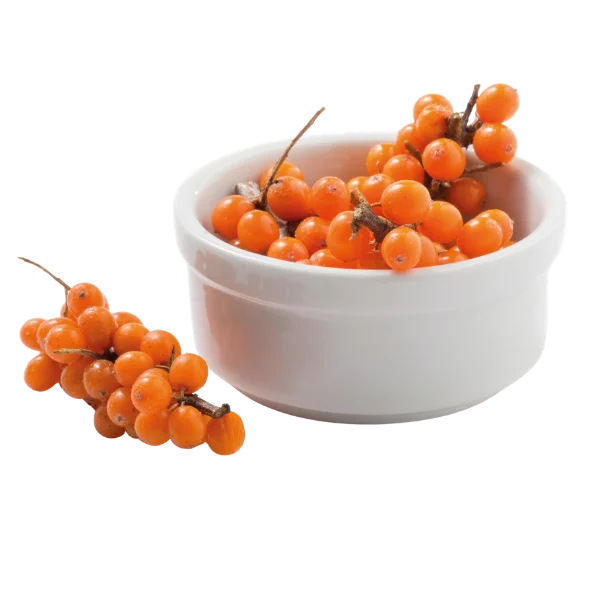
Is Sea buckthorn a trigger for histamine intolerance?
Sea buckthorn scores a 0 out of 3 on the SIGHI Food Compatibility List, placing it in the Safe category.
Sea buckthorn & Histamine, what the evidence says
Sea buckthorn doesn't have a clearly established histamine classification, similar to some other less common berries discussed on this site. That reflects limited data rather than evidence that it's a problem food.
What's well documented is that sea buckthorn is unusually rich in vitamin C, along with vitamin E, carotenoids, and flavonoids. Sea buckthorn is sometimes marketed specifically to people with histamine intolerance because of this nutrient density, though as with other high-vitamin-C foods discussed on this site, the amount of vitamin C in a typical serving is well below the doses used in research linking vitamin C to lower circulating histamine.
There is also some direct laboratory research on sea buckthorn's flavonoids and mast cells. A study using cultured mast cells found that a flavonoid extract from sea buckthorn inhibited IgE-triggered mast cell activation through a specific internal signaling pathway. A separate animal study found that sea buckthorn flavonoids reduced mast cell infiltration and inflammatory markers in a model of skin inflammation. Both are genuine findings, but they come from cell cultures and animal models rather than from people eating sea buckthorn, so they don't establish that eating the berries produces the same effect.
Some commercial sources marketing sea buckthorn products go further, describing it as specifically suited to people with histamine intolerance. That framing goes beyond what the current research supports. The laboratory findings are interesting, but they don't amount to clinical evidence that sea buckthorn treats or prevents histamine-related symptoms in people.
Does preparation change the risk?
Because sea buckthorn lacks a clear histamine classification, freshness and processing are reasonable general guides rather than firmly established risk factors.
| Form | Risk Level | Notes |
|---|---|---|
| Fresh sea buckthorn berries | Low | No established histamine concern, though overall data is limited |
| Sea buckthorn juice, freshly made | Low | Similar reasoning applies; freshness is a sensible general precaution |
| Sea buckthorn oil or concentrated extracts/supplements | Moderate | Concentrated doses go beyond typical dietary amounts and haven't been tested for histamine intolerance specifically |
| Fermented sea buckthorn products | Moderate | Fermentation generally raises histamine and other biogenic amines, as it does in other fruit-based products |
Note: Risk levels are based on clinical observations and patient reports, not standardized histamine measurements. Individual tolerance varies.
A food score is a reference, not a verdict.
Histamine intolerance is highly individual. A food that triggers symptoms in one person may be tolerated by another, even within the same category.
Strict elimination may help reduce symptoms initially, but long-term progress often depends on gradual reintroduction and pattern recognition. The goal is not to remove more foods over time, but to understand your personal tolerance and expand your diet when possible.
Tracking symptoms, portions, and context such as stress or timing can provide insights that generalized food lists cannot. This is where informed decisions replace fear-based restriction.
How to test your tolerance
 Treat it as a new food to test.
Since sea buckthorn doesn't have an established histamine profile, introduce it in a small amount first, the way you would with any unfamiliar food.
 Be skeptical of strong marketing claims.
Some products are marketed as specifically suited to histamine intolerance based on lab and animal research. That research is real, but it doesn't confirm the same effect happens from eating the berries.
 Keep supplement doses in perspective.
Research on vitamin C and histamine generally uses concentrated doses well beyond what a normal serving of sea buckthorn provides.
 Fresh berries or juice are a simpler starting point.
Concentrated oils, extracts, and supplements deliver much higher doses of specific compounds than eating the whole berry.
 Be cautious with fermented sea buckthorn products.
Fermentation tends to raise histamine content, so fermented products carry more uncertainty than fresh berries or juice.
 Track it carefully.
Since there's no reliable classification to fall back on, logging your own response to sea buckthorn in MyHistaMap is especially useful here.
Common questions about Sea buckthorn and histamine
Is sea buckthorn high in histamine?
It isn't classified either way with much confidence. Sea buckthorn hasn't been studied enough to say clearly whether it's high, low, or a liberator.
Does sea buckthorn help with histamine intolerance?
Laboratory studies have found that sea buckthorn flavonoids can inhibit mast cell activation and reduce mast cell infiltration in an animal model, but these are cell and animal experiments, not evidence that eating sea buckthorn helps with symptoms in people.
Why is sea buckthorn marketed for histamine intolerance?
It's very rich in vitamin C and has real laboratory research on mast cells behind it, but some marketing claims describing it as specifically suited to histamine intolerance go further than the current evidence supports.
Should I try sea buckthorn if I have histamine intolerance?
It's reasonable to try in a small amount, the same way you'd introduce any new food, since there isn't strong evidence pointing to it being a common trigger.
Some people find these options helpful





Supplements are optional tools, not a solution. Personal tracking and identifying your individual triggers remains the priority.
Where this information comes from
At MyHistaMap we curate information from peer reviewed research and recognized medical sources. This guide is a reference tool, not a medical prescription. Always track your own reactions and consult your healthcare provider.
References
- Sea Buckthorn Flavonoid Extracted by High Hydrostatic Pressure Inhibited IgE-Stimulated Mast Cell Activation through the Mitogen-Activated Protein Kinase Signaling Pathway, 2024: found sea buckthorn flavonoid extract inhibited IgE-stimulated mast cell activation in cultured RBL-2H3 cells, working through the MAPK signaling pathway. The source for the mast cell study referenced on this page.
- Synergistic Role of Vitamins and Bioactive Compounds in Sea Buckthorn, IntechOpen, 2025: describes sea buckthorn's rich vitamin C, A, and E content, and cites research finding sea buckthorn flavonoids reduced mast cell infiltration in a mouse model of atopic dermatitis-like skin lesions. The source for the composition and animal study referenced on this page.
- Marketing materials from commercial sea buckthorn suppliers describe the product as specifically suited to people with histamine intolerance, a framing that goes beyond what the current cell and animal research supports. The source for this page's caution about commercial marketing claims.