This content is for informational purposes only and does not constitute medical advice. Always consult a qualified healthcare provider before making dietary changes. Histamine tolerance is highly individual.
This information applies to histamine intolerance, DAO deficiency, and MCAS only. If you have a confirmed food allergy, this content does not apply to you. Food allergies involve the immune system and can be life-threatening. Please consult your allergist.
Is Cape gooseberry a trigger for histamine intolerance?
Cape gooseberry scores a 0 out of 3 on the SIGHI Food Compatibility List, placing it in the Safe category.
Cape gooseberry & Histamine, what the evidence says
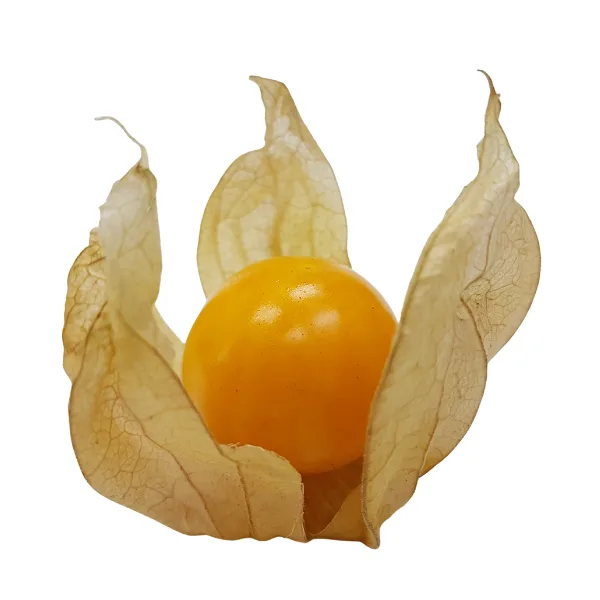
Physalis peruviana, commonly called Cape gooseberry or goldenberry, is generally considered low in histamine. It also carries a safety consideration for unripe fruit that's separate from histamine intolerance. The unripe fruit, along with the plant's flowers, leaves, and stems, contains solanine and related glycoalkaloids. These compounds have been associated with gastrointestinal symptoms, headaches, and, in severe cases, neurological effects. The ripe fruit itself is the edible part regularly sold and eaten; the concern applies mainly to unripe fruit and other plant parts, not to properly ripened berries removed from their papery husk.
Toxicology testing in rats found the ripe fruit had an acute oral LD50 above 5000 milligrams per kilogram of body weight, indicating low acute toxicity at that dose. However, the same research found that prolonged, high-dose exposure over 90 days caused cardiac toxicity in male rats. Separately, case reports have described adverse effects, including elevated blood pressure, an abnormal heart rhythm, and a manic episode, in people using concentrated weight-loss preparations containing the fruit, though these involved specific commercial products rather than eating the fruit as a normal food.
Physalis peruviana also contains withanolides, a class of steroid-like compounds studied for anti-inflammatory and antioxidant properties in laboratory and animal research. This research is preliminary, mostly preclinical, and doesn't establish a specific health benefit from eating the fruit in ordinary amounts.
Does preparation change the risk?
For Cape gooseberry, ripeness is the key safety factor, separate from its generally low histamine content.
| Form | Risk Level | Notes |
|---|---|---|
| Ripe fruit, husk removed | Low | The standard edible form; low in histamine and low in the alkaloids of concern |
| Unripe fruit | High | This is a food safety consideration, not a histamine one. Contains solanine-type alkaloids. |
| Flowers, leaves, or stems of the plant | High | Not intended for consumption; contain the same alkaloids of concern |
| Concentrated weight-loss preparations containing the fruit | Moderate | Case reports have described adverse effects with concentrated commercial products, distinct from eating the fruit |
Note: The higher-risk rows reflect documented alkaloid toxicity concerns, not standardized histamine measurements. This is separate from histamine intolerance.
A food score is a reference, not a verdict.
Histamine intolerance is highly individual. A food that triggers symptoms in one person may be tolerated by another, even within the same category.
Strict elimination may help reduce symptoms initially, but long-term progress often depends on gradual reintroduction and pattern recognition. The goal is not to remove more foods over time, but to understand your personal tolerance and expand your diet when possible.
Tracking symptoms, portions, and context such as stress or timing can provide insights that generalized food lists cannot. This is where informed decisions replace fear-based restriction.
How to test your tolerance
 Eat it ripe, out of the husk.
This is the standard, safe way to eat Cape gooseberry. The unripe fruit and other plant parts carry the alkaloid safety concern.
 Don't eat unripe fruit or other plant parts.
Flowers, leaves, and stems, along with unripe fruit, contain solanine-type alkaloids and aren't intended for consumption.
 Be cautious with concentrated weight-loss products.
Case reports describe adverse cardiovascular and psychiatric effects from concentrated preparations containing this fruit. This is different from eating the ripe fruit as food.
 Don't expect a specific health benefit from eating it.
Research on withanolides and other compounds in Cape gooseberry is preliminary and mostly preclinical, so treat it as a food to enjoy rather than a therapeutic supplement.
 Introduce it like any new food for histamine purposes.
Ripe Cape gooseberry is generally low in histamine. Start with a small amount and note how you feel.
 This isn't a histamine tracking issue.
For MyHistaMap purposes, ripe Cape gooseberry is low in histamine. Its more important consideration is ripeness and plant-part safety.
Common questions about Cape gooseberry and histamine
Is Cape gooseberry safe to eat?
The ripe fruit, removed from its husk, is the standard edible form and is generally safe. Unripe fruit, flowers, leaves, and stems contain solanine-type alkaloids and shouldn't be eaten.
Is Cape gooseberry high in histamine?
No, its histamine content is generally considered low. Its more notable consideration is the ripeness-related alkaloid safety issue, unrelated to histamine.
Is Cape gooseberry the same risk as a green potato?
It carries a similar type of concern, since both contain solanine-type alkaloids in unripe or vegetative parts, but this applies to unripe fruit and other plant parts, not to the ripe fruit that's normally eaten.
Are weight-loss supplements containing Cape gooseberry safe?
Case reports have described adverse effects, including elevated blood pressure, abnormal heart rhythm, and a manic episode, with concentrated commercial preparations. This is a separate consideration from eating the ripe fruit as food.
Some people find these options helpful





Supplements are optional tools, not a solution. Personal tracking and identifying your individual triggers remains the priority.
Where this information comes from
At MyHistaMap we curate information from peer reviewed research and recognized medical sources. This guide is a reference tool, not a medical prescription. Always track your own reactions and consult your healthcare provider.
References
- Physalis peruviana Toxicity and Toxic Elements, in Toxicological Aspects of Medicinal Plants: describes unripe Physalis peruviana fruit as containing a solanine toxin causing gastrointestinal toxicity, headaches, and hallucinations, and cites case reports of adverse effects from weight-loss preparations. The source for the toxicity findings referenced on this page.
- Morton, Cape Gooseberry, Physalis peruviana L., in Fruits of Warm Climates, Purdue University Center for New Crops & Plant Products, 1987: describes unripe raw fruits, flowers, leaves, and stems of Physalis peruviana as containing solanine and solanidine alkaloids capable of causing poisoning. The source for the specific alkaloid identification referenced on this page.
- Perk et al., Acute and Subchronic Toxic Effects of the Fruits of Physalis peruviana L., Evidence-Based Complementary and Alternative Medicine, 2013: found an acute LD50 above 5000 mg/kg in rats and cardiotoxicity in male rats after 90-day high-dose exposure. The source for the toxicology testing figures referenced on this page.
- Effects of Moderate High Temperature and UV-B on Accumulation of Withanolides in Physalis peruviana: describes withanolide compounds studied for anti-inflammatory, antioxidant, and other pharmacological properties, largely in preclinical research. The source for the withanolide information referenced on this page.