This content is for informational purposes only and does not constitute medical advice. Always consult a qualified healthcare provider before making dietary changes. Histamine tolerance is highly individual.
This information applies to histamine intolerance, DAO deficiency, and MCAS only. If you have a confirmed food allergy, this content does not apply to you. Food allergies involve the immune system and can be life-threatening. Please consult your allergist.
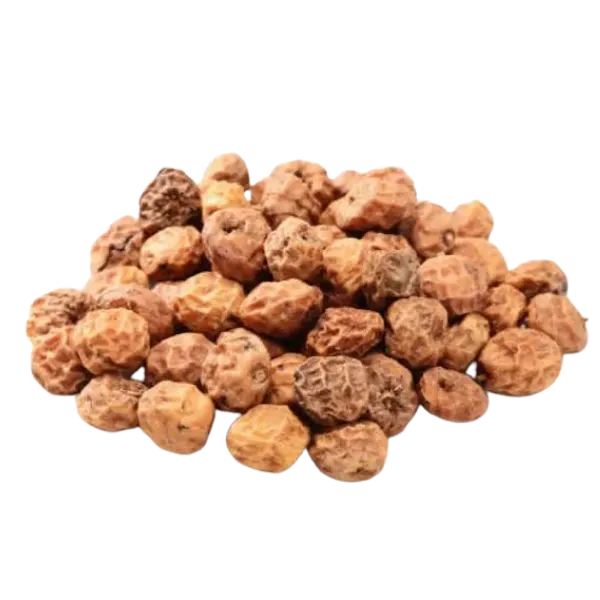
Is Tigernut, roasted a trigger for histamine intolerance?
Tigernut, roasted scores a 2 out of 3 on the SIGHI Food Compatibility List, placing it in the Moderate category. Some reference sources also suggest it may be a histamine liberator, though even the source itself describes this as unconfirmed or suspected.
Tigernut, roasted & Histamine, what the evidence says
Roasted tigernuts are not associated with meaningful histamine content on compatibility reference lists.
Roasting is a relevant processing step for tigernuts because they can be exposed to molds capable of producing aflatoxins during cultivation, harvesting, or storage. A study using artificially contaminated tigernuts found that roasting reduced total aflatoxin levels by approximately 66%, compared with about 30% after blanching and about 5% after soaking. None of these treatments completely eliminated the aflatoxins. Because the study used artificially contaminated tigernuts, the exact reduction may not apply to naturally contaminated samples, but it demonstrates that roasting can substantially reduce aflatoxin levels.
Roasting has also been found to reduce other compounds present in raw tigernut tubers. Laboratory analysis found lower levels of oxalates, cyanogenic glycosides, tannins, and saponins in roasted tigernuts compared with the raw tuber. The study reported that roasting numerically reduced the antinutritional compounds measured. This does not eliminate these compounds, but it shows that roasting can alter their levels in tigernuts.
Does preparation change the risk?
Roasting itself doesn't affect histamine content, but it is the main variable for aflatoxin risk and antinutrient levels in tigernuts.
| Form | Risk Level | Notes |
|---|---|---|
| Roasted tigernuts, small portion | Low | Not associated with meaningful histamine content; roasting reduces aflatoxin and antinutrient levels compared to raw |
| Larger portions | Moderate | Oxalate content becomes more relevant at larger serving sizes, even after roasting |
| Tigernut milk (horchata) made from roasted tubers | Moderate | Documented allergy cases specific to processed tigernut beverages; not a histamine concern |
Note: Risk levels are based on clinical observations and patient reports, not standardized histamine measurements. Individual tolerance varies.
A food score is a reference, not a verdict.
Histamine intolerance is highly individual. A food that triggers symptoms in one person may be tolerated by another, even within the same category.
Strict elimination may help reduce symptoms initially, but long-term progress often depends on gradual reintroduction and pattern recognition. The goal is not to remove more foods over time, but to understand your personal tolerance and expand your diet when possible.
Tracking symptoms, portions, and context such as stress or timing can provide insights that generalized food lists cannot. This is where informed decisions replace fear-based restriction.
How to test your tolerance
 Roasting reduces aflatoxin levels.
Since tigernuts can be exposed to aflatoxin-producing molds, roasting is a meaningful processing step, substantially reducing though not fully eliminating aflatoxin content.
 Roasting also lowers other compounds.
Laboratory analysis found lower oxalate, cyanogenic glycoside, tannin, and saponin levels in roasted tigernuts compared to raw ones.
 Portion size still matters.
Roasting reduces but doesn't eliminate oxalate content, so keeping portions moderate is still worth considering if you're managing oxalate intake.
 Tigernut milk is a separate consideration.
If trying horchata made from roasted tigernuts, documented allergy cases have occurred specifically with the processed beverage, unrelated to histamine.
 Track your response.
Log the quantity and any symptoms using MyHistaMap to spot patterns over multiple trials.
Common questions about Tigernut, roasted and histamine
Are roasted tigernuts high in histamine?
No, roasted tigernuts are not associated with meaningful histamine content on compatibility reference lists.
Does roasting make tigernuts safer?
In some ways, yes. A study found roasting reduced aflatoxin contamination by about 66%, more than blanching or soaking, though it didn't eliminate it completely. Roasting was also found to lower oxalate, cyanogenic glycoside, tannin, and saponin levels compared to raw tigernuts.
Why do tigernuts carry an aflatoxin risk?
Tigernuts can be exposed to molds capable of producing aflatoxins during cultivation, harvesting, or storage. This is a food-safety consideration separate from histamine.
Are roasted tigernuts completely free of oxalates after roasting?
No. Roasting reduces oxalate levels compared to raw tigernuts, but doesn't eliminate them, so portion size is still worth considering if you're managing oxalate intake.
Some people find these options helpful





Supplements are optional tools, not a solution. Personal tracking and identifying your individual triggers remains the priority.

Where this information comes from
At MyHistaMap we curate information from peer reviewed research and recognized medical sources. This guide is a reference tool, not a medical prescription. Always track your own reactions and consult your healthcare provider.
References
- Aflatoxin Contamination, Phenolic Contents Concentration in Tigernuts as Affected by Traditional Household Processes, Egyptian Journal of Food Science, 2018: found that roasting reduced total aflatoxin levels in artificially contaminated tigernuts by approximately 66%, compared to about 30% for blanching and about 5% for soaking, with none of the methods fully eliminating aflatoxins. The source for this page's aflatoxin reduction section.
- Ekeanyanwu RC, Ononogbu IC, Determination of anti-nutrient content of Nigerian tigernut (Cyperus esculentus), 2010: found roasting numerically reduced oxalate, cyanogenic glycoside, tannin, and saponin levels compared to raw tigernut tubers. The source for this page's antinutrient reduction section.