This content is for informational purposes only and does not constitute medical advice. Always consult a qualified healthcare provider before making dietary changes. Histamine tolerance is highly individual.
This information applies to histamine intolerance, DAO deficiency, and MCAS only. If you have a confirmed food allergy, this content does not apply to you. Food allergies involve the immune system and can be life-threatening. Please consult your allergist.
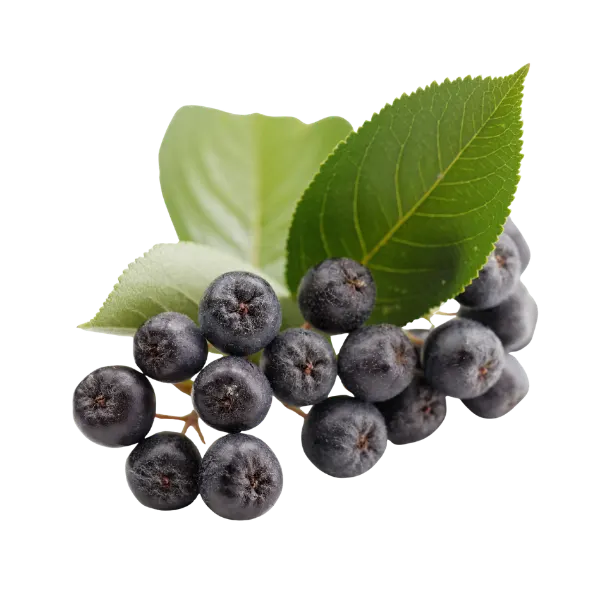
Is Chokeberries a trigger for histamine intolerance?
Chokeberries's histamine classification isn't conclusive; available reference sources don't agree or don't have enough data to assign a confident score.
Chokeberries & Histamine, what the evidence says
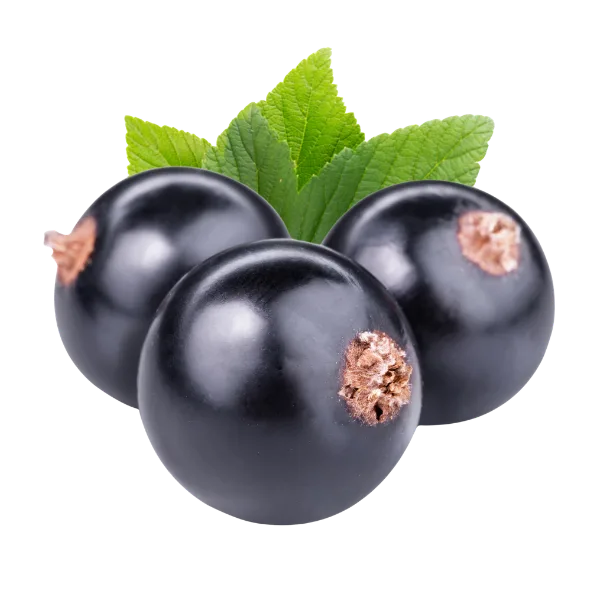
Aronia, also called chokeberry, doesn't have enough research in humans to say whether it tends to be well tolerated or problematic for people with histamine intolerance.
What is well established is that aronia is particularly rich in polyphenols, especially anthocyanins, the pigments responsible for its dark purple color. Studies comparing different berries have found aronia among the richest sources of anthocyanins, along with substantial amounts of other polyphenols such as proanthocyanidins.
A small body of laboratory and animal research has looked at whether these compounds interact with histamine-related processes. A 1994 study found that flavonoids from Aronia melanocarpa juice reduced inflammation in a rat model in which inflammation was induced by histamine or serotonin. A more recent study found that aronia extracts and juice reduced histamine-induced contractions in isolated rat intestinal tissue. A separate, more recent study tested aronia extract directly on cultured mast cells and found that a polyphenol-rich fraction significantly inhibited the release of histamine and other allergy-related mediators, identifying quercetin as one of the compounds contributing to the effect. These findings show that aronia compounds can interact with biological processes involving histamine, but they do not tell us whether eating aronia berries or drinking aronia juice changes histamine-related symptoms in people.
Does preparation change the risk?
Because aronia lacks a clear histamine classification, freshness and processing are reasonable general guides rather than firmly established risk factors.
| Form | Risk Level | Notes |
|---|---|---|
| Fresh aronia berries | Low | No established histamine concern, though overall data is limited |
| Aronia juice, freshly made | Low | Similar reasoning applies; freshness is a sensible general precaution |
| Fermented aronia products (wine, some juices) | Moderate | Fermentation generally raises histamine and other biogenic amines, as it does in other fruit-based drinks |
| Aronia supplements or concentrated extracts | Moderate | Concentrated doses go beyond typical dietary amounts and haven't been tested for histamine intolerance specifically |
Note: Risk levels are based on clinical observations and patient reports, not standardized histamine measurements. Individual tolerance varies.
A food score is a reference, not a verdict.
Histamine intolerance is highly individual. A food that triggers symptoms in one person may be tolerated by another, even within the same category.
Strict elimination may help reduce symptoms initially, but long-term progress often depends on gradual reintroduction and pattern recognition. The goal is not to remove more foods over time, but to understand your personal tolerance and expand your diet when possible.
Tracking symptoms, portions, and context such as stress or timing can provide insights that generalized food lists cannot. This is where informed decisions replace fear-based restriction.
How to test your tolerance
 Treat it as a new food to test.
Since aronia doesn't have an established histamine profile, introduce it in a small amount first, the way you would with any food you haven't tried before.
 Start with fresh berries or juice.
Fresh, unfermented aronia is a more straightforward starting point than wine, aged products, or concentrated supplements.
 Don't expect a treatment effect.
The laboratory research on aronia and histamine comes from cell and animal studies, not from people eating aronia. Approach it as a food to test, not a remedy.
 Be cautious with aronia wine or aged products.
Fermentation tends to raise histamine content, so fermented aronia products carry more uncertainty than fresh berries or juice.
 Check supplement concentrations.
Aronia extracts and supplements deliver much higher polyphenol doses than eating the berries. If you react to a supplement, it may not predict how you'll respond to the whole fruit.
 Track it carefully.
Since there's no reliable classification to fall back on, logging your own response to aronia in MyHistaMap is especially useful here.
Common questions about Chokeberries and histamine
Is aronia high in histamine?
It isn't classified either way with much confidence. Aronia hasn't been studied enough to say clearly whether it's high, low, or a liberator, unlike many more common fruits.
Does aronia help with histamine intolerance?
Laboratory studies have found that aronia compounds can inhibit histamine release from mast cells and reduce histamine-related effects in animal tissue, but these are cell and animal experiments, not evidence that eating aronia helps with symptoms in people.
Why is aronia rich in polyphenols relevant here?
Aronia's high polyphenol and anthocyanin content is what researchers have focused on when studying its interaction with histamine-related processes, even though that research hasn't been tested in humans with histamine intolerance.
Should I try aronia if I have histamine intolerance?
It's reasonable to try in a small amount, the same way you'd introduce any new food, since there isn't strong evidence pointing to it being a common trigger.
Some people find these options helpful





Supplements are optional tools, not a solution. Personal tracking and identifying your individual triggers remains the priority.
Where this information comes from
At MyHistaMap we curate information from peer reviewed research and recognized medical sources. This guide is a reference tool, not a medical prescription. Always track your own reactions and consult your healthcare provider.
References
- SIGHI (Swiss Interest Group Histamine Intolerance) Food Compatibility List: lists aronia and chokeberries with insufficient or contradictory information rather than a specific rating. The source for this page's note that aronia lacks a clear classification.
- Antioxidant Activity and Polyphenols of Aronia in Comparison to Other Berry Species, Agricultural and Food Science, 2007: found aronia had the highest total polyphenol and anthocyanin content among the berries tested (aronia, blackberry, red raspberry, strawberry). The source for aronia's polyphenol ranking referenced on this page.
- Borissova et al., Antiinflammatory Effect of Flavonoids in the Natural Juice from Aronia melanocarpa, Rutin and Rutin-Magnesium Complex on an Experimental Model of Inflammation Induced by Histamine and Serotonin, Acta Physiologica et Pharmacologica Bulgarica, 1994: found aronia juice flavonoids reduced inflammation in a rat model induced by histamine and serotonin. The source for the 1994 study referenced on this page.
- Antispasmodic Effects of Black Chokeberry (Aronia melanocarpa) Extracts and Juice and Their Potential Use in Gastrointestinal Disorders, 2019: found aronia extracts and juice reduced histamine-induced contractions in isolated rat ileum tissue in a concentration-dependent manner. The source for the intestinal tissue study referenced on this page.
- Effect of Aronia melanocarpa Extracts on Allergic Responses in Mast Cells, Bioscience, Biotechnology, and Biochemistry: found a polyphenol-rich fraction of aronia extract significantly inhibited histamine, β-hexosaminidase, and leukotriene B4 release from stimulated mast cells, with quercetin identified as one of the contributing compounds. The source for the mast cell study referenced on this page.