This content is for informational purposes only and does not constitute medical advice. Always consult a qualified healthcare provider before making dietary changes. Histamine tolerance is highly individual.
This information applies to histamine intolerance, DAO deficiency, and MCAS only. If you have a confirmed food allergy, this content does not apply to you. Food allergies involve the immune system and can be life-threatening. Please consult your allergist.
Is Brussels sprouts a trigger for histamine intolerance?
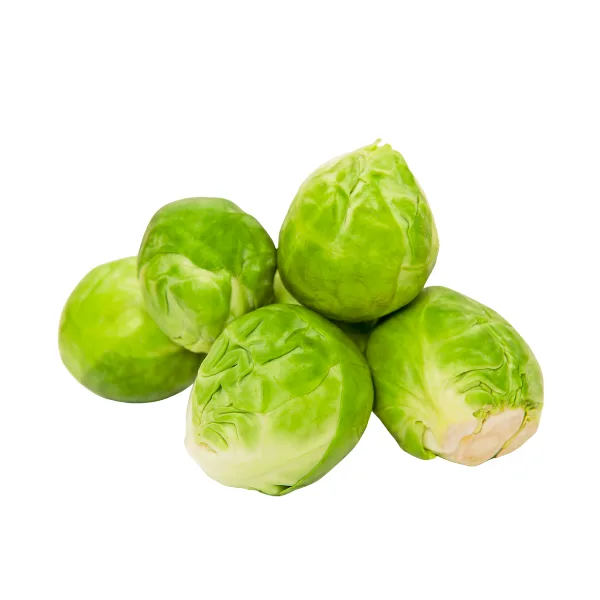
Brussels sprouts scores a 1 out of 3 on the SIGHI Food Compatibility List, placing it in the Low category. It is also classified on some reference lists as a potential histamine liberator. This reflects the reference list's classification rather than a confirmed mast-cell mechanism, since research specifically testing this hasn't provided strong support for it.
Brussels sprouts & Histamine, what the evidence says
Brussels sprouts aren't considered high in histamine, but some reference sources also classify them as potential histamine liberators. In this context, that means they are considered capable of prompting the body's mast cells to release stored histamine, beyond the small amount naturally present in the vegetable. This mechanism has not been fully established, but the classification may help explain why some people report reactions to Brussels sprouts despite their low histamine content.
Their bitter taste is a separate issue. Whether Brussels sprouts taste pleasantly mild or intensely bitter depends largely on a gene called TAS2R38. Scientists first noticed people react differently to a related bitter compound back in 1931, though the gene itself wasn't identified until 2003. People with the more sensitive variant perceive the vegetable's natural glucosinolates as much more bitter than those with the less sensitive variant.
Brussels sprouts are also worth watching if you track FODMAPs. Reference sources that call them low FODMAP are often using a small serving, around 38 grams or about two sprouts, and the fructan content rises meaningfully at more typical portions, like half a cup or more. This is unrelated to histamine, but portion size matters here more than the "low FODMAP" label alone might suggest.
Separately, Brussels sprouts also carry a moderate amount of salicylates, a different group of plant compounds from histamine. This is worth knowing if you're managing salicylate sensitivity alongside histamine intolerance.
Does preparation change the risk?
Cooking method affects perceived bitterness, while portion size matters most for FODMAP content, more than the histamine consideration itself.
| Form | Risk Level | Notes |
|---|---|---|
| Small serving (about 2 sprouts, 38g) | Moderate | Within the low-FODMAP threshold used by most reference sources; liberator consideration still applies |
| Typical serving (half a cup or more) | High | Fructan content rises meaningfully beyond the small "low FODMAP" serving size |
| Roasted | Moderate | Same histamine consideration; roasting tends to mellow perceived bitterness |
| Raw or lightly steamed | Moderate | Same histamine consideration; tends to taste more bitter, especially for genetic supertasters |
Note: Risk levels are based on clinical observations and patient reports, not standardized histamine measurements. Individual tolerance varies.
A food score is a reference, not a verdict.
Histamine intolerance is highly individual. A food that triggers symptoms in one person may be tolerated by another, even within the same category.
Strict elimination may help reduce symptoms initially, but long-term progress often depends on gradual reintroduction and pattern recognition. The goal is not to remove more foods over time, but to understand your personal tolerance and expand your diet when possible.
Tracking symptoms, portions, and context such as stress or timing can provide insights that generalized food lists cannot. This is where informed decisions replace fear-based restriction.
How to test your tolerance
 Know it might be genetic.
If you've always disliked Brussels sprouts specifically for their bitterness, a gene called TAS2R38, unrelated to histamine tolerance, may be why.
 Consider the liberator classification.
Some reference sources treat Brussels sprouts as a potential histamine liberator, a separate consideration from their direct histamine content.
 Watch portion size if you track FODMAPs.
The "low FODMAP" label often applies only to a small serving, around two sprouts. Larger portions carry meaningfully more fructan.
 Consider salicylate sensitivity separately.
Brussels sprouts carry a moderate amount of salicylates. If you also react to aspirin or other salicylate-rich foods, this is worth tracking apart from histamine.
 Roasting can reduce bitterness.
If taste, not histamine tolerance, is the issue, roasting tends to mellow the bitter compounds compared to steaming or eating raw.
 Track your response.
Log quantity and preparation in MyHistaMap, since the liberator classification and portion-dependent FODMAP content can make Brussels sprouts less predictable than some other vegetables.
Common questions about Brussels sprouts and histamine
Are Brussels sprouts high in histamine?
No, but some reference sources classify them as a potential liberator, meaning they may prompt some histamine release beyond their direct content.
Why do some people find Brussels sprouts intensely bitter while others don't mind them?
It comes down to variants of the TAS2R38 gene. People with the more sensitive variant, sometimes called bitter supertasters, perceive the glucosinolate compounds in Brussels sprouts as considerably more bitter. This is unrelated to histamine tolerance.
Are Brussels sprouts really low FODMAP?
Only in small servings. Reference sources typically base the "low FODMAP" label on about 38 grams, or two sprouts. Fructan content rises meaningfully at more typical portions like half a cup or more.
Are Brussels sprouts high in salicylates?
They carry a moderate amount, a separate consideration from histamine, worth knowing if you're also managing salicylate sensitivity.
Is bitterness in Brussels sprouts a sign of reduced tolerance?
No, bitterness perception is a separate genetic taste trait, not an indicator of how your body will respond from a histamine standpoint.
Some people find these options helpful


Supplements are optional tools, not a solution. Personal tracking and identifying your individual triggers remains the priority.
Where this information comes from
At MyHistaMap we curate information from peer reviewed research and recognized medical sources. This guide is a reference tool, not a medical prescription. Always track your own reactions and consult your healthcare provider.
References
- The classification of Brussels sprouts as a potential histamine liberator comes from histamine intolerance food lists, including the SIGHI (Swiss Interest Group Histamine Intolerance) Food Compatibility List, based on clinical observation rather than a laboratory study measuring this specific mechanism in Brussels sprouts.
- Global Diversity in the TAS2R38 Bitter Taste Receptor: Revisiting a Classic Evolutionary PROPosal, 2016: confirms glucosinolates in Brussels sprouts, cabbage, and broccoli are chemically similar to PTC, first shown in 1931 to taste intensely bitter to some people and tasteless to others; the TAS2R38 gene responsible was identified in 2003.
- Monash University FODMAP Diet App: lab testing sets the low-FODMAP serving for Brussels sprouts at 38 grams (about two sprouts), with fructan content rising at larger portions. The source for this page's FODMAP serving size figures.
- RPAH Elimination Diet Handbook, Swain, Soutter & Loblay, Royal Prince Alfred Hospital Allergy Unit, 2011: lists Brussels sprouts in the medium salicylate category for vegetables. The source for this page's salicylate classification.