This content is for informational purposes only and does not constitute medical advice. Always consult a qualified healthcare provider before making dietary changes. Histamine tolerance is highly individual.
This information applies to histamine intolerance, DAO deficiency, and MCAS only. If you have a confirmed food allergy, this content does not apply to you. Food allergies involve the immune system and can be life-threatening. Please consult your allergist.
Is Chia (Salvia hispanica) a trigger for histamine intolerance?
Chia (Salvia hispanica) scores a 0 out of 3 on the SIGHI Food Compatibility List, placing it in the Safe category.
Chia (Salvia hispanica) & Histamine, what the evidence says
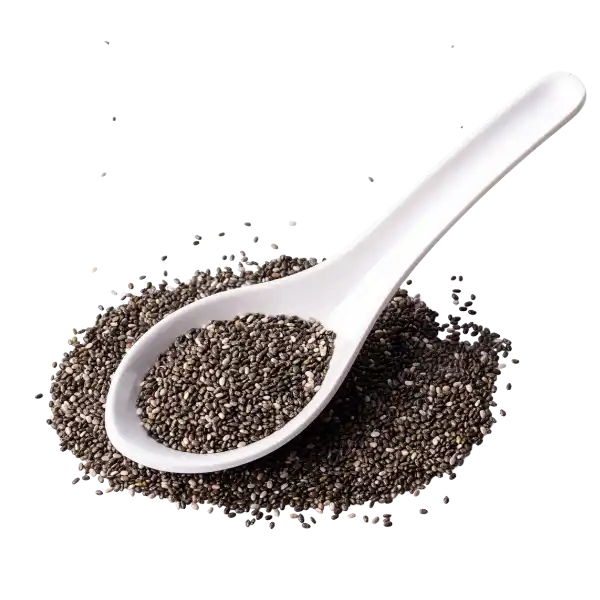
Chia seeds are not associated with meaningful histamine content on compatibility reference lists.
They carry a distinctive safety consideration unrelated to histamine. Chia seeds can absorb up to 27 times their weight in water, and when swallowed dry, they can expand and form a gel that may become lodged in the esophagus. A documented case, believed to be the first reported of its kind, described a 39-year-old man with a history of swallowing difficulty who developed complete esophageal blockage after eating a tablespoon of dry chia seeds followed by a glass of water. The blockage required emergency endoscopic treatment and was difficult to remove because of the gel-like consistency of the hydrated seeds. People with a history of swallowing difficulty or esophageal strictures should consume chia seeds only after they have been allowed to fully expand in liquid.
Separately, chia seeds are high in oxalates. The National Kidney Foundation classifies chia seeds as high in oxalate, while ground flaxseed is classified as low. This is relevant for people who are also managing oxalate intake or have a history of calcium-oxalate kidney stones.
Does preparation change the risk?
How chia seeds are prepared matters more than any other factor here. Fully hydrated chia is a very different risk profile from dry chia.
| Form | Risk Level | Notes |
|---|---|---|
| Chia pudding or fully soaked seeds | Low | Not associated with meaningful histamine content; the safest form once fully hydrated |
| Chia sprinkled on food, small amount | Low | Generally fine in small quantities mixed into moist food |
| Larger portions | Moderate | Oxalate content becomes more relevant at larger serving sizes |
| Dry chia seeds, especially with a swallowing history | High | Documented risk of esophageal blockage; not a histamine concern but a genuine safety issue |
Note: Risk levels are based on clinical observations and patient reports, not standardized histamine measurements. Individual tolerance varies.
A food score is a reference, not a verdict.
Histamine intolerance is highly individual. A food that triggers symptoms in one person may be tolerated by another, even within the same category.
Strict elimination may help reduce symptoms initially, but long-term progress often depends on gradual reintroduction and pattern recognition. The goal is not to remove more foods over time, but to understand your personal tolerance and expand your diet when possible.
Tracking symptoms, portions, and context such as stress or timing can provide insights that generalized food lists cannot. This is where informed decisions replace fear-based restriction.
How to test your tolerance
 Never eat chia seeds dry.
Let them fully expand in liquid before eating, especially if you have any history of swallowing difficulty. This is a genuine safety consideration, not a histamine one.
 Give them time to hydrate.
Chia seeds can absorb many times their weight in water. Mixing them into liquid and letting them sit, as in chia pudding, is the safest way to prepare them.
 Watch oxalate intake if relevant.
Chia seeds are classified as high in oxalate, worth keeping in mind alongside your histamine tracking if you have a history of kidney stones.
 Keep portions moderate.
A smaller amount is a reasonable place to start, since oxalate content becomes more relevant at larger serving sizes.
 Track your response.
Log portion size and preparation method using MyHistaMap to spot patterns over multiple trials.
Common questions about Chia (Salvia hispanica) and histamine
Are chia seeds high in histamine?
No, chia seeds are not associated with meaningful histamine content on compatibility reference lists.
Is it true chia seeds can cause choking or blockage?
Yes. Chia seeds can absorb up to 27 times their weight in water. A documented case described complete esophageal blockage after someone ate dry chia seeds followed by water. This is unrelated to histamine but a genuine safety consideration, especially for people with a history of swallowing difficulty.
Are chia seeds high in oxalates?
Yes. The National Kidney Foundation classifies chia seeds as high in oxalate, while ground flaxseed is classified as low.
What's the safest way to eat chia seeds?
Let them fully expand in liquid first, such as in chia pudding or mixed into a smoothie, rather than eating them dry.
Some people find these options helpful





Supplements are optional tools, not a solution. Personal tracking and identifying your individual triggers remains the priority.
Where this information comes from
At MyHistaMap we curate information from peer reviewed research and recognized medical sources. This guide is a reference tool, not a medical prescription. Always track your own reactions and consult your healthcare provider.
References
- Rawl RE, Watch It Grow: Esophageal Impaction With Chia Seeds, American College of Gastroenterology Annual Meeting, 2014: documented believed-first case of esophageal impaction after dry chia seed ingestion in a patient with prior swallowing difficulty, requiring endoscopic removal. The source for this page's esophageal blockage case and water-absorption figure.
- National Kidney Foundation, Flax and Chia Seeds, Kidney-Friendly Superfoods fact sheet, 2023: classifies chia seeds as high in oxalate and ground flaxseed as low in oxalate, and recommends pairing high-oxalate foods with calcium for those with a history of oxalate kidney stones. The source for this page's oxalate classification.