This content is for informational purposes only and does not constitute medical advice. Always consult a qualified healthcare provider before making dietary changes. Histamine tolerance is highly individual.
This information applies to histamine intolerance, DAO deficiency, and MCAS only. If you have a confirmed food allergy, this content does not apply to you. Food allergies involve the immune system and can be life-threatening. Please consult your allergist.
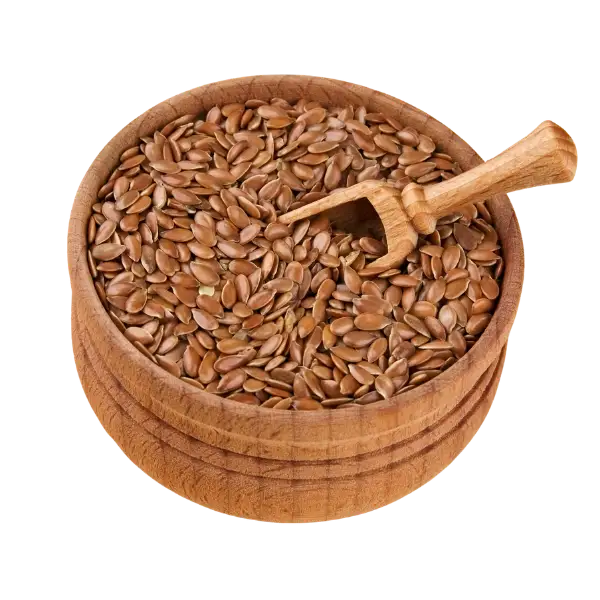
Is Flax seeds a trigger for histamine intolerance?
Flax seeds scores a 0 out of 3 on the SIGHI Food Compatibility List, placing it in the Safe category.
Flax seeds & Histamine, what the evidence says
Flax seeds are not associated with meaningful histamine content on compatibility reference lists.
They stand out nutritionally as one of the richest known dietary sources of lignans, plant compounds with weak estrogen-like activity. Flaxseed contains exceptionally high concentrations of lignans, reported at 75 to 800 times those found in other cereal crops, oilseeds, legumes, fruits, and vegetables. The main lignan in flaxseed is secoisolariciresinol diglucoside (SDG), which can be converted by gut bacteria into the mammalian lignans enterodiol and enterolactone. Research has investigated these compounds for their potential effects on hormone metabolism and hormone-related health outcomes, although clinical findings on the effects of flaxseed consumption on sex hormones have been inconsistent. This is a general nutritional characteristic rather than a histamine consideration and may be relevant for people managing hormone-sensitive conditions, who may wish to discuss flaxseed intake with their doctor.
Flax seeds also contain cyanogenic glycosides, compounds that are also found in foods such as raw cassava. When metabolized, these compounds can release hydrogen cyanide, but the amounts present in flaxseed have not been associated with cyanide toxicity at typical dietary intakes. Cyanogenic glycosides can also produce thiocyanate, which can interfere with iodine uptake by the thyroid. This provides a potential mechanism for thyroid effects at excessive exposure, but clinical thyroid toxicity from ordinary flaxseed consumption has not been established.
Does preparation change the risk?
Form and portion size are the main variables to consider with flax seeds, more from a digestive and nutritional standpoint than a histamine one.
| Form | Risk Level | Notes |
|---|---|---|
| Ground flaxseed, typical serving | Low | Not associated with meaningful histamine content; ground form improves nutrient absorption |
| Whole flaxseed | Low | Passes through the digestive tract largely intact if not ground, limiting nutrient absorption but not a safety issue |
| Flaxseed oil | Low | Contains the fatty acids but not the lignans or fiber found in the whole seed |
| Very large regular amounts | Moderate | Lignan and cyanogenic glycoside intake both increase with larger, more frequent servings |
Note: Risk levels are based on clinical observations and patient reports, not standardized histamine measurements. Individual tolerance varies.
A food score is a reference, not a verdict.
Histamine intolerance is highly individual. A food that triggers symptoms in one person may be tolerated by another, even within the same category.
Strict elimination may help reduce symptoms initially, but long-term progress often depends on gradual reintroduction and pattern recognition. The goal is not to remove more foods over time, but to understand your personal tolerance and expand your diet when possible.
Tracking symptoms, portions, and context such as stress or timing can provide insights that generalized food lists cannot. This is where informed decisions replace fear-based restriction.
How to test your tolerance
 Grind flaxseed for better absorption.
Whole flaxseed tends to pass through the digestive tract largely intact. Ground flaxseed makes its nutrients, including lignans, more available.
 Discuss with your doctor if managing a hormone-sensitive condition.
Flaxseed is unusually high in lignans, compounds with weak estrogen-like activity, though clinical research on their hormonal effects has been inconsistent.
 Typical culinary amounts are considered safe.
The cyanogenic glycosides in flaxseed haven't been associated with toxicity at ordinary dietary intakes, unlike raw cassava eaten unprocessed.
 Keep very large regular servings in check.
Lignan and cyanogenic glycoside content both scale with quantity, so moderation is reasonable if eating flaxseed daily in large amounts.
 Track your response.
Log portion size and form using MyHistaMap to spot patterns over multiple trials.
Common questions about Flax seeds and histamine
Are flax seeds high in histamine?
No, flax seeds are not associated with meaningful histamine content on compatibility reference lists.
Do flax seeds affect hormones?
Flaxseed is one of the richest known dietary sources of lignans, compounds with weak estrogen-like activity. However, clinical research on flaxseed's effects on sex hormones has been inconsistent, so this isn't a clearly established clinical effect.
Is it true flax seeds contain cyanide-related compounds?
Yes, flax seeds contain cyanogenic glycosides, similar to those in raw cassava, though at much lower levels. These haven't been associated with toxicity at typical dietary intakes.
Can I eat flax seeds with histamine intolerance?
Most people tolerate flax seeds well from a histamine perspective. Grinding them improves nutrient absorption, and typical serving sizes are considered safe.
Some people find these options helpful





Supplements are optional tools, not a solution. Personal tracking and identifying your individual triggers remains the priority.
Where this information comes from
At MyHistaMap we curate information from peer reviewed research and recognized medical sources. This guide is a reference tool, not a medical prescription. Always track your own reactions and consult your healthcare provider.
References
- Krajčová A, Schulzová V, Hajšlová J, Bjelková M, Lignans in Flaxseed, Czech Journal of Food Sciences, 2009: laboratory (LC-MS/MS) measurement confirming flaxseed as one of the richest dietary sources of lignans, with secoisolariciresinol (SECO) and matairesinol (MAT) as the major components. The source for this page's lignan content figures.
- Rahimlou M, Hejazi J, Perspective Chapter: Flaxseed (Linum usitatissimum L) - Chemical Structure and Health-Related Functions, in Lignin - Chemistry, Structure, and Application, 2023: describes flaxseed's cyanogenic glycoside content alongside its lignan and fatty acid profile. The source for this page's cyanogenic glycoside note.