This content is for informational purposes only and does not constitute medical advice. Always consult a qualified healthcare provider before making dietary changes. Histamine tolerance is highly individual.
This information applies to histamine intolerance, DAO deficiency, and MCAS only. If you have a confirmed food allergy, this content does not apply to you. Food allergies involve the immune system and can be life-threatening. Please consult your allergist.
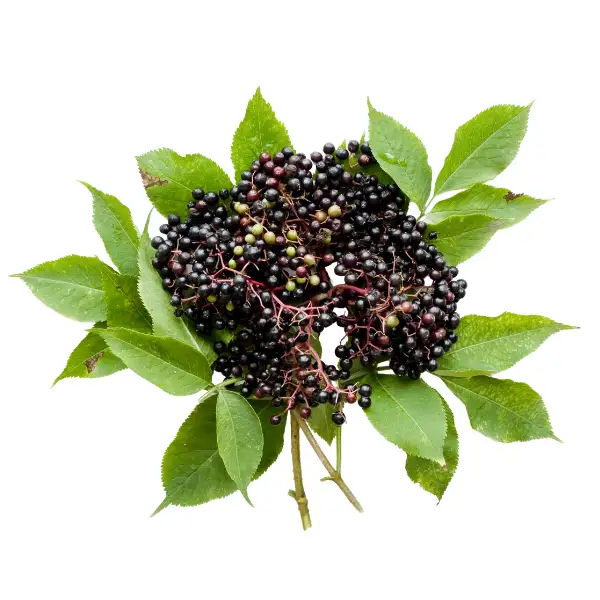
Is Elderberry a trigger for histamine intolerance?
Elderberry scores a 0 out of 3 on the SIGHI Food Compatibility List, placing it in the Safe category.
Elderberry & Histamine, what the evidence says
Elderberry is low in histamine and is generally well tolerated. The main safety concern is that raw or unripe berries and other parts of the plant contain compounds that can release cyanide when the plant material is damaged or processed incorrectly.
This isn't just a theoretical concern. In 1983, the CDC investigated an outbreak of illness in California after people drank juice made from elderberries that had been crushed together with their leaves and branches. Eleven people became ill, eight were taken to the hospital, and one was admitted overnight. Symptoms included nausea, vomiting, abdominal cramps, weakness, dizziness, and numbness. Everyone recovered, and the people who drank the most juice became the most seriously ill.
Cooking helps break down these compounds. The CDC notes that mature elderberries are edible and that cooked berries are commonly used in foods such as pies and jams, while the leaves, stems, and other plant parts should not be included when preparing elderberry juice.
Elderberry extracts are also commonly used for colds and influenza, but the evidence for a benefit remains uncertain. A 2021 systematic review of five randomized trials found that elderberry might reduce the duration or severity of colds or influenza, but the certainty of the evidence was very low. A separate randomized trial involving 87 people with confirmed influenza found no benefit from elderberry extract for reducing the duration or severity of the illness.
Does preparation change the risk?
For elderberry, whether it's been properly cooked or heat-processed matters far more than its histamine content.
| Form | Risk Level | Notes |
|---|---|---|
| Properly cooked elderberry (syrup, jam, pies, cooked preparations) | Low | Cooking helps break down the compounds that can release cyanide; low in histamine |
| Commercial elderberry extract or supplements (e.g. Sambucol) | Low | Heat-processed; its benefit for colds and flu remains uncertain |
| Raw ripe elderberries | High | This is a food safety consideration, not a histamine one. Ripe berries can still contain compounds that release cyanide. |
| Raw unripe berries, leaves, stems, bark, or roots | High | Higher levels of these compounds. No part of the plant should be eaten raw. |
Note: The high-risk rows reflect a documented food safety issue, not standardized histamine measurements. This is separate from histamine intolerance.
A food score is a reference, not a verdict.
Histamine intolerance is highly individual. A food that triggers symptoms in one person may be tolerated by another, even within the same category.
Strict elimination may help reduce symptoms initially, but long-term progress often depends on gradual reintroduction and pattern recognition. The goal is not to remove more foods over time, but to understand your personal tolerance and expand your diet when possible.
Tracking symptoms, portions, and context such as stress or timing can provide insights that generalized food lists cannot. This is where informed decisions replace fear-based restriction.
How to test your tolerance
 Cook it before eating.
Cooked syrups, jams, and pies are the traditional ways to enjoy elderberry. Ripeness alone doesn't make raw berries safe.
 Leave out leaves and stems.
When making juice or syrup at home, only the berries are used. The leaves, stems, and branches stay out.
 Choose commercially processed products.
Store-bought elderberry syrups and extracts are made with controlled heat treatment. Many people find these the simplest option.
 Get medical care for symptoms after eating it raw.
Nausea, vomiting, stomach cramps, weakness, or dizziness after eating raw or unripe elderberry is a reason to seek prompt medical care.
 Keep cold and flu expectations realistic.
Evidence for elderberry extract's benefit for colds and flu is uncertain, and a trial in people with confirmed flu found no benefit. It isn't a proven treatment.
 Track it like any other low-histamine fruit.
For MyHistaMap purposes, cooked elderberry is low in histamine. Its main consideration is preparation, not histamine.
Common questions about Elderberry and histamine
Can I eat elderberries raw?
No. Raw or unripe elderberries, along with the leaves, stems, bark, and roots, can contain compounds that release cyanide. Cooked or commercially processed elderberry products are the safe way to eat it.
Is elderberry high in histamine?
No, cooked elderberry is low in histamine and generally well tolerated. Its main consideration is how it's prepared, which is unrelated to histamine.
Does elderberry syrup help with colds and flu?
The evidence is uncertain. A few small trials suggested it might shorten colds and flu, but the quality of that evidence was rated very low, and a trial in people with confirmed flu found no benefit.
Is ripe elderberry safe to eat raw?
No. Ripe berries contain less of these compounds than unripe fruit or other parts of the plant, but they're still meant to be cooked before eating.
Some people find these options helpful





Supplements are optional tools, not a solution. Personal tracking and identifying your individual triggers remains the priority.
Where this information comes from
At MyHistaMap we curate information from peer reviewed research and recognized medical sources. This guide is a reference tool, not a medical prescription. Always track your own reactions and consult your healthcare provider.
References
- Poisoning from Elderberry Juice, California. Centers for Disease Control (CDC), MMWR, 1984: reports the 1983 outbreak in which 11 people became ill after drinking juice made from elderberries crushed with their leaves and branches; 8 were taken to the hospital, one was admitted overnight, and all recovered. Also notes that mature berries are edible, that cooked berries are commonly eaten in pies and jams, and that leaves and stems should not be crushed in when making juice. The source for the documented outbreak and preparation guidance referenced on this page.
- Wieland LS et al. Elderberry for Prevention and Treatment of Viral Respiratory Illnesses: A Systematic Review. BMC Complementary Medicine and Therapies, 2021: reviewed five randomized trials and found elderberry might reduce the duration or severity of colds and influenza, but rated the certainty of that evidence as very low. The source for the systematic review findings referenced on this page.
- Macknin M et al. Elderberry Extract Outpatient Influenza Treatment for Emergency Room Patients Ages 5 and Above: A Randomized, Double-Blind, Placebo-Controlled Trial. Journal of General Internal Medicine, 2020: in 87 patients with PCR-confirmed influenza, found no evidence that elderberry extract reduced the duration or severity of the illness. The source for the separate randomized trial referenced on this page.
- SIGHI (Swiss Interest Group Histamine Intolerance) Food Compatibility List: rates elderberry 0 (compatible), with no histamine, amine, liberator, or blocker markers. The source for elderberry's histamine classification referenced on this page.