This content is for informational purposes only and does not constitute medical advice. Always consult a qualified healthcare provider before making dietary changes. Histamine tolerance is highly individual.
This information applies to histamine intolerance, DAO deficiency, and MCAS only. If you have a confirmed food allergy, this content does not apply to you. Food allergies involve the immune system and can be life-threatening. Please consult your allergist.
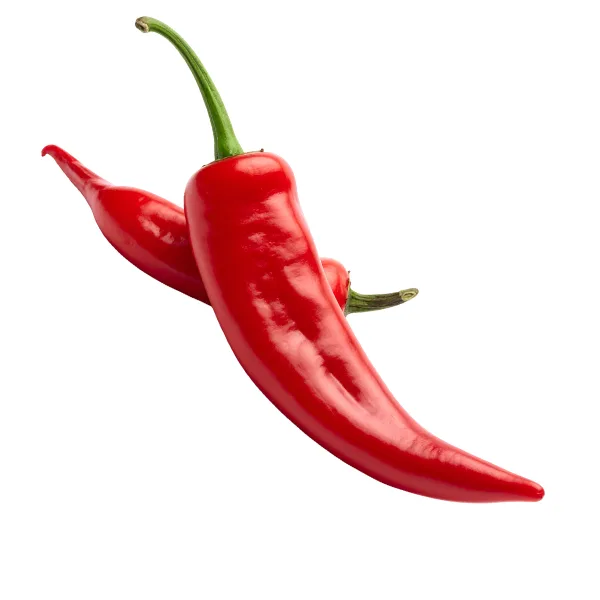
Is Fresh red chili peppers a trigger for histamine intolerance?
Fresh red chili peppers scores a 1 out of 3 on the SIGHI Food Compatibility List, placing it in the Low category. Some reference sources also suggest it may be a histamine liberator, though even the source itself describes this as unconfirmed or suspected.
Fresh red chili peppers & Histamine, what the evidence says
Fresh red chili peppers are not associated with meaningful histamine content, but there is another mechanism worth understanding: the heat itself can cause irritation. Capsaicin, the compound responsible for chili heat, works by binding to TRPV1, a receptor on sensory nerves that normally responds to potentially harmful heat above about 43°C. Capsaicin activates these nerves and creates a burning sensation even though the pepper is not actually hot enough to burn the skin. This means the burning, flushing, or mild digestive irritation some people experience after eating chili peppers can be a direct effect of capsaicin rather than a histamine reaction.
Capsaicin is concentrated mainly in the white pith, or placenta, inside the pepper, not primarily in the seeds as commonly believed. Seeds that touch the pith can pick up some capsaicin, which is why they are often blamed for the heat. Because capsaicin does not dissolve well in water, dairy products work better than water for relieving the burning sensation. This is thought to be because casein and other milk proteins can help remove capsaicin from the tissues, although the exact mechanism isn't fully settled.
Separately, chili peppers are notably high in salicylates and moderate in lectins, plant compounds unrelated to histamine that some people track independently. Being histamine-friendly doesn't mean chili peppers are free of every other consideration.
Does preparation change the risk?
Heat level and preparation affect the capsaicin-related irritation, separate from histamine.
| Form | Risk Level | Notes |
|---|---|---|
| Mild fresh chili, small amount | Low | Lower capsaicin content; less likely to cause irritation-based discomfort |
| Hot fresh chili, standard amount | Moderate | Capsaicin-driven irritation is a separate mechanism from histamine, but can feel similar (flushing, burning) |
| Pith and seeds included | Moderate | The pith carries the highest capsaicin concentration; removing it reduces heat |
| Dried / powdered | Moderate | Capsaicin becomes more concentrated by weight once dried |
Note: Risk levels are based on clinical observations and patient reports, not standardized histamine measurements. Individual tolerance varies.
A food score is a reference, not a verdict.
Histamine intolerance is highly individual. A food that triggers symptoms in one person may be tolerated by another, even within the same category.
Strict elimination may help reduce symptoms initially, but long-term progress often depends on gradual reintroduction and pattern recognition. The goal is not to remove more foods over time, but to understand your personal tolerance and expand your diet when possible.
Tracking symptoms, portions, and context such as stress or timing can provide insights that generalized food lists cannot. This is where informed decisions replace fear-based restriction.
How to test your tolerance
 Separate heat irritation from histamine reactions.
Flushing or burning after chili can come directly from capsaicin activating heat-sensing nerve receptors, not necessarily from histamine.
 Reach for dairy, not water, if the heat is too much.
Capsaicin is fat-soluble. Milk or yogurt, which contain casein, are more effective than water at relieving the burning sensation.
 Remove the pith to reduce heat.
Capsaicin concentrates mainly in the white pith inside the pepper, not the seeds themselves, though seeds touching the pith pick some up.
 Consider salicylate sensitivity separately.
Chili peppers are high in salicylates. If you also react to aspirin or other salicylate-rich foods, this is worth tracking apart from histamine.
 Start with milder amounts.
Since capsaicin-related irritation is dose-dependent, a smaller amount is a reasonable way to test your personal tolerance.
 Track your response.
Log the pepper type, amount, and any symptoms using the MyHistaMap app to distinguish capsaicin irritation from histamine reactions.
Common questions about Fresh red chili peppers and histamine
Are fresh red chili peppers high in histamine?
No. They are not associated with meaningful histamine content, but their heat itself can cause irritation, separate from histamine.
Why does chili pepper cause a burning sensation?
Capsaicin binds to TRPV1, the same nerve receptor that normally detects actual heat above about 43°C. It tricks the nerves into signaling burning without real heat or tissue damage.
Is the burning sensation the same as a histamine reaction?
No, it's a separate, well-documented mechanism. Both can cause flushing or discomfort, which is why it's worth distinguishing them when tracking your symptoms.
Does water help with chili burn?
Not as effectively as dairy. Capsaicin is fat-soluble, so milk or yogurt (which contain casein) work better than water at relieving the sensation.
Are chili peppers high in salicylates?
Yes, notably so, and they're also moderate in lectins. Both are separate considerations from histamine, worth knowing if you're also managing salicylate sensitivity.
Some people find these options helpful
Supplements are optional tools, not a solution. Personal tracking and identifying your individual triggers remains the priority.
Where this information comes from
At MyHistaMap we curate information from peer reviewed research and recognized medical sources. This guide is a reference tool, not a medical prescription. Always track your own reactions and consult your healthcare provider.
References
- More Than Fat, Proteins in Dairy and Plant Milks Contribute to the Reduction of Oral Burn From Capsaicin, Food Quality and Preference, 2023: TRPV1 is normally activated by noxious heat above roughly 43°C, a threshold lowered by the presence of capsaicin, and the exact mechanism by which milk proteins reduce oral burn is still not fully established. The source for this page's TRPV1 and dairy relief section.
- The Effect of Interactions Between Capsaicin and Dairy Proteins on Oral Burn, Pennsylvania State University: full-fat milk was found to be no more effective than skim milk at reducing capsaicin burn when used as a rinse, challenging the assumption that fat content alone explains why dairy helps. The source for this page's note on casein and milk protein mechanisms.
- RPAH Elimination Diet Handbook, Swain, Soutter & Loblay, Royal Prince Alfred Hospital Allergy Unit, 2011: classifies chili and related capsicum among foods very high in salicylates. The source for this page's salicylate classification.