This content is for informational purposes only and does not constitute medical advice. Always consult a qualified healthcare provider before making dietary changes. Histamine tolerance is highly individual.
This information applies to histamine intolerance, DAO deficiency, and MCAS only. If you have a confirmed food allergy, this content does not apply to you. Food allergies involve the immune system and can be life-threatening. Please consult your allergist.
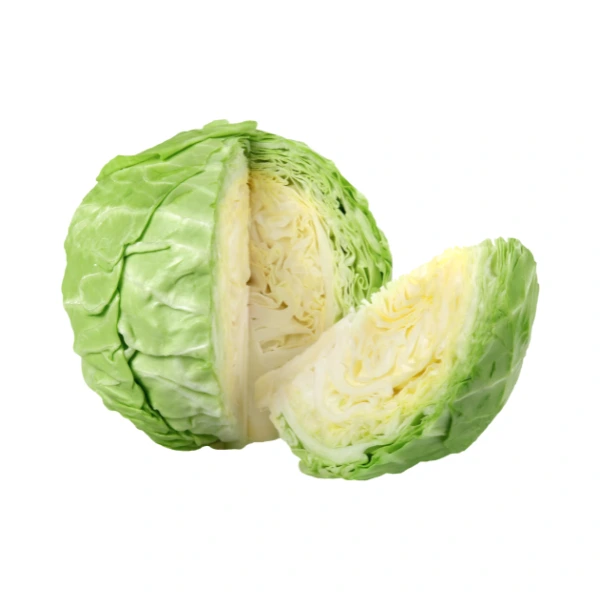
Is Cabbage, green or white a trigger for histamine intolerance?
Cabbage, green or white scores a 0 out of 3 on the SIGHI Food Compatibility List, placing it in the Safe category.
Cabbage, green or white & Histamine, what the evidence says
Green and white cabbage are not associated with meaningful histamine content, which places them favorably on a low-histamine approach.
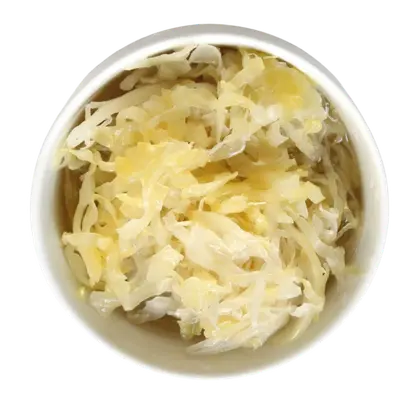
It is worth being specific about which form you are eating. Fresh green or white cabbage carries a very different consideration from the same vegetable after fermentation into sauerkraut. During fermentation, bacterial activity can produce various biogenic amines, including histamine, while tyramine and putrescine are also commonly detected. These compounds are relevant when tracking reactions to fermented foods, but their effects should not be assumed to be the same as those of histamine.
The fresh vegetable and its fermented form should be tracked as distinct foods rather than treated interchangeably.
Green and white cabbage also have an interesting place in nutrition history that's unrelated to histamine. In 1949, physician Garnett Cheney reported that patients with peptic ulcers who drank fresh cabbage juice healed considerably faster than was typical at the time. He attributed the effect to a heat-sensitive compound that became known as vitamin U, although it was later identified as S-methylmethionine rather than a true vitamin. While the study remains well known, it was small and conducted more than 70 years ago, so it's worth taking those results with that in mind.
Does preparation change the risk?
Fermentation is the single biggest variable for cabbage's histamine profile.
| Form | Risk Level | Notes |
|---|---|---|
| Raw, fresh | Low | Not associated with meaningful histamine content; typical in slaws and salads |
| Cooked | Low | Same histamine profile as raw |
| Fermented (sauerkraut) | High | A different histamine consideration entirely; treat as a separate food from fresh cabbage |
Note: Risk levels are based on clinical observations and patient reports, not standardized histamine measurements. Individual tolerance varies.
A food score is a reference, not a verdict.
Histamine intolerance is highly individual. A food that triggers symptoms in one person may be tolerated by another, even within the same category.
Strict elimination may help reduce symptoms initially, but long-term progress often depends on gradual reintroduction and pattern recognition. The goal is not to remove more foods over time, but to understand your personal tolerance and expand your diet when possible.
Tracking symptoms, portions, and context such as stress or timing can provide insights that generalized food lists cannot. This is where informed decisions replace fear-based restriction.
How to test your tolerance
 Fresh cabbage is consistently low histamine.
Whether raw or cooked, green or white cabbage is not associated with meaningful histamine content.
 Never assume sauerkraut shares this profile.
Fermentation fundamentally changes the histamine consideration. Sauerkraut is a separate food to track, not an extension of fresh cabbage's low-risk status.
 Preparation method is flexible.
Raw, steamed, boiled, or stir-fried cabbage all share the same favorable histamine profile.
 Track your response if trying it new.
Even well-tolerated vegetables are worth a brief note in the MyHistaMap app when first introduced.
Common questions about Cabbage, green or white and histamine
Is green or white cabbage high in histamine?
No. Both are not associated with meaningful histamine content, whether eaten raw or cooked.
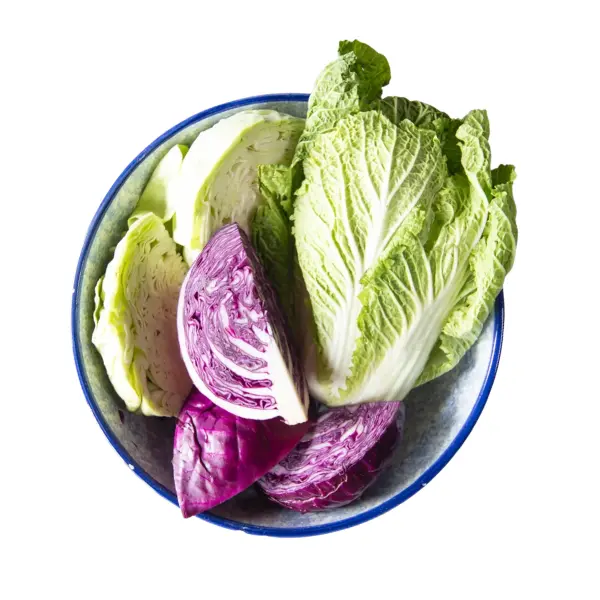
Is this the same as red cabbage?
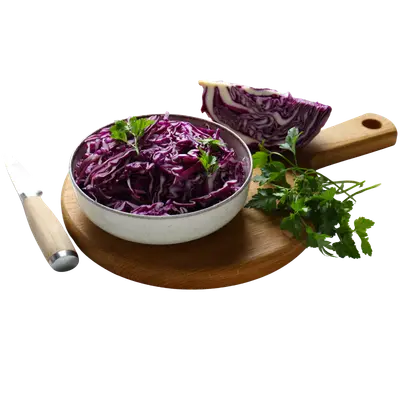
This entry covers green and white cabbage specifically. Red cabbage is a separate cultivar and may be tracked individually.
Does fresh cabbage share sauerkraut's histamine risk?
No. Sauerkraut undergoes fermentation, which can produce various biogenic amines, including histamine, tyramine, and putrescine. It should be treated as a distinct food from fresh cabbage, not an equivalent.
Can I eat green or white cabbage raw?
Yes, raw and cooked forms share the same favorable histamine profile. The difference that matters is fermentation, not raw versus cooked.
What is "vitamin U" in cabbage?
It's an informal name for S-methylmethionine, a compound in raw cabbage juice studied since the 1940s for its role in ulcer healing. It isn't an actual vitamin, and it's destroyed by cooking.
Some people find these options helpful
Supplements are optional tools, not a solution. Personal tracking and identifying your individual triggers remains the priority.
Where this information comes from
At MyHistaMap we curate information from peer reviewed research and recognized medical sources. This guide is a reference tool, not a medical prescription. Always track your own reactions and consult your healthcare provider.
References
- Changes in Biogenic Amine Concentrations During Sauerkraut Storage, Food Chemistry, 2000: across sauerkraut samples fermented from white cabbage, histamine, tryptamine, and spermine were virtually below detection limits, while tyramine reached the highest levels, up to hundreds of mg/kg, followed by putrescine and cadaverine. The source for this page's fermentation and biogenic amine section.
- Cheney, Rapid Healing of Peptic Ulcers in Patients Receiving Fresh Cabbage Juice, California Medicine, 1949: 13 patients with peptic ulcers given fresh cabbage juice had an average crater healing time of 10.4 days for duodenal ulcers and 7.3 days for gastric ulcers, compared with 37 and 42 days respectively reported in the literature for standard therapy of that era. The source for this page's vitamin U/Cheney history section.