This content is for informational purposes only and does not constitute medical advice. Always consult a qualified healthcare provider before making dietary changes. Histamine tolerance is highly individual.
This information applies to histamine intolerance, DAO deficiency, and MCAS only. If you have a confirmed food allergy, this content does not apply to you. Food allergies involve the immune system and can be life-threatening. Please consult your allergist.
Is Horseradish a trigger for histamine intolerance?
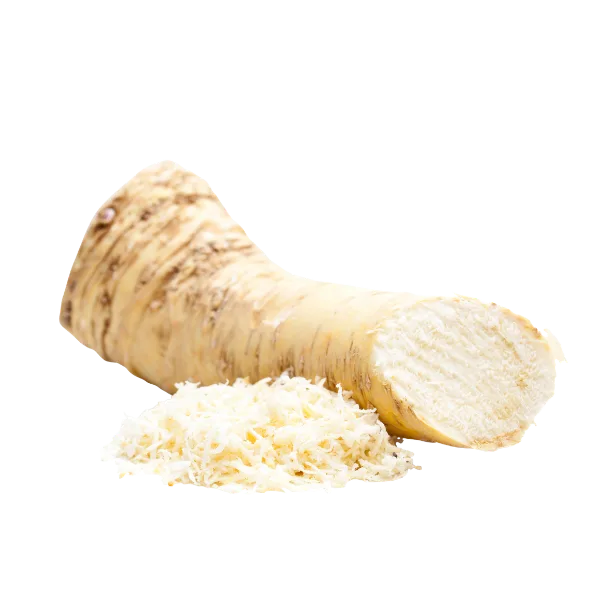
Horseradish scores a 1 out of 3 on the SIGHI Food Compatibility List, placing it in the Low category. Some reference sources also suggest it may be a histamine liberator, though even the source itself describes this as unconfirmed or suspected.
Horseradish & Histamine, what the evidence says
Horseradish is not associated with meaningful histamine content, but it is noted as a potential histamine liberator on some reference lists, meaning it may trigger the body's own histamine release beyond whatever histamine it contains directly. Reference lists vary on this point, so it is worth treating as a personal variable to test rather than a settled fact.
Separately, horseradish stores a stable compound called sinigrin in its root, along with an enzyme called myrosinase that is kept separate from it inside the intact plant cells. Grating or chopping breaks those cells and allows the two to combine, forming allyl isothiocyanate (AITC), the compound responsible for horseradish's characteristic sinus-clearing burn. AITC activates TRPA1, a different nerve receptor from the TRPV1 receptor activated by capsaicin in chili peppers, which is part of why horseradish's heat feels sharp and nasal rather than the slower, broader burn of chili.
Heat readily inactivates myrosinase, so cooked horseradish is usually milder because less AITC is formed when the enzyme is inactivated before the reaction can occur. As with other cruciferous vegetables, horseradish also contains compounds that can interfere with iodine uptake by the thyroid at high, sustained intakes, though this is a separate consideration from histamine.
Does preparation change the risk?
Freshness and preparation timing affect horseradish's pungency, though not its underlying histamine consideration.
| Form | Risk Level | Notes |
|---|---|---|
| Freshly grated | Moderate | Baseline consideration given the liberator note; strongest pungency. |
| Prepared (jarred, with vinegar) | Moderate | Same histamine consideration; check for additional additives. |
| Cooked into a dish | Moderate | Heat destroys the pungency-forming enzyme but doesn't change the underlying histamine consideration. |
Note: Risk levels are based on clinical observations and patient reports, not standardized histamine measurements. Individual tolerance varies.
A food score is a reference, not a verdict.
Histamine intolerance is highly individual. A food that triggers symptoms in one person may be tolerated by another, even within the same category.
Strict elimination may help reduce symptoms initially, but long-term progress often depends on gradual reintroduction and pattern recognition. The goal is not to remove more foods over time, but to understand your personal tolerance and expand your diet when possible.
Tracking symptoms, portions, and context such as stress or timing can provide insights that generalized food lists cannot. This is where informed decisions replace fear-based restriction.
How to test your tolerance
 Consider the liberator effect.
Horseradish is noted as a potential histamine liberator, a separate consideration from its low direct histamine content.
 Know why the burn feels different from chili.
Horseradish's heat activates a different nerve receptor (TRPA1) than chili's capsaicin (TRPV1), which is why it feels sharp and nasal rather than a slow-building mouth burn.
 Cook it to reduce pungency, if desired.
Heat readily inactivates the enzyme responsible for horseradish's burn, so less pungency forms once it's cooked - though the histamine consideration stays the same.
 Be aware of the thyroid note if relevant.
Like other cruciferous vegetables, horseradish contains compounds that can interfere with iodine uptake by the thyroid at high, sustained intakes - a separate consideration worth discussing with a doctor if you have thyroid concerns.
 Track your response.
Log the amount and preparation using the MyHistaMap app, given the liberator effect.
Common questions about Horseradish and histamine
Is horseradish high in histamine?
It's not associated with meaningful histamine content, but it is noted as a potential liberator on some reference lists, meaning it may trigger histamine release beyond its direct content.
Why does horseradish burn my sinuses instead of my mouth?
Its main compound, allyl isothiocyanate, activates TRPA1, a nerve receptor different from the one chili pepper's capsaicin activates. This produces a sharper, more nasal sensation.
Does cooking horseradish reduce its histamine risk?
Cooking reduces its pungency because heat inactivates the enzyme needed to form allyl isothiocyanate, but this doesn't change the underlying histamine and liberator consideration.
Is horseradish a concern for thyroid health?
At high, sustained intakes, cruciferous vegetables like horseradish contain compounds that can interfere with iodine uptake by the thyroid. This is generally only relevant at unusually large amounts and is worth discussing with a doctor if you have thyroid concerns.
Some people find these options helpful
Supplements are optional tools, not a solution. Personal tracking and identifying your individual triggers remains the priority.
Where this information comes from
At MyHistaMap we curate information from peer reviewed research and recognized medical sources. This guide is a reference tool, not a medical prescription. Always track your own reactions and consult your healthcare provider.
References
- Sinigrin, ScienceDirect Topics: horseradish's pungency and aroma result from isothiocyanates released when the glucosinolate sinigrin is hydrolyzed by the enzyme myrosinase, a reaction that begins only once the plant tissue is crushed or grated.
- Structure-Activity Relationship Study on Isothiocyanates: Comparison of TRPA1-Activating Ability between Allyl Isothiocyanate and Specific Flavor Components of Wasabi, Horseradish, and White Mustard, Journal of Natural Products: allyl isothiocyanate, the main pungent component released from horseradish and related plants, generates its characteristic sharp sensation by activating the TRPA1 receptor.