This content is for informational purposes only and does not constitute medical advice. Always consult a qualified healthcare provider before making dietary changes. Histamine tolerance is highly individual.
This information applies to histamine intolerance, DAO deficiency, and MCAS only. If you have a confirmed food allergy, this content does not apply to you. Food allergies involve the immune system and can be life-threatening. Please consult your allergist.
Is Ladyfinger banana a trigger for histamine intolerance?
Ladyfinger banana's histamine classification isn't conclusive; available reference sources don't agree or don't have enough data to assign a confident score.
Ladyfinger banana & Histamine, what the evidence says
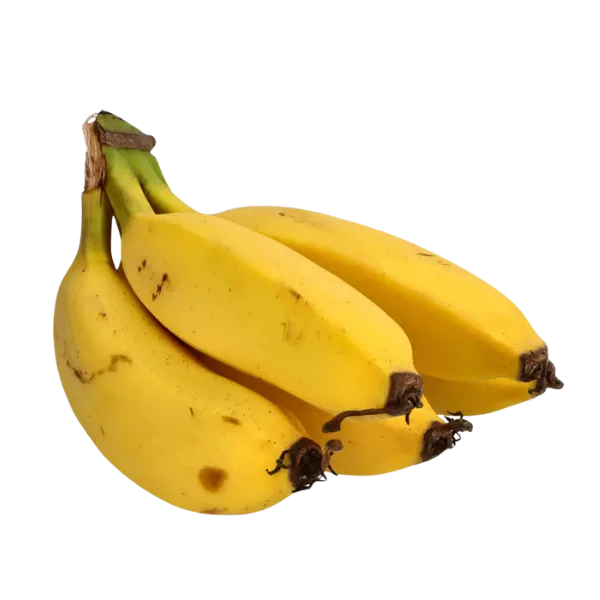
Ladyfinger banana, also called sugar banana, date banana, or fig banana depending on the region, is a small, sweet banana variety, distinct from the common Cavendish banana found in most supermarkets, which has its own separate entry on this site. Different regional names for this same variety are listed separately in histamine reference sources, all sharing the same unclassified histamine rating. Here, we've consolidated them into one entry rather than presenting four separate pages for what is essentially the same variety.
The clinical guidance most consistently repeated is that greener, less ripe bananas of this type are better tolerated than very ripe ones. This is a widely repeated recommendation, but the underlying reason is less straightforward than the popular claim that ripening converts an amino acid called histidine into histamine. A study that measured biogenic amines across 20 banana and plantain varieties actually found the opposite for histamine itself: in the pulp of most varieties, histamine, along with tyramine, dopamine, serotonin, and other amines, generally decreased as the fruit ripened. What did increase with ripening was a different compound called putrescine.
Putrescine isn't histamine, but it can interact with the same enzyme involved in intestinal histamine breakdown. Laboratory research has shown that putrescine can interfere with the degradation of histamine by diamine oxidase (DAO), apparently by competing with histamine for the enzyme. The effect became stronger as the amount of putrescine increased relative to histamine. This provides a possible explanation for why riper bananas could be less well tolerated by some people even though their direct histamine content is actually lower, not higher, than that of less ripe fruit. However, this mechanism has been demonstrated in enzyme experiments rather than in people eating ripe bananas, so it should be understood as a plausible explanation rather than a proven cause of symptoms.
Given this, the practical guidance around ladyfinger banana remains useful: less ripe, greener fruit is generally the more cautious choice for someone who notices a difference between stages of ripeness. But the reason should not be presented as histamine accumulating during ripening. The available measurements point in the opposite direction for histamine itself, while the increase in putrescine offers a different possible explanation.
Does preparation change the risk?
For ladyfinger banana, ripeness is the main variable, though not for the reason commonly assumed.
| Form | Risk Level | Notes |
|---|---|---|
| Green or just-ripe fruit | Low | Lower putrescine content than very ripe fruit; the more cautious choice |
| Fully ripe fruit | Moderate | Higher putrescine content, which may interfere with histamine breakdown by DAO, even though direct histamine content is lower than in green fruit |
| Overripe, spotted, or very soft fruit | Moderate | Consistent with general guidance to avoid overripe fruit |
Note: Risk levels are based on clinical observations and patient reports, not standardized histamine measurements. Individual tolerance varies.
A food score is a reference, not a verdict.
Histamine intolerance is highly individual. A food that triggers symptoms in one person may be tolerated by another, even within the same category.
Strict elimination may help reduce symptoms initially, but long-term progress often depends on gradual reintroduction and pattern recognition. The goal is not to remove more foods over time, but to understand your personal tolerance and expand your diet when possible.
Tracking symptoms, portions, and context such as stress or timing can provide insights that generalized food lists cannot. This is where informed decisions replace fear-based restriction.
How to test your tolerance
 Choose greener, less ripe fruit.
This is the most consistently repeated practical guidance, even though the reason likely relates to putrescine rather than histamine itself.
 Don't repeat the histidine-to-histamine myth.
Research measuring amines across banana and plantain varieties found histamine actually decreases as fruit ripens, not increases.
 Treat ripeness sensitivity as a personal pattern to test.
If you notice a difference between green and ripe fruit, that's a reasonable pattern to track, even though the underlying mechanism (putrescine and DAO) is still not fully confirmed in people.
 Know this is a consolidated entry.
Several regional names for the same variety are combined here, since all shared the same unclassified histamine rating in the reference source.
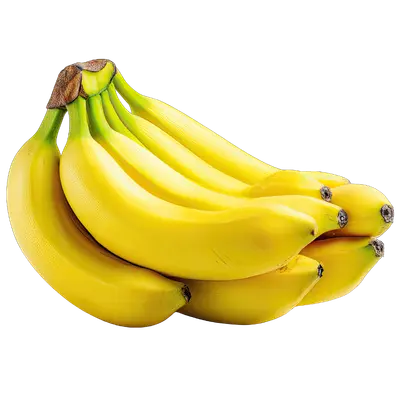
- This is a separate fruit from common banana.
Ladyfinger, sugar, date, and fig banana are smaller varieties distinct from the common Cavendish banana, which has its own entry.
 Log ripeness alongside your entries.
In MyHistaMap, noting how ripe the fruit was may help you spot whether this pattern applies to you personally.
Common questions about Ladyfinger banana and histamine
Does ripening turn banana histidine into histamine?
This is a commonly repeated claim, but it doesn't match the available research. A study measuring amines across 20 banana and plantain varieties found histamine generally decreased, not increased, as fruit ripened.
So why are riper bananas often described as poorly tolerated?
A different compound, putrescine, increases with ripening and has been shown in lab experiments to interfere with the enzyme (DAO) that breaks down histamine. This is a plausible explanation, though it hasn't been directly tested in people eating ripe bananas.
What is ladyfinger banana?
It's a small, sweet banana variety also known regionally as sugar banana, date banana, or fig banana, distinct from the common Cavendish banana found in most supermarkets.
Why are several banana names combined into one entry here?
Different regional names for this same variety were listed separately, but all shared the same unclassified histamine rating in the reference sources we checked, so we combined them into one entry.
Some people find these options helpful





Supplements are optional tools, not a solution. Personal tracking and identifying your individual triggers remains the priority.
Where this information comes from
At MyHistaMap we curate information from peer reviewed research and recognized medical sources. This guide is a reference tool, not a medical prescription. Always track your own reactions and consult your healthcare provider.
References
- SIGHI (Swiss Interest Group Histamine Intolerance) Food Compatibility List: lists date banana/lady finger banana, fig banana/lady finger banana, lady finger banana, and sugar banana/ladyfinger banana as separate entries, all uniformly unclassified for histamine, sharing the note that greener fruit is better tolerated. The source for the consolidation described on this page.
- Bioactive Amines Changes During the Ripening and Thermal Processes of Bananas and Plantains: measured biogenic amines across 20 genotypes and found histamine, tyramine, dopamine, serotonin, spermidine, and spermine generally decreased in the pulp during ripening, while putrescine increased. The source for the ripening and amine findings referenced on this page.
- The Rate of Histamine Degradation by Diamine Oxidase Is Compromised by Other Biogenic Amines, Frontiers in Nutrition, 2022: found putrescine reduced histamine degradation by DAO by approximately 35% at a 4-fold higher concentration than histamine, and by approximately 70% at a 20-fold higher concentration, in vitro. The source for the putrescine-DAO interference findings referenced on this page.