This content is for informational purposes only and does not constitute medical advice. Always consult a qualified healthcare provider before making dietary changes. Histamine tolerance is highly individual.
This information applies to histamine intolerance, DAO deficiency, and MCAS only. If you have a confirmed food allergy, this content does not apply to you. Food allergies involve the immune system and can be life-threatening. Please consult your allergist.
Is Pistachio a trigger for histamine intolerance?
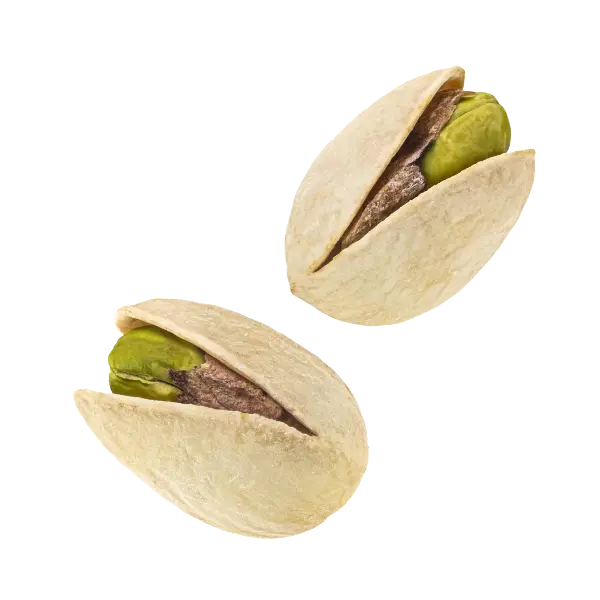
Pistachio scores a 0 out of 3 on the SIGHI Food Compatibility List, placing it in the Safe category.
Pistachio & Histamine, what the evidence says
Pistachios are not associated with meaningful histamine content and are not commonly reported as a histamine liberator, making them compatible with a low-histamine approach.
One important consideration, however, is their high FODMAP content, particularly from fructans. Unlike most other nuts, pistachios reach high FODMAP levels even in relatively small servings according to Monash University's testing. If you experience digestive symptoms after eating pistachios despite a low-histamine approach otherwise going well, FODMAP content is worth considering as a possible explanation independent of histamine. Portion size matters here, and published figures for an exact low-FODMAP serving can vary between testing rounds, so the official Monash app is a more reliable reference than any single number.
Pistachios are also moderate in oxalates. Laboratory measurements placed pistachios, along with peanuts and walnuts, in a range of roughly 54 to 83 mg per 100 grams. This is relevant for people also managing oxalate intake or a history of calcium-oxalate kidney stones.
Pistachios also stand out among nuts for their lutein and zeaxanthin content, carotenoids more commonly associated with leafy green vegetables. This is a general nutritional characteristic rather than a histamine consideration.
Does preparation change the risk?
From a histamine standpoint, pistachios are consistently low-risk across common forms. Variation in how people tolerate them tends to come from FODMAP content and portion size, not histamine, as discussed above.
| Form | Risk Level | Notes |
|---|---|---|
| Small portion (a few pistachios) | Low | Not associated with meaningful histamine content; smaller portions are less likely to trigger FODMAP-related symptoms |
| Larger handful or more | Moderate | FODMAP content becomes more relevant at larger servings, independent of histamine |
| Salted or flavored | Low | Same histamine profile; check labels for added ingredients unrelated to the pistachio itself |
| Pistachio butter or paste | Low | Processing into a butter or paste doesn't introduce histamine |
Note: Risk levels are based on clinical observations and patient reports, not standardized histamine measurements. Individual tolerance varies.
A food score is a reference, not a verdict.
Histamine intolerance is highly individual. A food that triggers symptoms in one person may be tolerated by another, even within the same category.
Strict elimination may help reduce symptoms initially, but long-term progress often depends on gradual reintroduction and pattern recognition. The goal is not to remove more foods over time, but to understand your personal tolerance and expand your diet when possible.
Tracking symptoms, portions, and context such as stress or timing can provide insights that generalized food lists cannot. This is where informed decisions replace fear-based restriction.
How to test your tolerance
 Watch your portion size.
Pistachios reach high FODMAP levels even in relatively small servings. A smaller handful is a reasonable place to start if you notice digestive symptoms after eating them.
 Choose plain over flavored.
Skip seasoned or flavored varieties, which introduce ingredients unrelated to the pistachio itself.
- Separate digestive symptoms from histamine reactions.
Bloating or gas after pistachios is more likely related to FODMAP content than histamine.
 Consider oxalate intake if relevant.
Pistachios are moderate in oxalates, worth keeping in mind alongside your histamine tracking if you have a history of kidney stones.
- Introduce gradually.
If you suspect FODMAP sensitivity, start with a small amount and increase slowly to find your tolerance level, ideally using the Monash app as a reference.
 Track your response.
Log portion size and any digestive symptoms using MyHistaMap to distinguish patterns over time.
Common questions about Pistachio and histamine
Are pistachios high in histamine?
No. Pistachios are not associated with meaningful histamine content and are not commonly reported as a liberator.
Why do I react to pistachios if they are low histamine?
Pistachios reach high FODMAP levels, particularly from fructans, even in relatively small servings according to Monash University's testing, which can cause digestive symptoms independent of histamine.
How many pistachios are considered a safer portion?
Published FODMAP figures vary between testing rounds, so there's no single reliable number here. A smaller portion is generally a safer starting point, and the official Monash app is the most reliable reference if you want an exact serving size.
Can I eat pistachios with histamine intolerance?
Many people tolerate pistachios well from a histamine perspective. If digestive symptoms occur, portion size and FODMAP content are worth considering before assuming it's a histamine reaction.
Some people find these options helpful
Supplements are optional tools, not a solution. Personal tracking and identifying your individual triggers remains the priority.
Where this information comes from
At MyHistaMap we curate information from peer reviewed research and recognized medical sources. This guide is a reference tool, not a medical prescription. Always track your own reactions and consult your healthcare provider.
References
- Monash University FODMAP Diet App: the primary research group testing and publishing FODMAP content in foods; pistachios reach high FODMAP levels even in small servings, unlike most other nuts. Secondary sources report varying low-FODMAP serving sizes across testing rounds, so this page directs readers to the official app rather than a specific figure. The source for the FODMAP consideration referenced on this page.
- Ruan QY, Zheng XQ, Chen BL, Xiao Y, Peng XX, Leung DWM, Liu EE, Determination of total oxalate contents of a great variety of foods commonly available in Southern China using an oxalate oxidase prepared from wheat bran, 2013: laboratory measurement placing pistachio, peanut, and walnut oxalate content in a range of roughly 54 to 83 mg per 100 g. The source for this page's oxalate figures.
- Bulló & Juanola-Falgarona, Nutrition Attributes and Health Effects of Pistachio Nuts, British Journal of Nutrition, 2015: reports that raw pistachios contain 1405 μg of lutein and zeaxanthin per 100 g, roughly thirteen times more than the next highest nut, hazelnuts. The source for the lutein and zeaxanthin content referenced on this page.