This content is for informational purposes only and does not constitute medical advice. Always consult a qualified healthcare provider before making dietary changes. Histamine tolerance is highly individual.
This information applies to histamine intolerance, DAO deficiency, and MCAS only. If you have a confirmed food allergy, this content does not apply to you. Food allergies involve the immune system and can be life-threatening. Please consult your allergist.
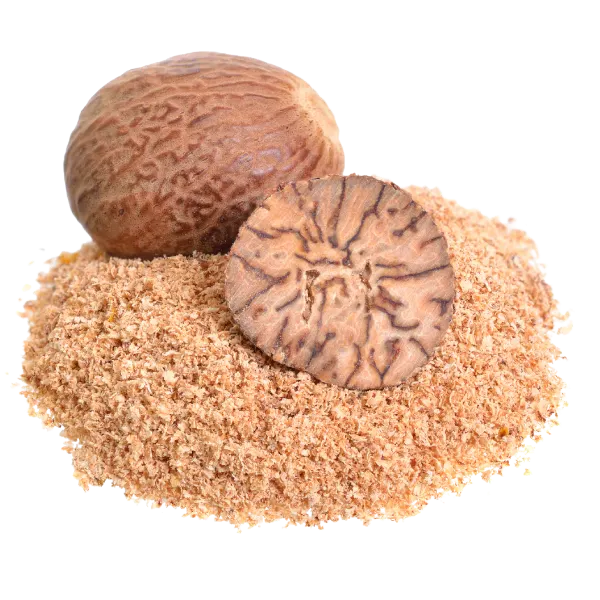
Is Nutmeg a trigger for histamine intolerance?
Nutmeg scores a 1 out of 3 on the SIGHI Food Compatibility List, placing it in the Low category.
Nutmeg & Histamine, what the evidence says
Nutmeg is well tolerated for histamine intolerance in small amounts.
Its far more significant consideration is myristicin, one of the main psychoactive compounds in nutmeg's essential oil. In larger amounts, nutmeg can cause genuine intoxication, with documented symptoms including rapid heartbeat, hallucinations, euphoria, anxiety, dry mouth, blurred vision, and delirium. Toxicological reviews report that these effects have occurred after ingestion of as little as one and a half whole nutmeg seeds, although the amount required varies considerably between individuals. Symptoms typically resolve within 24 to 36 hours, but more severe cases have also been reported. Fatal cases are extremely rare, but they have been documented, including a case involving a child and another in which other drugs were also present. Nutmeg intoxication continues to appear in the medical literature, including cases associated with intentional high-dose use.
This risk is specific to consuming substantial amounts of nutmeg well beyond the small quantities used to season food. Normal culinary use does not produce the concentrations associated with these toxic effects. The exact cause of nutmeg intoxication is not fully established, and although myristicin is considered an important contributor, other compounds in the essential oil may also be involved.
Nutmeg is also high in salicylates. Its oxalate content is high when measured per 100 grams, but the small amounts typically used as a spice contribute relatively little to total oxalate intake.
Does preparation change the risk?
Quantity is the single most important variable for nutmeg, far more than for most spices in this category.
| Form | Risk Level | Notes |
|---|---|---|
| A pinch or teaspoon, culinary seasoning | Low | Well tolerated for histamine intolerance; far below the quantities associated with intoxication |
| Larger regular culinary amounts | Moderate | High in salicylates; still well below intoxication-level doses |
| ⚠️ Substantial quantities (roughly one or more whole seeds), any intent | High | Documented cases of genuine intoxication, including hallucinations, delirium, and rapid heartbeat, have occurred at this level |
Note: Risk levels are based on clinical observations and patient reports, not standardized histamine measurements. Individual tolerance varies.
A food score is a reference, not a verdict.
Histamine intolerance is highly individual. A food that triggers symptoms in one person may be tolerated by another, even within the same category.
Strict elimination may help reduce symptoms initially, but long-term progress often depends on gradual reintroduction and pattern recognition. The goal is not to remove more foods over time, but to understand your personal tolerance and expand your diet when possible.
Tracking symptoms, portions, and context such as stress or timing can provide insights that generalized food lists cannot. This is where informed decisions replace fear-based restriction.
How to test your tolerance
 Know that nutmeg intoxication is real.
Ingesting substantial amounts, well beyond a culinary pinch, can cause genuine symptoms including hallucinations, rapid heartbeat, and delirium. This has been documented for centuries and continues to appear in case reports.
 Culinary seasoning amounts are not a concern.
The toxic effects require quantities far beyond what's used to flavor a dish. A normal pinch or teaspoon isn't associated with intoxication.
- Keep whole nutmeg away from children.
Cases of accidental ingestion, including in children, have led to intoxication. Store whole nutmeg securely.
 Factor in salicylates.
Nutmeg is high in salicylates. If you're managing salicylate sensitivity alongside histamine, this is worth tracking.
- Don't worry about the per-100g oxalate figure.
Nutmeg's oxalate content is high by weight, but the small amount used as a spice keeps actual intake low.
 Track your response in MyHistaMap.
Log the amount of nutmeg used and any symptoms.
Common questions about Nutmeg and histamine
Is nutmeg high in histamine?
No, nutmeg is well tolerated for histamine intolerance in small amounts.
Can nutmeg get you high or cause intoxication?
In large amounts, yes, genuinely. Documented cases describe symptoms including hallucinations, rapid heartbeat, euphoria, and delirium after ingesting as little as one and a half whole nutmeg seeds, though this varies between individuals. This has nothing to do with the small amounts used in cooking.
Is nutmeg dangerous?
In typical culinary amounts, no. In substantial quantities, it can cause real intoxication, and severe or fatal cases, while extremely rare, have been documented.
Is nutmeg high in salicylates or oxalates?
It's high in salicylates. Its oxalate content is high per 100 grams, but the small amount used as a spice keeps actual intake relatively low.
Some people find these options helpful





Supplements are optional tools, not a solution. Personal tracking and identifying your individual triggers remains the priority.
Where this information comes from
At MyHistaMap we curate information from peer reviewed research and recognized medical sources. This guide is a reference tool, not a medical prescription. Always track your own reactions and consult your healthcare provider.
References
- SIGHI (Swiss Interest Group Histamine Intolerance) Food Compatibility List: classifies nutmeg with a histamine score of 1, noting small amounts are well tolerated.
- NTP Technical Report on the Toxicity Studies of Myristicin, National Toxicology Program: toxicological review describing nutmeg overdose symptoms (facial flushing, tachycardia, hypertension, blurred vision, dry mouth, psychoactive hallucinations, euphoria, anxiety, fear) typically subsiding within 24-36 hours, occurring after ingestion of as little as one and a half nutmeg seeds up to 19 seeds. The source for this page's intoxication symptom and dose section.
- Stein U, Greyer H, Hentschel H, Nutmeg (myristicin) poisoning, Forensic Science International, 2001: reports on a fatal nutmeg poisoning case and a case series from a poison information center, discussing the debated role of myristicin relative to other essential oil compounds. The source for this page's note on fatal case rarity and uncertain mechanism.
- Nutmeg Poisoning With Electrolyte Abnormalities: A Case Report, Cureus, 2024; Nutmeg Intoxication: A Case Report, Cureus, 2023: recent case reports confirming nutmeg intoxication continues to appear in current medical literature. The source for this page's note on ongoing case reports.
- RPAH Elimination Diet Handbook, Swain, Soutter & Loblay, Royal Prince Alfred Hospital Allergy Unit: classifies nutmeg among spices high in salicylates. The source for this page's salicylate section.
- Total and Soluble Oxalate Content of Some Indian Spices, Plant Foods for Human Nutrition, 2012: direct laboratory measurement placing nutmeg's oxalate content at 194 mg/100g dry matter, the lowest of the spices tested in this study. The source for this page's oxalate figure.