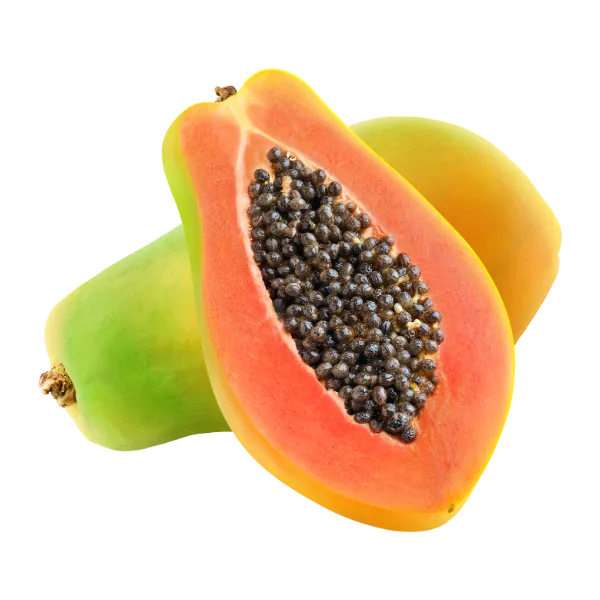
This content is for informational purposes only and does not constitute medical advice. Always consult a qualified healthcare provider before making dietary changes. Histamine tolerance is highly individual.
This information applies to histamine intolerance, DAO deficiency, and MCAS only. If you have a confirmed food allergy, this content does not apply to you. Food allergies involve the immune system and can be life-threatening. Please consult your allergist.
Is Papaya a trigger for histamine intolerance?
Papaya scores a 2 out of 3 on the SIGHI Food Compatibility List, placing it in the Moderate category. It is also classified on some reference lists as a potential histamine liberator. This reflects the reference list's classification rather than a confirmed mast-cell mechanism, since research specifically testing this hasn't provided strong support for it.
Papaya & Histamine, what the evidence says
Papaya carries a safety consideration that's specific to pregnancy and separate from histamine intolerance. Unripe or semi-ripe papaya contains a milky latex rich in papain and other compounds, and laboratory research, including studies using isolated uterine tissue and pregnant rat models, has found that this latex can trigger strong uterine contractions. In one study, the contractions produced by crude papaya latex were comparable to those produced by oxytocin and prostaglandin F2α, hormones involved in uterine contraction. Ripe papaya, in contrast, contains much less latex, and ripe papaya juice did not produce significant uterine contractions in the same research.
There isn't adequate human clinical research confirming how these findings translate to real pregnancies, and it's important to be clear that the evidence comes primarily from animal and laboratory studies rather than controlled studies in pregnant women. The available research is nevertheless the basis for the common precaution of avoiding unripe or semi-ripe papaya, papaya latex, and concentrated papain preparations during pregnancy. The same animal study found no evidence of maternal or fetal toxicity from ripe papaya consumption, but this should not be taken as definitive proof of safety in human pregnancy.
Separately, papaya is involved in a real, documented allergy picture unrelated to histamine intolerance. It is one of the fruits associated with latex-fruit syndrome, in which proteins from natural rubber latex and certain plant foods can cross-react and cause allergic reactions. Papaya contains several potentially allergenic proteins, including papain, chymopapain, and class I chitinases. Documented cases include anaphylactic reactions in people with latex allergy who also react to papaya.
Papain itself is also a recognized occupational allergen. People who are repeatedly exposed to airborne papain, particularly in food-processing and pharmaceutical settings where the enzyme is used, have developed IgE-mediated sensitization, asthma, rhinitis, and other respiratory or skin reactions. This occupational allergy is a separate issue from eating papaya as a food.
None of this changes the histamine information used for this entry. Papaya is placed in a higher-caution category on the reference system used for this site and is also marked as a potential histamine liberator. That label reflects the classification of the reference system and should not be interpreted as proof that papaya directly causes mast-cell histamine release. As with orange and other foods carrying the same designation, the specific mechanism behind the liberator label remains scientifically unsettled.
Does preparation change the risk?
For papaya, ripeness matters for both the pregnancy-specific latex consideration and general use, separate from histamine, which follows the reference classification below.
| Form | Risk Level | Notes |
|---|---|---|
| Ripe papaya, not pregnant, no known allergy | Moderate | Placed in a higher-caution category on reference lists, with a liberator note whose mechanism isn't firmly established |
| Unripe or semi-ripe papaya, latex, or concentrated papain, during pregnancy | High | Animal research has shown this latex can trigger strong uterine contractions; this is a pregnancy safety consideration, not a histamine one |
| Any amount, known latex allergy | High | Documented latex-fruit syndrome cross-reactivity; seek allergist guidance |
| Ripe papaya, pregnant | Moderate | Animal data on ripe papaya specifically is reassuring but doesn't constitute proof of safety in human pregnancy |
Note: The higher-risk rows here reflect a documented pregnancy safety consideration and allergy patterns, not standardized histamine measurements. These are separate from histamine intolerance.
A food score is a reference, not a verdict.
Histamine intolerance is highly individual. A food that triggers symptoms in one person may be tolerated by another, even within the same category.
Strict elimination may help reduce symptoms initially, but long-term progress often depends on gradual reintroduction and pattern recognition. The goal is not to remove more foods over time, but to understand your personal tolerance and expand your diet when possible.
Tracking symptoms, portions, and context such as stress or timing can provide insights that generalized food lists cannot. This is where informed decisions replace fear-based restriction.
How to test your tolerance
 Avoid unripe or semi-ripe papaya during pregnancy.
Animal and lab research has shown this latex can trigger strong uterine contractions. Ripe papaya is the more cautious choice if you're pregnant.
 Avoid concentrated papain supplements if pregnant.
These deliver more of the compound implicated in the uterine contraction research than eating ripe fruit.
- Talk to your doctor if you have a latex allergy.
Papaya is linked to latex-fruit syndrome, so discuss this cross-reactivity before trying it if you have a known latex allergy.
 Know that papain has its own occupational allergy profile.
This is separate from eating papaya and mainly relevant to people who work with the enzyme regularly in food, pharmaceutical, or cosmetic settings.
 Track your own response for histamine purposes.
Papaya's "liberator" label reflects a reference-list classification, not a proven mechanism. If it affects you, that's worth tracking regardless of why.
 Note pregnancy status alongside your tracking.
If you're pregnant, keep the ripeness distinction in mind separately from your histamine log in MyHistaMap.
Common questions about Papaya and histamine
Is papaya safe during pregnancy?
Ripe papaya is generally the more cautious choice. Unripe or semi-ripe papaya and its latex have been shown in animal research to trigger strong uterine contractions, though adequate human clinical data is lacking.
Is papaya a proven histamine liberator?
It's flagged as a potential liberator on some reference lists, but as with orange, the underlying mast-cell mechanism hasn't been firmly established by research. This is a reference-list classification, not a confirmed biological mechanism.
Can papaya cause an allergic reaction?
Yes. Papaya is linked to latex-fruit syndrome and contains several potentially allergenic proteins, including papain. This is a genuine, documented allergy risk, separate from histamine intolerance.
Is papain in supplements the same concern as eating papaya?
Concentrated papain preparations deliver more of the compound studied in the pregnancy research than eating ripe fruit, and papain is also a recognized occupational allergen for people regularly exposed to it, separate from dietary papaya.
Some people find these options helpful





Supplements are optional tools, not a solution. Personal tracking and identifying your individual triggers remains the priority.
Where this information comes from
At MyHistaMap we curate information from peer reviewed research and recognized medical sources. This guide is a reference tool, not a medical prescription. Always track your own reactions and consult your healthcare provider.
References
- Adebiyi et al., Papaya (Carica papaya) Consumption Is Unsafe in Pregnancy: Fact or Fable? Scientific Evaluation of a Common Belief in Some Parts of Asia Using a Rat Model, British Journal of Nutrition, 2002: found crude papaya latex produced uterine contractions comparable to oxytocin and prostaglandin F2α, while ripe papaya juice did not produce significant contractions and showed no maternal or fetal toxicity. The source for the pregnancy-related findings referenced on this page.
- Papaya Allergy: Diagnosis, Symptoms & Treatment: describes papaya's association with latex-fruit syndrome, its allergenic proteins including papain, chymopapain, and class I chitinases, and papain's recognized status as an occupational allergen causing IgE-mediated asthma and rhinitis in exposed workers. The source for the allergy and occupational sensitization information referenced on this page.
- SIGHI (Swiss Interest Group Histamine Intolerance) Food Compatibility List: rates papaya/pawpaw at a higher caution level (2) with other amines and a liberator note. The source for the histamine classification referenced on this page.