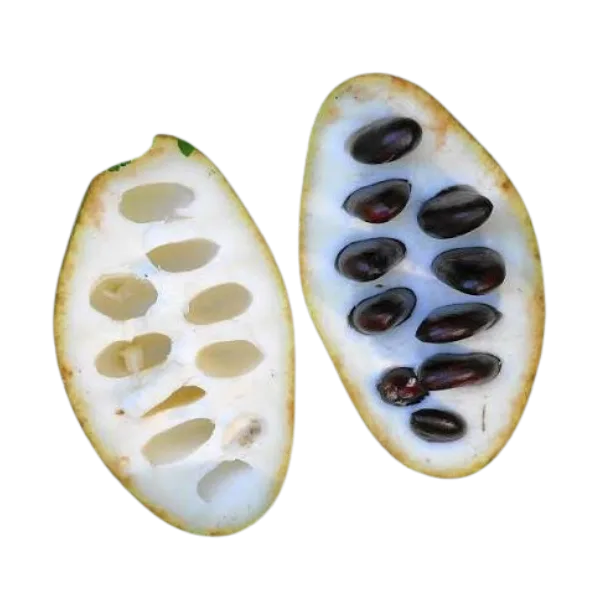
This content is for informational purposes only and does not constitute medical advice. Always consult a qualified healthcare provider before making dietary changes. Histamine tolerance is highly individual.
This information applies to histamine intolerance, DAO deficiency, and MCAS only. If you have a confirmed food allergy, this content does not apply to you. Food allergies involve the immune system and can be life-threatening. Please consult your allergist.
Is Pawpaw a trigger for histamine intolerance?
Pawpaw's histamine classification isn't conclusive; available reference sources don't agree or don't have enough data to assign a confident score.
Pawpaw & Histamine, what the evidence says
Pawpaw carries a safety consideration that's separate from histamine intolerance and worth understanding on its own. The fruit contains annonacin, a natural compound that belongs to a class called acetogenins, in notably high concentrations, with one study measuring more than 7 milligrams per gram of fruit pulp. Laboratory studies have shown that annonacin interferes with a key step in how cells produce energy and can be toxic to neurons.
This concern comes from research on a related tropical fruit, soursop (also called graviola), which contains the same compound, generally at lower concentrations, and has been epidemiologically linked to a higher incidence of atypical parkinsonism in populations that consume it heavily, particularly in parts of the Caribbean. Pawpaw hasn't been studied in the same way in human populations, so there is no equivalent epidemiological evidence specific to pawpaw. What we do know is that pawpaw contains the same neurotoxic compound, and at concentrations that can be higher than those typically found in soursop.
No clinical studies or documented cases of pawpaw-related neurological illness in humans currently exist. The concern researchers have raised is primarily about repeated exposure over time rather than occasional consumption, but we do not have enough human data to determine how that exposure translates into actual risk. This is a different kind of uncertainty from a food simply lacking a histamine classification: here there is a specific, biologically plausible mechanism and a measured presence of a potentially neurotoxic compound, but not yet the human outcome data needed to determine the real-world risk.
Separate from this safety question, pawpaw doesn't have a clear histamine profile either and is grouped with other fruits for which there isn't enough information to rate it definitively one way or another.
Does preparation change the risk?
For pawpaw, the open safety question about annonacin is the main consideration, separate from histamine. It applies to the fruit generally rather than varying by form.
| Form | Risk Level | Notes |
|---|---|---|
| Occasional, infrequent consumption | Moderate | No documented human cases exist, but the fruit contains a compound with a plausible neurotoxic mechanism, unrelated to histamine |
| Regular or frequent consumption over time | High | Researchers' concern centers on repeated exposure specifically; there isn't enough human data to define a safe frequency |
| Pawpaw supplements or concentrated extracts | High | Concentrated extracts would deliver more of the compound of concern than eating the fruit itself |
Note: Risk levels here reflect an open, laboratory-based safety question rather than standardized histamine measurements. This is a food safety consideration separate from histamine intolerance.
A food score is a reference, not a verdict.
Histamine intolerance is highly individual. A food that triggers symptoms in one person may be tolerated by another, even within the same category.
Strict elimination may help reduce symptoms initially, but long-term progress often depends on gradual reintroduction and pattern recognition. The goal is not to remove more foods over time, but to understand your personal tolerance and expand your diet when possible.
Tracking symptoms, portions, and context such as stress or timing can provide insights that generalized food lists cannot. This is where informed decisions replace fear-based restriction.
How to test your tolerance
 Understand this isn't about histamine.
Pawpaw's main safety question involves a compound called annonacin and its potential effects on nerve cells, a completely separate issue from histamine intolerance.
 Occasional consumption carries a different profile than regular consumption.
The concern researchers have raised centers on repeated, ongoing exposure over time, not on trying pawpaw once or occasionally.
 Be cautious with pawpaw supplements or extracts.
Concentrated pawpaw products would deliver more of the compound of concern than eating the whole fruit occasionally.
 Know that the evidence is still developing.
There are no documented human cases or clinical studies on pawpaw specifically. The concern is based on laboratory research and comparison to a related fruit, not confirmed real-world outcomes.
 Talk to a doctor if you eat pawpaw regularly.
If pawpaw is a frequent part of your diet, particularly if you forage or grow your own, discussing this with a healthcare provider is a reasonable precaution given the open questions in the research.
 Treat this as a separate consideration from your histamine tracking.
In MyHistaMap, you can still log pawpaw for histamine purposes, but keep in mind its safety profile involves a different question entirely.
Common questions about Pawpaw and histamine
Is pawpaw dangerous?
It contains a compound called annonacin that's been shown to be toxic to neurons in laboratory studies, and a related fruit (soursop) with the same compound has been linked to neurological illness in populations that eat it heavily. However, there are no documented human cases specific to pawpaw, so the real-world risk isn't yet established.
Is pawpaw high in histamine?
That's not the main concern with this fruit. Pawpaw doesn't have a clear histamine profile either way; it's grouped with other fruits that haven't been studied enough to rate definitively. Its more pressing open question is the annonacin safety issue, which is unrelated to histamine.
Is it safe to eat pawpaw occasionally?
The safety concern researchers have raised focuses on repeated, ongoing consumption over time rather than occasional eating. That said, there isn't enough human data to define a specific safe amount or frequency.
How is pawpaw related to soursop?
Both belong to the same plant family and contain the same neurotoxic compound, annonacin, sometimes at higher concentrations in pawpaw. Soursop has documented epidemiological links to neurological illness in heavy consumers; pawpaw hasn't been studied the same way in real populations.
Some people find these options helpful





Supplements are optional tools, not a solution. Personal tracking and identifying your individual triggers remains the priority.
Where this information comes from
At MyHistaMap we curate information from peer reviewed research and recognized medical sources. This guide is a reference tool, not a medical prescription. Always track your own reactions and consult your healthcare provider.
References
- Potts et al., Annonacin in Asimina triloba Fruit: Implication for Neurotoxicity, NeuroToxicology, 2012: found pawpaw fruit pulp contains high concentrations of annonacin, which was toxic to cortical neurons in laboratory testing. The source for the neurotoxicity findings referenced on this page.
- Levine et al., Determination of Neurotoxic Acetogenins in Pawpaw (Asimina triloba) Fruit by LC-HRMS, Journal of Agricultural and Food Chemistry, 2015: measured annonacin concentrations of 7.72 mg/g in pawpaw fruit pulp. The source for the concentration figure referenced on this page.
- Caparros-Lefebvre & Elbaz, Possible Relation of Atypical Parkinsonism in the French West Indies with Consumption of Tropical Plants: A Case-Control Study, The Lancet, 1999: found a higher incidence of atypical parkinsonism among heavy consumers of soursop and related Annonaceae fruits in Guadeloupe. The source for the epidemiological soursop link referenced on this page.
- SIGHI (Swiss Interest Group Histamine Intolerance) Food Compatibility List: lists common pawpaw of NE-USA with insufficient or contradictory information rather than a specific histamine rating. The source for this page's note that pawpaw lacks a clear histamine classification.