This content is for informational purposes only and does not constitute medical advice. Always consult a qualified healthcare provider before making dietary changes. Histamine tolerance is highly individual.
This information applies to histamine intolerance, DAO deficiency, and MCAS only. If you have a confirmed food allergy, this content does not apply to you. Food allergies involve the immune system and can be life-threatening. Please consult your allergist.
Is Passion fruit a trigger for histamine intolerance?
Passion fruit's histamine classification isn't conclusive; available reference sources don't agree or don't have enough data to assign a confident score.
Passion fruit & Histamine, what the evidence says
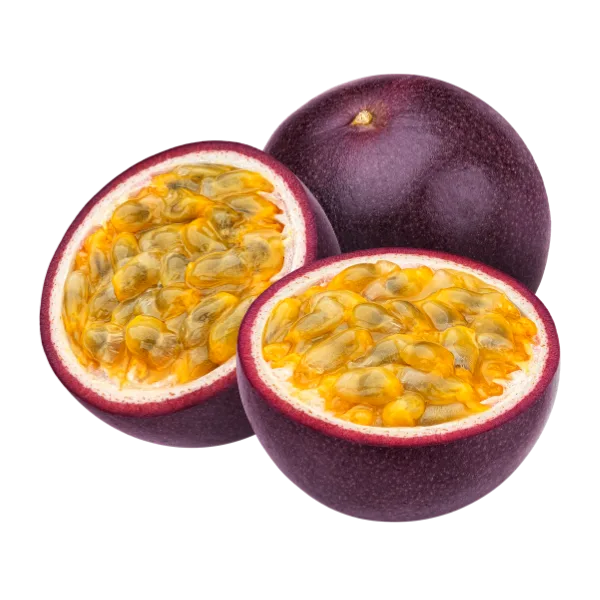
Passion fruit carries a safety consideration related to ripeness that is separate from histamine intolerance. Unripe Passiflora edulis fruit contains cyanogenic glycosides, natural compounds that can release hydrogen cyanide when they are broken down. Studies have identified cyanogenic compounds such as prunasin and sambunigrin in passion fruit, and research following the fruit through different stages of development found that cyanide content declined progressively as the fruit ripened. Fresh, fully ripe fruit had levels far below the toxicological limit reported in that study. The practical takeaway is to avoid eating passion fruit while it is still green and unripe and to wait until it has reached full maturity, typically indicated by its characteristic color, strong aroma, and, for many varieties, wrinkling of the skin.
Passion fruit is also sometimes confused with passionflower, but the two terms do not refer to the same thing. Passionflower refers specifically to Passiflora incarnata, a plant whose dried above-ground parts and extracts have been studied as herbal preparations for mild stress and sleep problems. The European Medicines Agency has evaluated Passiflora incarnata and established an EU herbal monograph for preparations of the plant, while randomized clinical trials have investigated its effects on anxiety and sleep. However, the clinical evidence remains limited and varies in quality, so this should not be interpreted as proof that passionflower is an established treatment for anxiety or insomnia.
This distinction is important because passion fruit sold as food is commonly obtained from other Passiflora species, particularly Passiflora edulis. Eating passion fruit is therefore not equivalent to taking a concentrated passionflower extract. The presence of the word "passion" in both names does not mean that the fruit and the medicinal herb have the same chemical composition or effects.
Passionflower extracts also have their own precautions. The European Medicines Agency states that safety during pregnancy and breastfeeding has not been established and, because sufficient data are lacking, use is not recommended during these periods. It also advises against combining passionflower preparations with synthetic sedatives such as benzodiazepines unless recommended by a doctor. These precautions apply to medicinal passionflower preparations and should not automatically be transferred to ordinary consumption of passion fruit.
None of this relates to dietary histamine. Passion fruit's own histamine profile remains uncertain in the reference systems commonly used for this type of information, so it is more appropriate to approach it according to individual tolerance rather than assigning it a firmly established histamine profile.
Does preparation change the risk?
For passion fruit, ripeness is the main safety variable, separate from an unsettled histamine classification.
| Form | Risk Level | Notes |
|---|---|---|
| Fully ripe passion fruit | Low | Cyanide content drops well below toxicological concern once fully ripe; histamine profile itself is uncertain |
| Unripe or green passion fruit | High | This is a food safety consideration, not a histamine one. Cyanogenic glycoside content is highest before ripening. |
| Passion fruit juice or pulp, from ripe fruit | Low | Similar reasoning applies as with the whole ripe fruit |
| Passionflower supplements, pregnant or breastfeeding | High | A separate herbal product; not recommended during pregnancy or lactation due to insufficient safety data |
Note: The higher-risk rows reflect documented food safety and herbal product guidance, not standardized histamine measurements.
A food score is a reference, not a verdict.
Histamine intolerance is highly individual. A food that triggers symptoms in one person may be tolerated by another, even within the same category.
Strict elimination may help reduce symptoms initially, but long-term progress often depends on gradual reintroduction and pattern recognition. The goal is not to remove more foods over time, but to understand your personal tolerance and expand your diet when possible.
Tracking symptoms, portions, and context such as stress or timing can provide insights that generalized food lists cannot. This is where informed decisions replace fear-based restriction.
How to test your tolerance
 Wait for full ripeness.
Look for the fruit's characteristic color, strong aroma, and skin wrinkling before eating, since cyanogenic glycoside content is highest in unripe fruit.
 Don't confuse the fruit with passionflower supplements.
Passionflower (Passiflora incarnata) extract is a different product from the passion fruit you eat, generally from a different species, with its own separate research and precautions.
- Avoid passionflower products during pregnancy or breastfeeding.
The European Medicines Agency doesn't recommend this due to insufficient safety data. This is about the supplement, not necessarily about eating the fruit.
 Check with a doctor before combining passionflower with sedatives.
This applies to the medicinal extract, particularly with benzodiazepines or other sedative medications.
 Treat passion fruit as a new food to test for histamine purposes.
Since its histamine profile isn't well established, introduce it in a small amount first, the way you would with any unfamiliar food.
 Track it carefully.
Since there's no reliable histamine classification to fall back on, logging your own response to passion fruit in MyHistaMap is especially useful here.
Common questions about Passion fruit and histamine
Is unripe passion fruit dangerous?
Unripe passion fruit contains cyanogenic glycosides, natural compounds that can release hydrogen cyanide when broken down. This declines significantly as the fruit ripens, and fully ripe fruit is considered safe to eat.
Is passion fruit the same as passionflower?
No. Passionflower specifically refers to Passiflora incarnata, studied and regulated as a medicinal herb for stress and sleep. The passion fruit you eat is commonly from a different species, particularly Passiflora edulis, and eating it isn't equivalent to taking a passionflower supplement.
Is passion fruit high in histamine?
This isn't well established. Passion fruit's histamine profile remains uncertain in the reference systems commonly used for this kind of information.
Can I take passionflower supplements while pregnant?
The European Medicines Agency does not recommend this due to insufficient safety data during pregnancy and breastfeeding. This applies to the medicinal extract, not necessarily to eating passion fruit as food.
Some people find these options helpful





Supplements are optional tools, not a solution. Personal tracking and identifying your individual triggers remains the priority.
Where this information comes from
At MyHistaMap we curate information from peer reviewed research and recognized medical sources. This guide is a reference tool, not a medical prescription. Always track your own reactions and consult your healthcare provider.
References
- Studies identifying cyanogenic glycosides, including prunasin and sambunigrin, in Passiflora edulis fruit, with cyanide content measured across ripening stages showing a progressive decline to levels well below the toxicological limit in fully ripe fruit. The source for the ripening and cyanide content findings referenced on this page.
- European Medicines Agency, Community Herbal Monograph on Passiflora incarnata L., herba and the accompanying assessment report: establish an EU herbal monograph for Passiflora incarnata for mild stress and sleep support, state that safety during pregnancy and lactation has not been established and use is not recommended due to insufficient data, and advise against combining it with synthetic sedatives such as benzodiazepines without medical guidance. The source for the passionflower classification and precautions referenced on this page.
- Passiflora incarnata in Neuropsychiatric Disorders: A Systematic Review: identified nine randomized clinical trials on Passiflora incarnata's neuropsychiatric effects, while noting variable study quality. The source for the clinical trial evidence referenced on this page.
- SIGHI (Swiss Interest Group Histamine Intolerance) Food Compatibility List: lists passion fruit/passionfruit with insufficient or contradictory information rather than a specific rating. The source for this page's note on passion fruit's uncertain histamine classification.