This content is for informational purposes only and does not constitute medical advice. Always consult a qualified healthcare provider before making dietary changes. Histamine tolerance is highly individual.
This information applies to histamine intolerance, DAO deficiency, and MCAS only. If you have a confirmed food allergy, this content does not apply to you. Food allergies involve the immune system and can be life-threatening. Please consult your allergist.
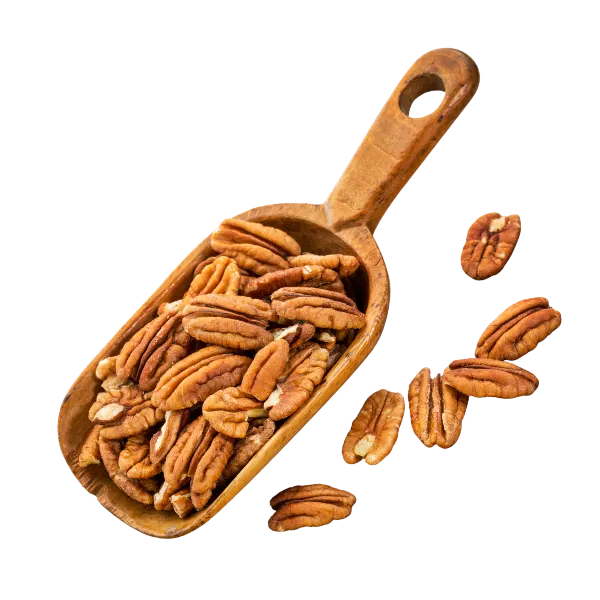
Is Pecan nut a trigger for histamine intolerance?
Pecan nut scores a 0 out of 3 on the SIGHI Food Compatibility List, placing it in the Safe category.
Pecan nut & Histamine, what the evidence says
Pecans are not associated with meaningful histamine content on compatibility reference lists.
Nutritionally, they stand out for their high antioxidant capacity. USDA research measuring antioxidant capacity across more than 100 foods found pecans to have one of the highest ORAC (Oxygen Radical Absorbance Capacity) values among the nuts analyzed. This reflects the presence of numerous antioxidant compounds, including phenolic compounds such as gallic acid, catechin, and ellagic acid. ORAC is a laboratory measure of antioxidant capacity rather than a direct measure of health benefits from eating the food. This is a general nutritional characteristic rather than a histamine consideration.
Pecans are also high in unsaturated fat, which makes them susceptible to oxidation and rancidity if stored improperly or for too long. Proper storage, particularly protection from heat, light, and air, helps preserve their quality.
Does preparation change the risk?
From a histamine standpoint, pecans are consistently low-risk across common forms. Freshness and storage are the main variables affecting quality.
| Form | Risk Level | Notes |
|---|---|---|
| Raw pecans | Low | Not associated with meaningful histamine content |
| Roasted pecans (unsalted) | Low | Same histamine profile as raw; check for freshness |
| Candied or flavored | Moderate | Added sugars and flavorings introduce independent triggers unrelated to the pecan itself |
| Older or stale pecans | Moderate | High unsaturated fat content means they can turn rancid, which may independently affect tolerance |
Note: Risk levels are based on clinical observations and patient reports, not standardized histamine measurements. Individual tolerance varies.
A food score is a reference, not a verdict.
Histamine intolerance is highly individual. A food that triggers symptoms in one person may be tolerated by another, even within the same category.
Strict elimination may help reduce symptoms initially, but long-term progress often depends on gradual reintroduction and pattern recognition. The goal is not to remove more foods over time, but to understand your personal tolerance and expand your diet when possible.
Tracking symptoms, portions, and context such as stress or timing can provide insights that generalized food lists cannot. This is where informed decisions replace fear-based restriction.
How to test your tolerance
 Choose plain over flavored.
Skip candied, honey-roasted, or seasoned varieties, which introduce ingredients unrelated to the pecan itself.
 Prioritize freshness.
Pecans are high in unsaturated fat and can turn rancid over time. Store them in the refrigerator or freezer to preserve quality.
 A notably antioxidant-rich nut.
Pecans have one of the highest measured antioxidant capacities among common nuts, a general nutritional characteristic unrelated to histamine.
 Protect from heat, light, and air.
Proper storage conditions help slow oxidation and preserve pecans' quality and flavor over time.
 Track your response.
Log the quantity and form you tried using the MyHistaMap app to build a clearer picture over time.
Common questions about Pecan nut and histamine
Are pecans high in histamine?
No. Pecans are not associated with meaningful histamine content on compatibility reference lists.
What makes pecans nutritionally notable?
They have one of the highest measured antioxidant capacities (ORAC values) among common nuts, reflecting a range of phenolic compounds. This is a general nutritional characteristic, not a direct measure of health benefits.
Why might pecans go rancid quickly?
Pecans are high in unsaturated fat, which makes them prone to oxidation if not stored properly. Keeping them cool, dark, and away from air helps preserve freshness.
Can I eat pecans with histamine intolerance?
Most people tolerate pecans well from a histamine perspective. Freshness and avoiding flavored varieties are the main practical considerations.
Some people find these options helpful





Supplements are optional tools, not a solution. Personal tracking and identifying your individual triggers remains the priority.
Where this information comes from
At MyHistaMap we curate information from peer reviewed research and recognized medical sources. This guide is a reference tool, not a medical prescription. Always track your own reactions and consult your healthcare provider.
References
- USDA Arkansas Children's Nutrition Center, antioxidant capacity (ORAC) analysis of over 100 foods: found pecans had the highest measured antioxidant capacity among common nuts, ranking among the highest antioxidant-capacity foods tested. The source for this page's antioxidant capacity note.
- Composition and antioxidant properties of pecan cultivars, phenolic compounds, tannins and tocopherols, 2022: identifies gallic acid, catechin, and ellagic acid among the phenolic compounds contributing to pecan's antioxidant activity. The source for this page's note on specific phenolic compounds.